Coloring tips: How to color Tropical Beach coloring page well?
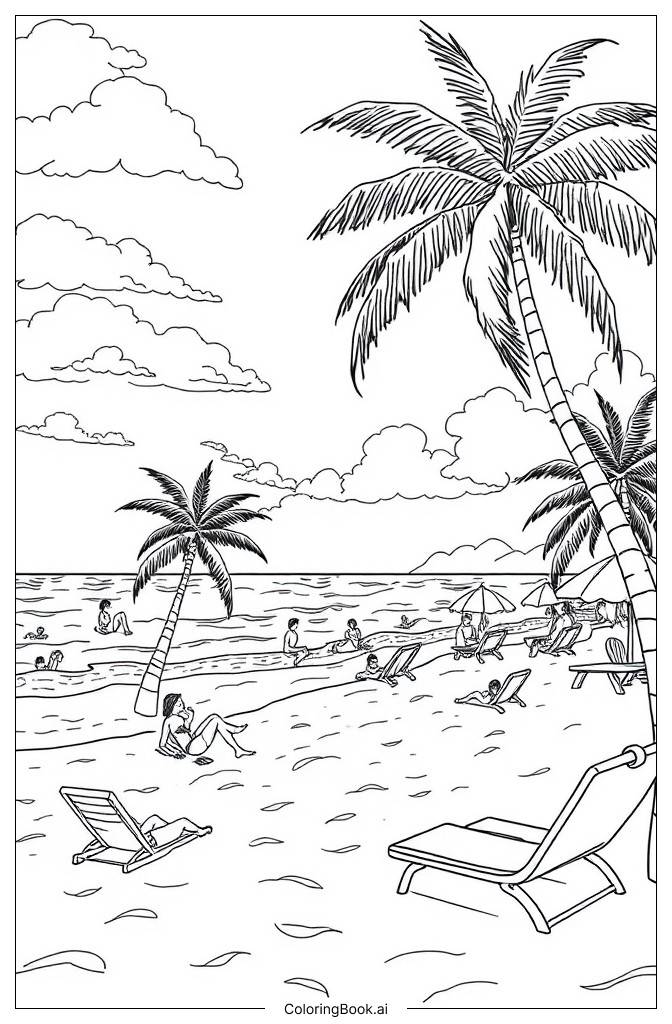
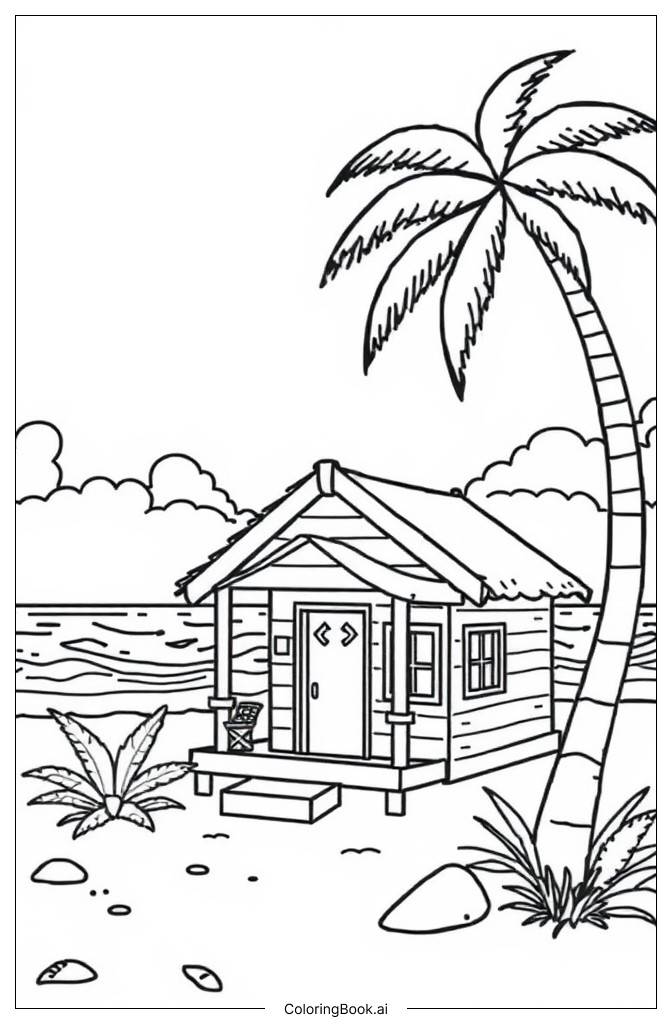
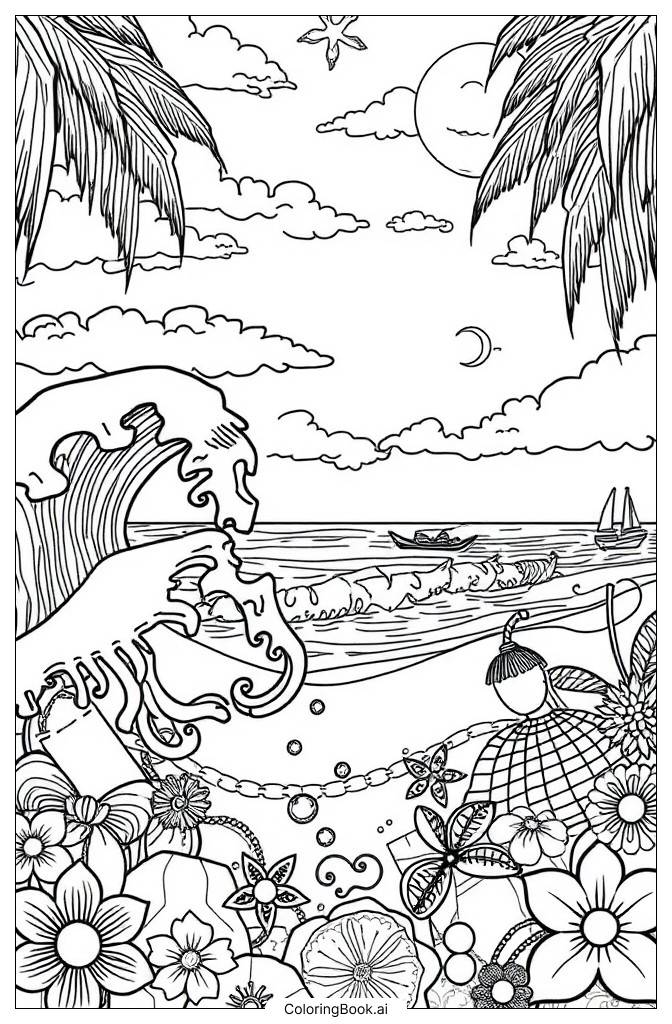
Start with the sky using light blue and soft white for the clouds. Give the sun a warm yellow or golden shade. Use two or three shades of blue and green for the ocean to show depth — darker blue further out, lighter turquoise near the shore. Color the sand in warm shades of tan, beige, or light yellow. The palm tree trunks look great in brown or sandy tan, while the leaves work well in bright or dark green. Try using pink, orange, or purple for the seashells to make them pop. The starfish can be orange or coral-colored. Color the beach umbrella in bold, fun stripes — red and white or yellow and blue are great choices. Add a touch of peachy or golden tone to the beach chair. Bright tropical birds can be colored in vivid reds, yellows, and greens. Don't be afraid to use bold, saturated colors — tropical scenes are all about vibrancy and life.
Coloring challenges: Which parts are difficult to color and need attention for Tropical Beach coloring page?
• Palm Tree Textures: The bark of palm trees has a rough, ringed texture with many small lines and segments. Staying within these narrow sections while adding shading or multiple brown tones can be tricky, especially for younger colorists who are still developing fine motor control. Take your time going from section to section.
• Ocean Depth and Gradients: Creating a realistic-looking ocean requires blending multiple shades of blue and green smoothly. Achieving a natural gradient from deep navy at the horizon to bright turquoise near the shore is one of the most challenging parts of this image. Colored pencils or watercolors work best here, but controlling the blend takes practice.
• Small Shell and Starfish Details: The seashells and starfish scattered on the sand contain intricate patterns, ridges, and tiny decorative lines. Coloring these small elements neatly without going outside the lines requires a sharp pencil or a fine-tipped marker. Rushing through these details can make them look messy.
• Sky and Cloud Blending: Leaving the clouds white while smoothly fading the sky around them takes careful technique. If using colored pencils, a light hand is needed to avoid making the sky look flat or patchy. Blending tools or layering very light strokes can help achieve a soft, airy look.
• Layering Sand Tones: Sand is rarely just one flat color. Capturing the warmth and subtle variation in the beach — shadows near the water, dry lighter patches near the palm trees — requires layering two or three close shades of beige and tan without making the area look muddy or overworked.
Benefits of coloring books: Advantages of drawing Tropical Beach coloring page
Coloring this tropical beach scene offers a wonderful range of benefits for children and adults alike. The peaceful, vacation-like setting naturally encourages relaxation and helps reduce everyday stress. Focusing on the gentle waves, open sky, and sandy shore can feel like a mini mental vacation, calming the mind and lifting the mood.
For children, this image builds fine motor skills as they carefully color small details like seashells, starfish, and palm fronds. It also encourages creativity — there is no single correct way to color a tropical scene, so kids feel free to explore bold, imaginative color choices.
Working through the different sections of the image — from the sky down to the ocean and sand — helps develop patience and concentration. Children learn to work step by step, finishing one area before moving to the next.
The scene also sparks curiosity about nature and geography. Kids may become interested in learning about tropical ecosystems, ocean life, and different parts of the world after engaging with the image.
For Adults, coloring detailed elements like palm bark textures and wave gradients offers a satisfying, meditative challenge. It is a screen-free activity that promotes mindfulness while producing something beautiful to display or share. Overall, this coloring page is a joyful, enriching experience for all ages.