Coloring tips: How to color Baseball Glove coloring page well?
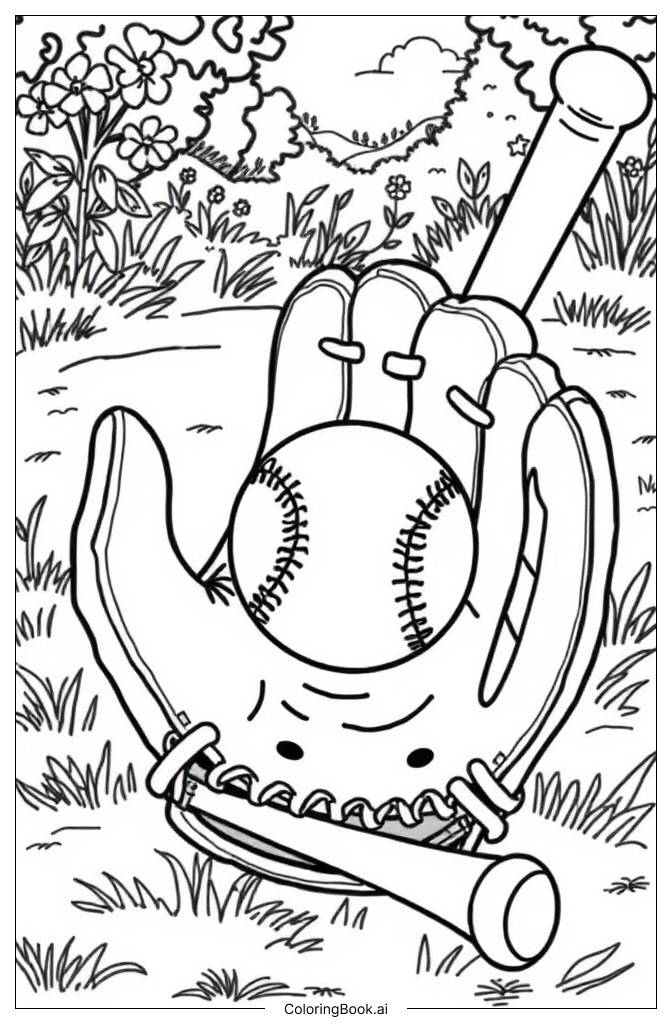
Start with the main leather body of the glove. Real baseball gloves come in tan, brown, or reddish-brown shades, so those are great choices. Use a light tan as your base color and then add darker brown on the finger sections and edges to show depth. The lacing along the seams can be colored in a slightly lighter shade of tan or cream to make it stand out. The webbing between the thumb and fingers can be the same base color but shaded a little darker. Add some shading inside the deep pocket of the glove using a dark brown to show its curved shape. For a fun twist, try making the glove in a non-traditional color like red, blue, or even black for a cool modern look. Leave small highlights along the raised leather edges to make the glove look shiny and three-dimensional. Kids can also get creative and add team colors or patterns to personalize their glove.
Coloring challenges: Which parts are difficult to color and need attention for Baseball Glove coloring page?
• Lacing Details: The lacing that runs along the edges and between the fingers is one of the trickiest parts to color. The laces are thin and close together, so a fine-tipped colored pencil or a thin marker works best. Try to keep the lace color lighter than the main body to make them stand out without bleeding into the surrounding panels. Take your time and color each lace section separately.
• Leather Panel Shading: The glove is made of multiple leather panels stitched together. Making each panel look slightly different in tone while keeping the whole glove looking unified can be challenging. Use a light base color first, then layer a slightly darker shade along the edges and seams of each panel to create dimension and a realistic leather feel.
• Webbing Area: The triangular web between the thumb and index finger has an open, cross-stitched look. This area has small spaces and overlapping lines that require careful coloring. Use a slightly darker shade here compared to the main palm to suggest depth, and try not to fill in any open gaps that represent the holes in the webbing.
• Deep Pocket Shading: The open pocket of the glove curves inward and should look darker at its deepest point. Blending from a medium brown at the edges to a very dark brown or even black near the center takes patience. This gradient shading is what makes the glove look truly three-dimensional and realistic rather than flat.
• Wrist Strap: The small strap at the base of the glove has its own buckle or snap detail. It is a small area but important for realism. Color it in a consistent shade and try to add a tiny bit of shadow beneath the strap to lift it off the glove body.
Benefits of coloring books: Advantages of drawing Baseball Glove coloring page
Coloring this baseball glove page offers a wide range of benefits for kids and young fans of the sport. First, it builds fine motor skills. Carefully filling in the thin laces, small panels, and detailed webbing requires precise hand movements that strengthen grip and hand-eye coordination, which are the same skills used when actually playing baseball. Second, it teaches patience and focus. A detailed image like this one asks colorists to slow down, plan their color choices, and work carefully through each section, building concentration and attention to detail. Third, it sparks creativity. While realistic brown and tan tones are natural choices, kids are free to imagine a glove in their favorite team's colors or even invent something entirely new. This kind of open-ended creative decision builds confidence and self-expression. Fourth, it connects kids to the world of sports in a calm, hands-on way. Coloring a piece of baseball equipment can inspire curiosity about the game, its history, and how the gear is made. Finally, the activity is simply relaxing and enjoyable. Taking time to color is a great screen-free way to unwind, and finishing the page gives a real sense of accomplishment and pride.