Coloring tips: How to color Baby Shark Chasing A Butterflyfish coloring page well?
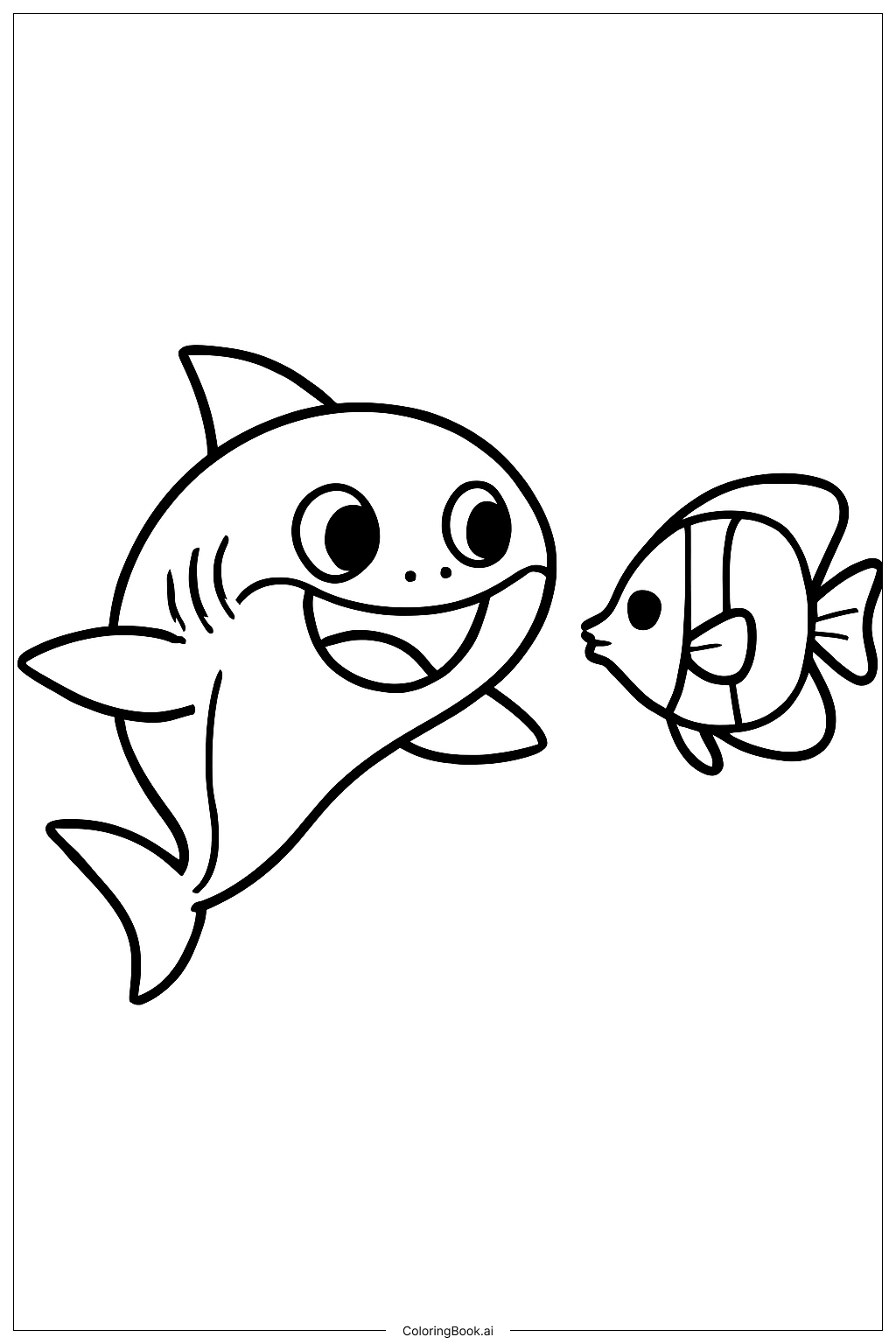
Start with the lightest colors and work your way to the darker shades. For Baby Shark, use a soft blue or sky blue on the body, with a pale yellow or cream on the belly. Add a light pink blush on the cheeks to give Baby Shark a cute, friendly look. For the butterflyfish, use bright yellow as the main body color, then add white and black markings to match its real-life pattern. You can also use orange or gold for extra detail. Color the bubbles in light blue or leave them white for a clean, airy feel. Use teal and aqua tones for the background water to create a deep ocean atmosphere. Greens and purples work great for the coral and seaweed. Do not be afraid to mix colors or try your own combinations. This is your ocean adventure, so make it as colorful and fun as you like!
Coloring challenges: Which parts are difficult to color and need attention for Baby Shark Chasing A Butterflyfish coloring page?
• Baby Shark's Body Curves: Baby Shark has a rounded, smooth body with subtle curves along the sides and belly. Staying neatly within these curved outlines while blending two or more shades of blue can be tricky, especially around the fins and tail where the lines are closest together. Take your time and use a sharp pencil or fine-tip marker for the edges.
• Butterflyfish Pattern Details: The butterflyfish has a distinctive pattern with bold stripes, a dark eye spot near the tail, and a narrow band across the eye area. Coloring these small details accurately requires a steady hand and thin tools. Getting the pattern symmetrical on both sides of the body is one of the biggest challenges on this page.
• Water and Bubble Effects: The flowing water lines and scattered bubbles in the background need to look light and transparent. Using too much color can make them look heavy and flat. Try gentle, uneven strokes or leave the centers of bubbles uncolored to keep that soft, underwater glow.
• Sense of Motion and Depth: Since both characters are mid-swim, giving the image a feeling of movement is important. Shading slightly darker on one side of each character and lighter on the facing side helps create depth. This technique, called basic shading, can be challenging for younger colorists but adds a lot of life to the finished piece.
• Background Balance: The coral and seaweed elements in the background should feel like a supporting layer, not the main focus. Choosing colors that are slightly muted compared to Baby Shark and the butterflyfish keeps the main characters standing out without losing the richness of the underwater setting.
Benefits of coloring books: Advantages of drawing Baby Shark Chasing A Butterflyfish coloring page
Coloring this fun underwater scene with Baby Shark and the butterflyfish offers a range of wonderful benefits for kids and families. First, it helps children build fine motor skills as they carefully color within the lines and handle small details like the butterflyfish's stripes and Baby Shark's fins. These small, controlled movements strengthen hand muscles that are important for writing and drawing. Second, choosing colors for the ocean scene sparks creativity and imagination. Kids get to decide what their underwater world looks like, building confidence in their own creative choices. Third, focusing on a coloring page encourages concentration and patience, helping children practice staying on task in a calm, enjoyable way. Fourth, the familiar and lovable character of Baby Shark makes this activity especially engaging and emotionally comforting, which is great for reducing stress or calming down after a busy day. Finally, completing the page gives children a real sense of accomplishment. They can display their finished artwork proudly, which boosts self-esteem. Whether coloring solo or together with a parent or friend, this page turns a simple activity into a meaningful, joyful experience.