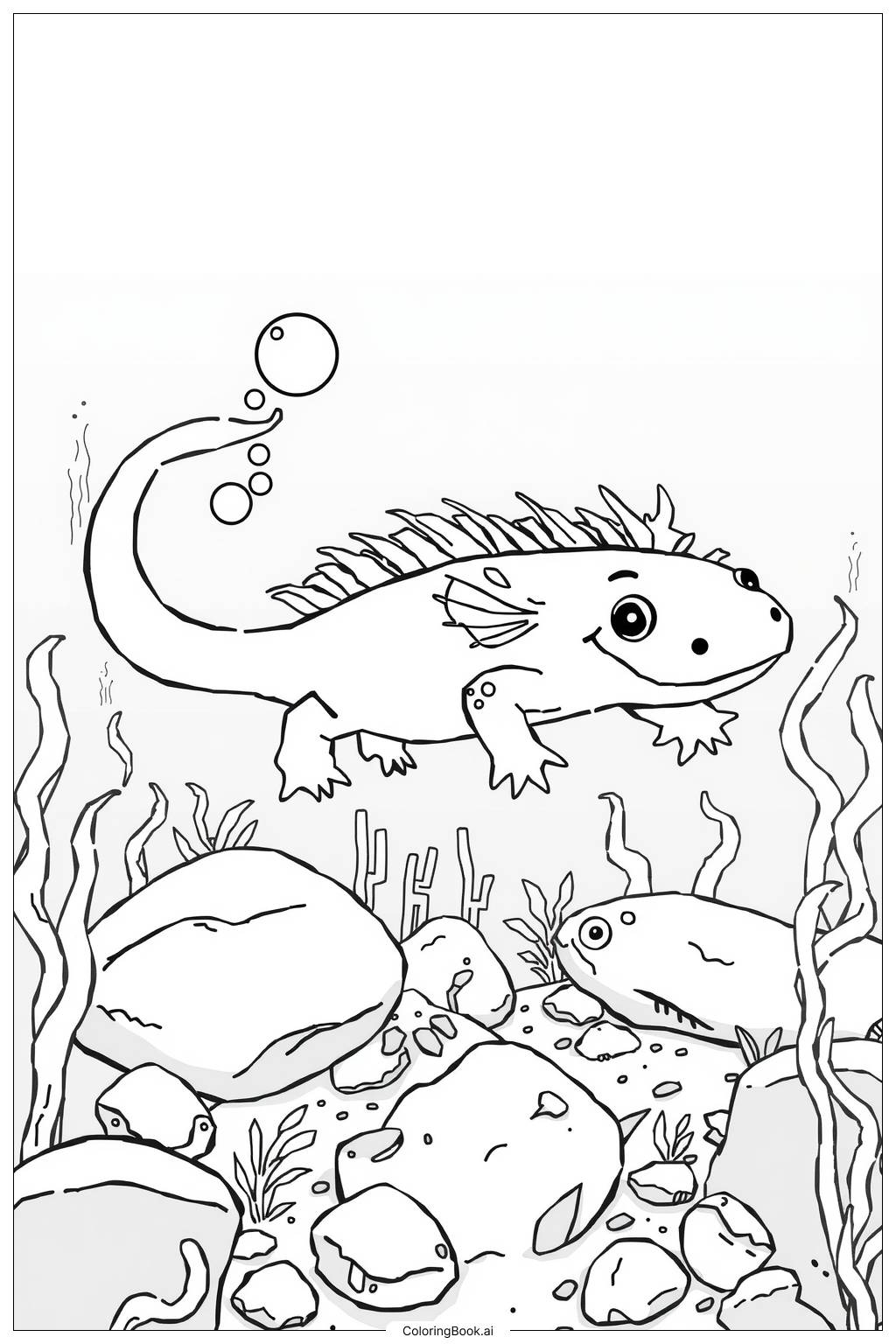
Coloring tips: How to color Tiny Axolotl Swimming-2 coloring page well?
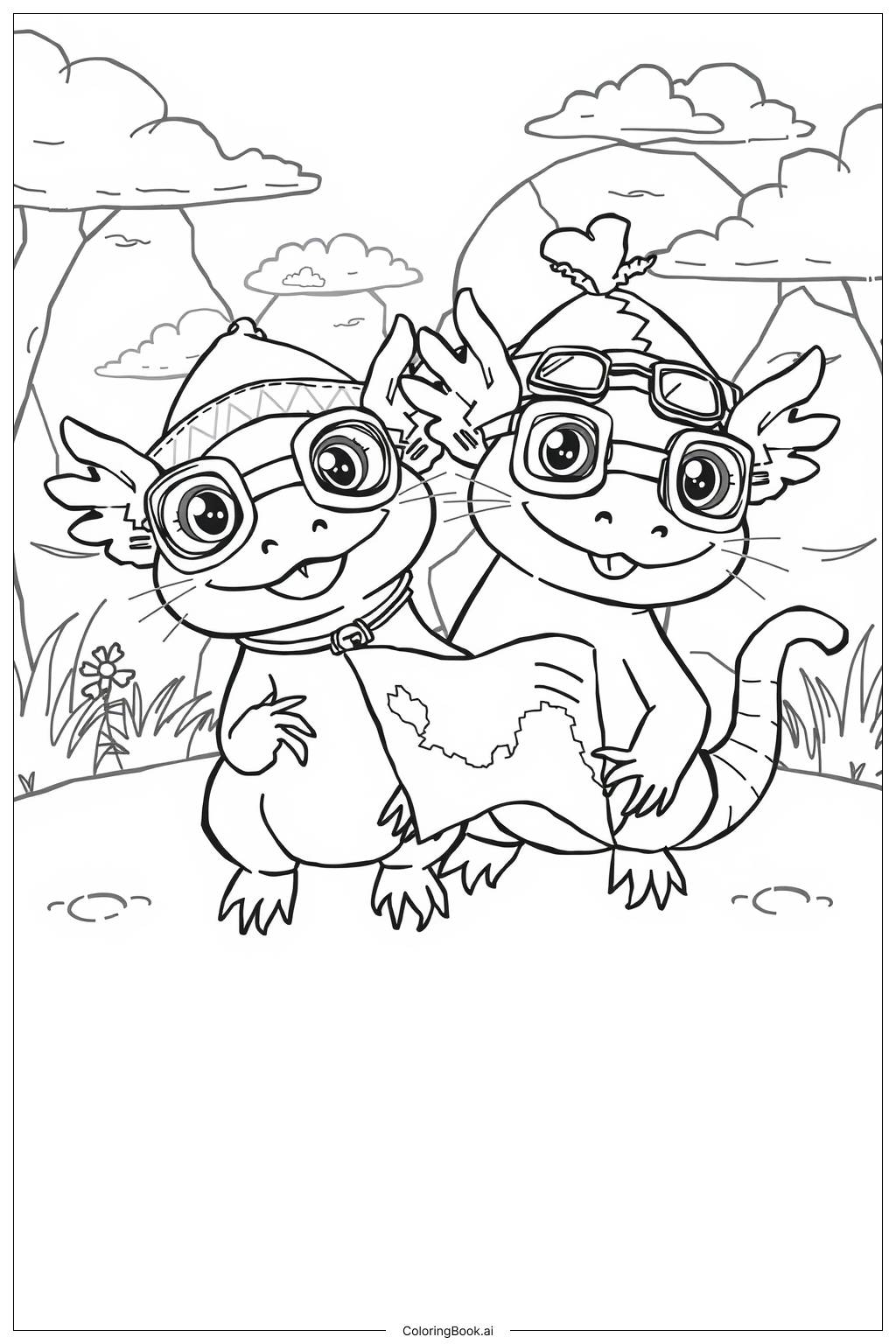
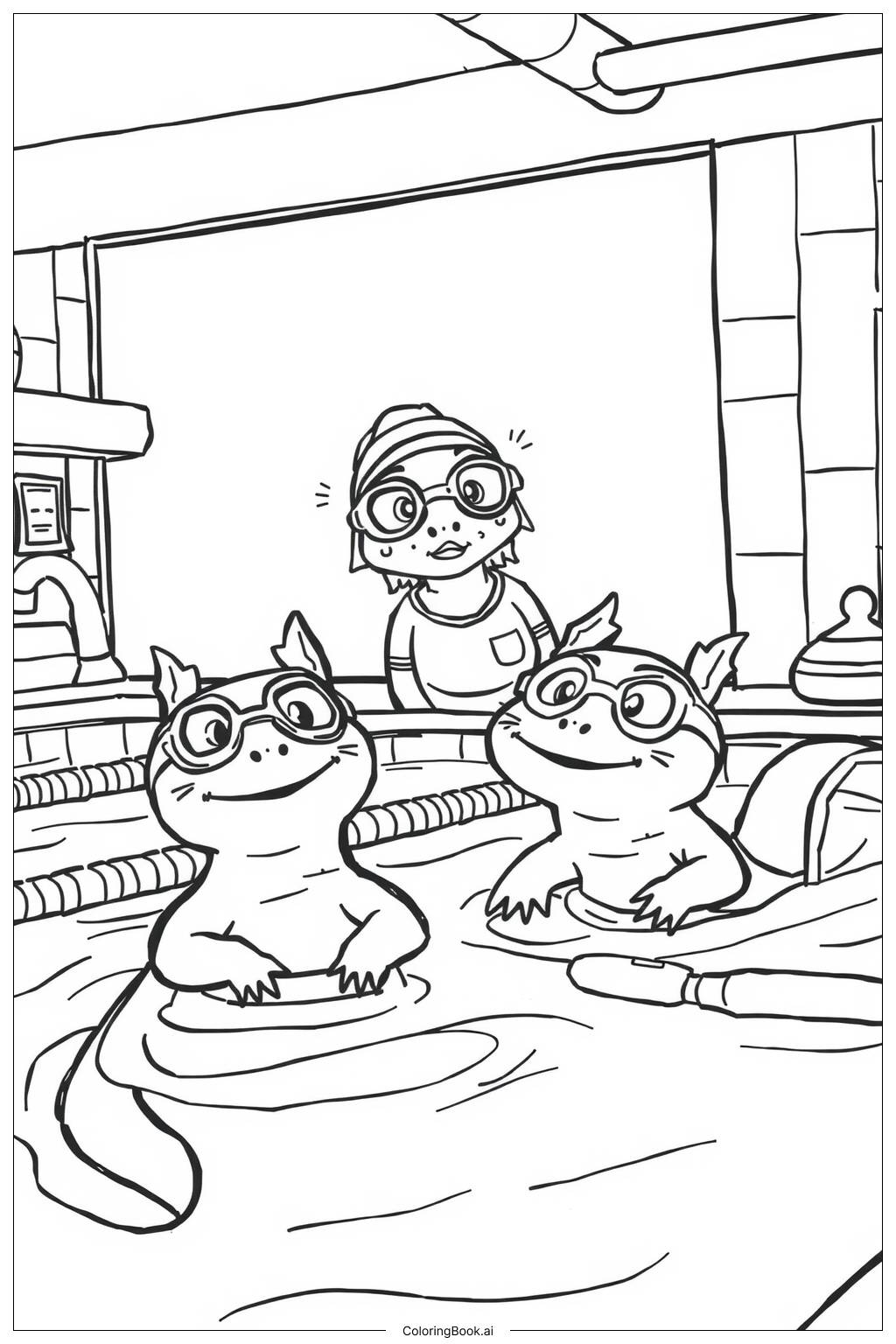
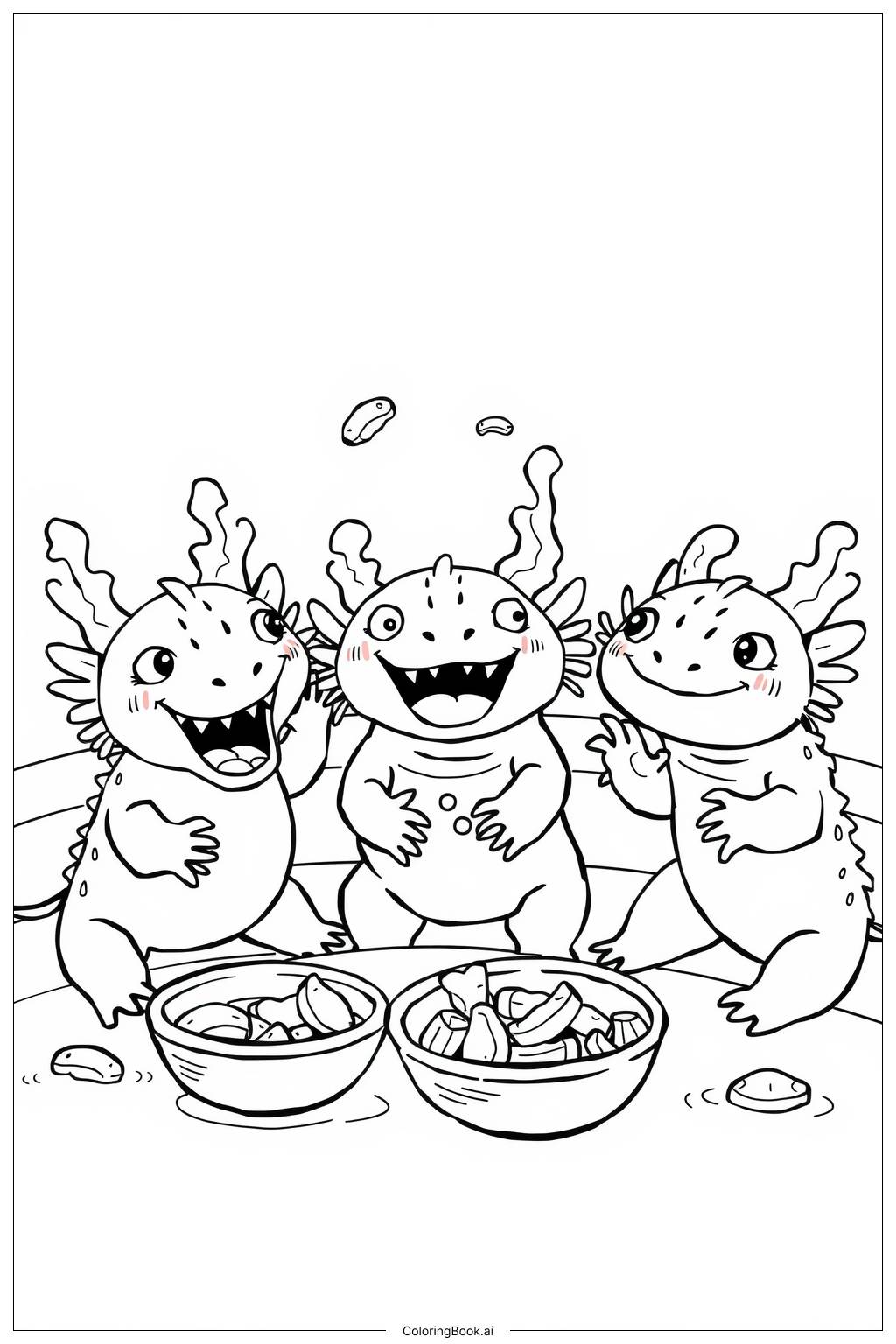
Try using soft pastel colors like light pinks or pale peaches for the axolotl’s body to highlight its delicate skin. The feathery gills can be shaded with light reds or oranges to make them stand out. For the water, use different shades of blue and green to create a cool, watery effect around the axolotl. Color the plants in fresh greens, experimenting with light and dark tones for variety. Adding gentle white highlights to the bubbles will give them a shiny, floating look. Remember to use smooth strokes for the water and delicate details for the axolotl’s features.
Coloring challenges: Which parts are difficult to color and need attention for Tiny Axolotl Swimming-2 coloring page?
• Small Details: The axolotl's feathery gills have many tiny branches that require careful coloring to avoid smudging or overlapping. • Gradients in Water: Creating a natural water effect can be tricky because it involves blending blues and greens smoothly to show depth. • Tiny Legs and Fingers: The axolotl’s little legs and fingers are narrow and may need precise coloring tools like fine-tip markers or colored pencils. • Bubbles Transparency: Coloring bubbles to look transparent while still visible requires subtle shading without making them too bold. • Plant Textures: The water plants have a mix of curved and straight leaves, making it challenging to keep coloring within lines while showing texture.
Benefits of coloring books: Advantages of drawing Tiny Axolotl Swimming-2 coloring page
Coloring this axolotl image helps improve fine motor skills by requiring attention to small details like the gills and tiny legs. It encourages creativity through experimenting with soft and bright colors to depict underwater life. This activity also promotes focus and patience, as blending water colors and shading bubbles needs careful work. Additionally, children learn about the axolotl’s unique appearance, fostering curiosity about amphibians and nature. Overall, coloring this scene can be calming and educational, making it fun for kids aged 4 to 16.