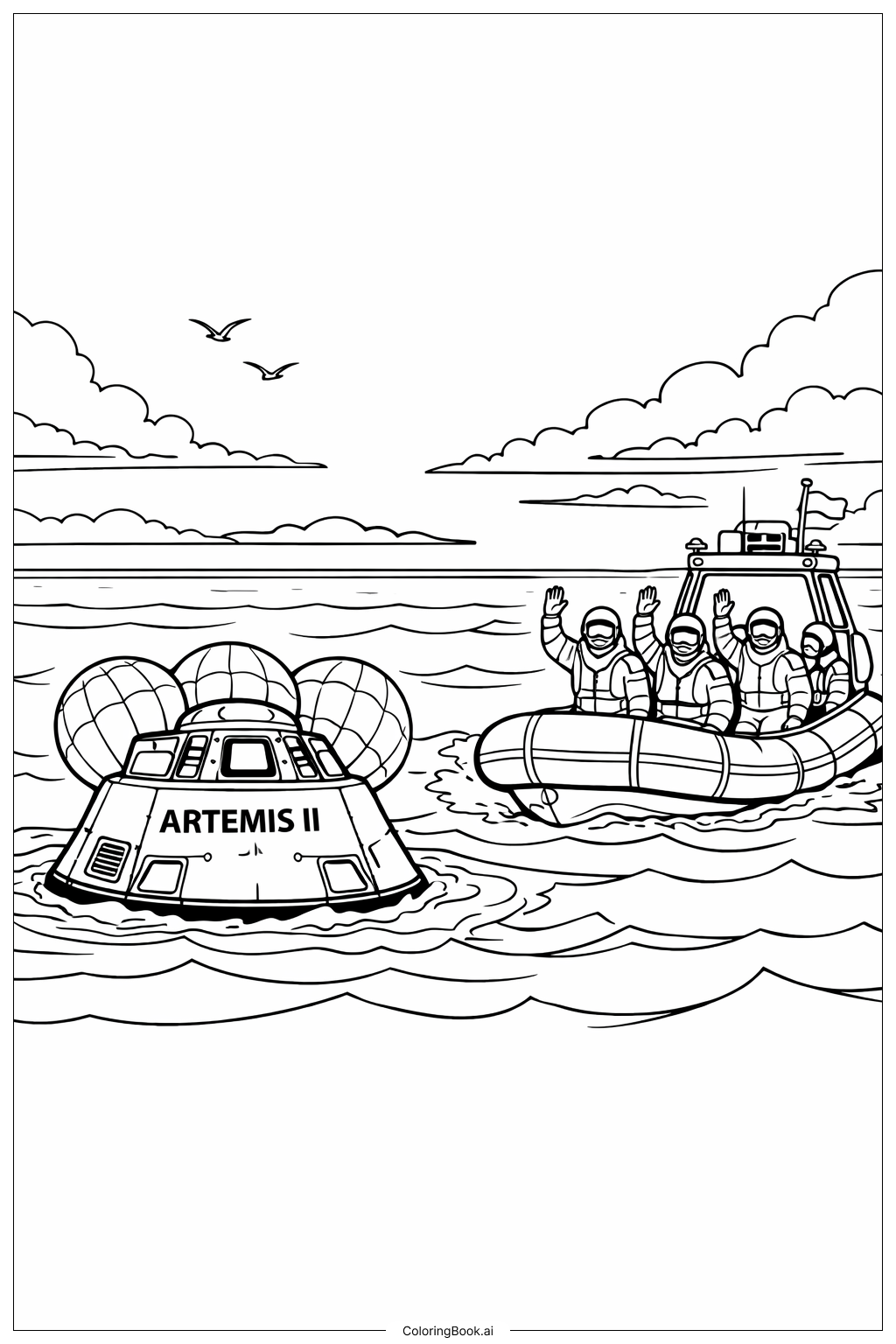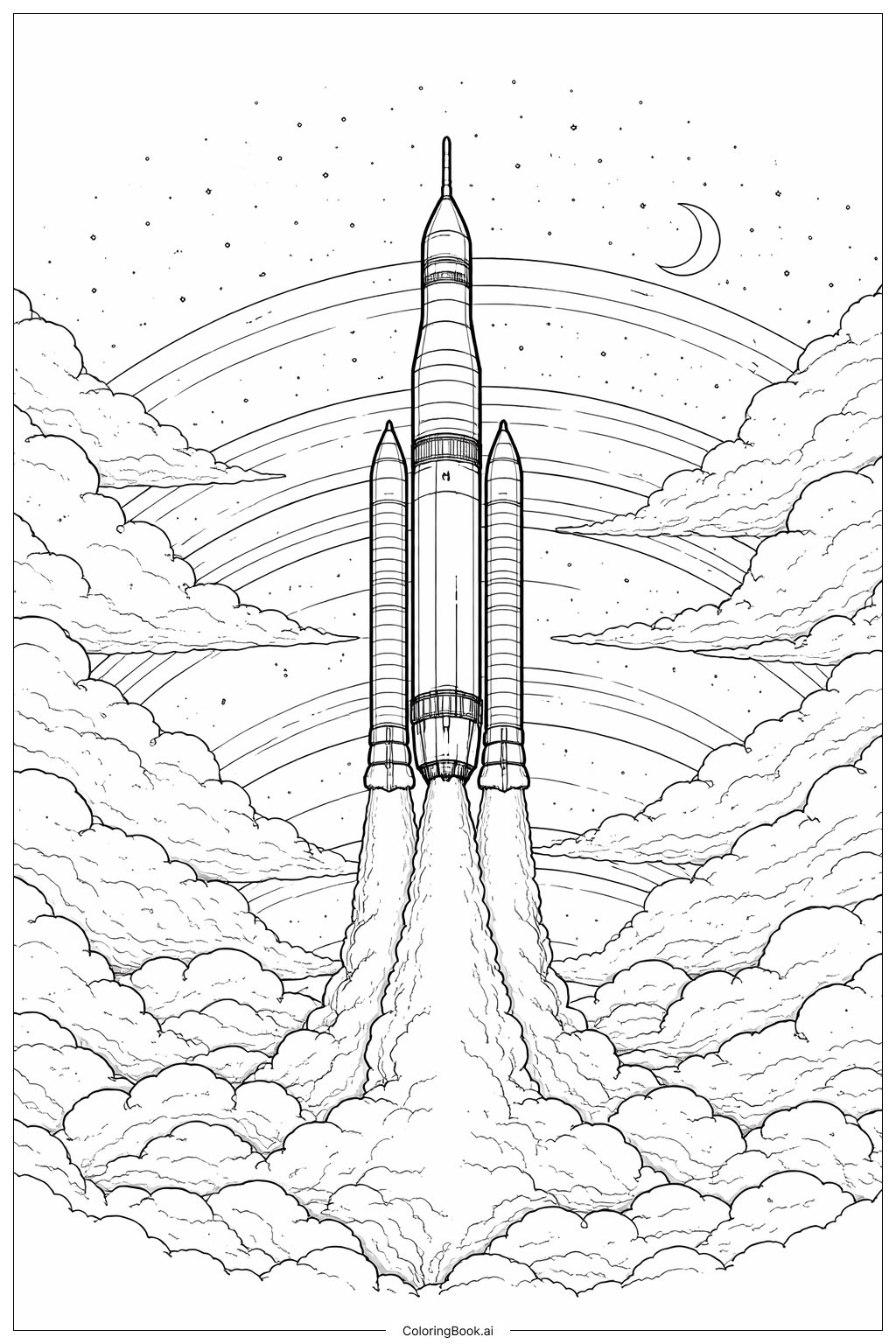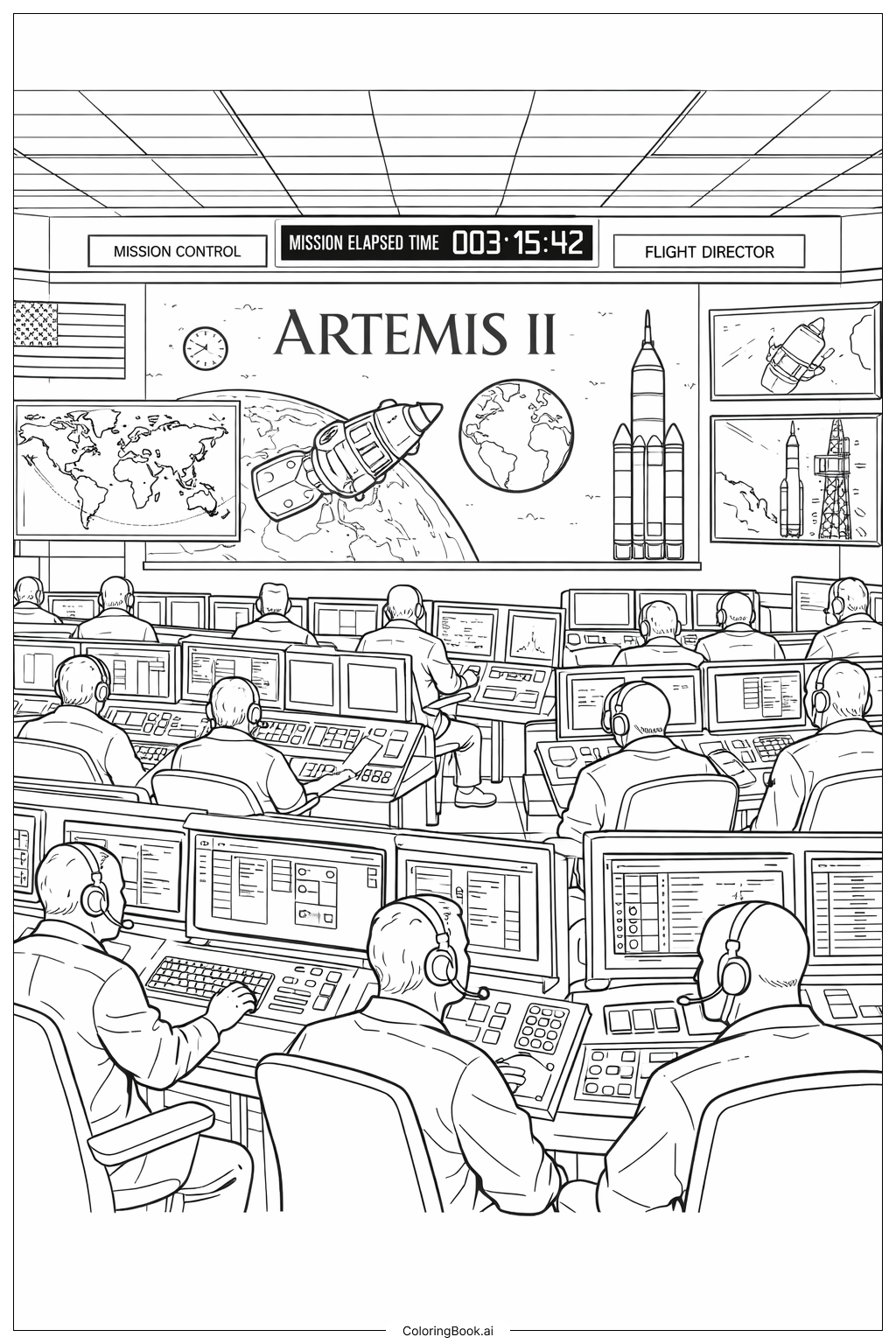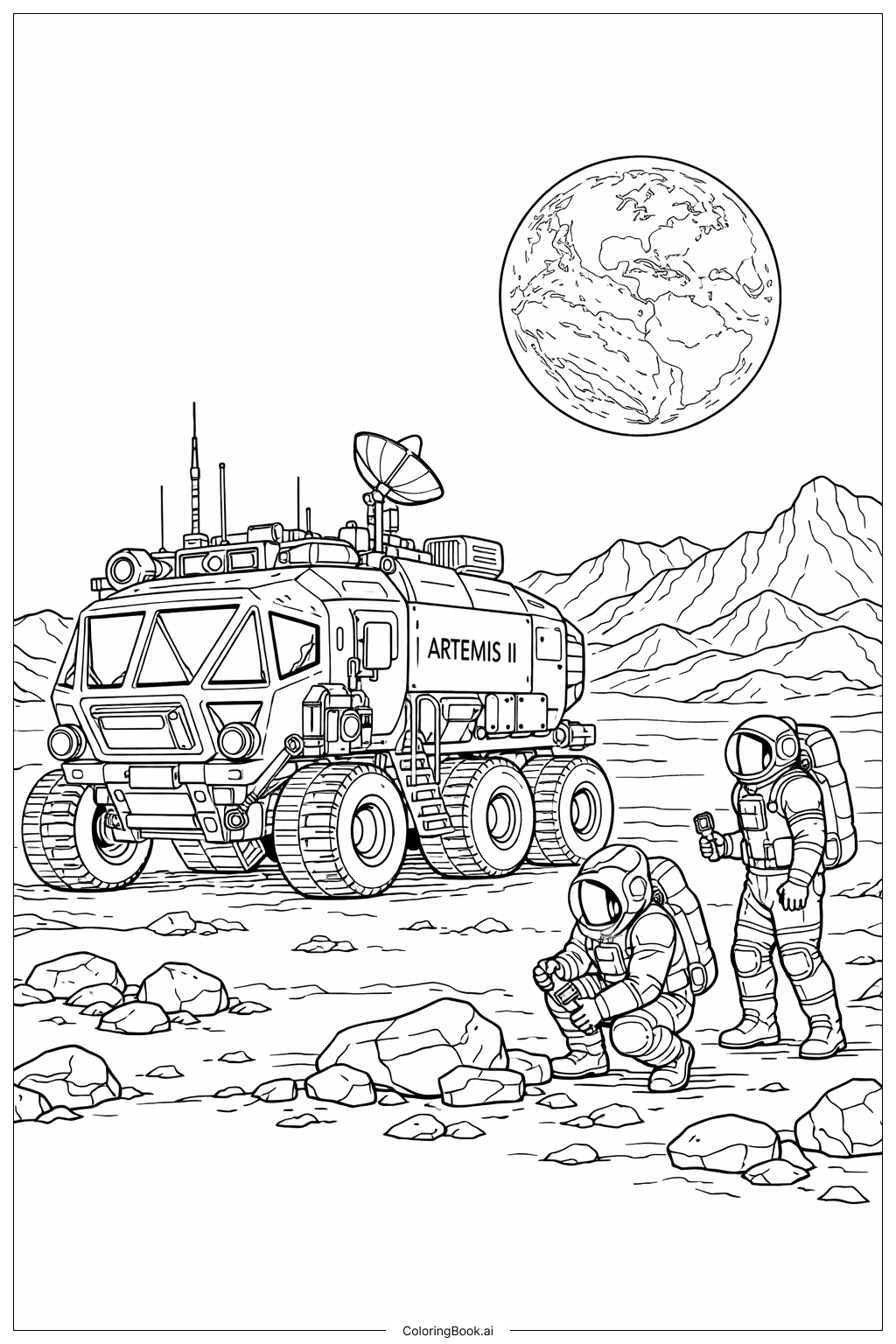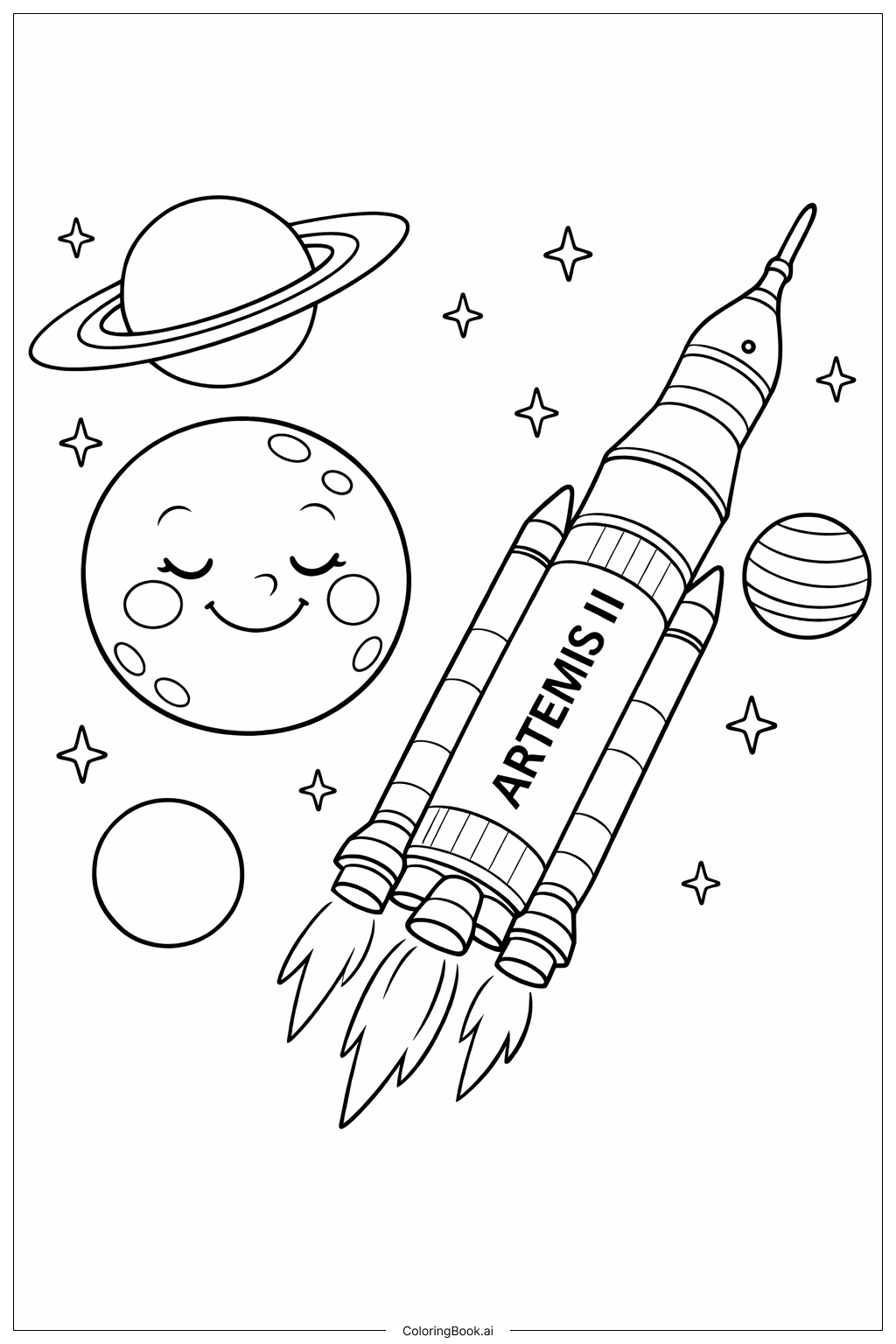
Coloring tips: How to color Artemis II Rocket With Planets coloring page well?
Use vibrant colors to bring this Artemis II Rocket With Planets image to life. Color the rocket body mainly white or silver with bright red or blue details on its boosters and upper sections to highlight its strength. For the planets, try using a variety of colors like orange, green, purple, and blue to show different planetary atmospheres and surfaces. The planet with rings can be shaded a golden yellow or light brown. Add bright yellow or white for stars to make the space sparkle. To create depth, use darker shades around the edges of planets and lighter tones on the rocket windows to show reflections. You can also add gradients in the background to suggest the vastness of space.
Coloring challenges: Which parts are difficult to color and need attention for Artemis II Rocket With Planets coloring page?
• Rocket Details: The Artemis II rocket has many small parts and lines that require careful coloring to stay inside the edges and highlight its structure.
• Planet Patterns: Some planets have rings or crater textures which take patience and attention to detail to color nicely without smudging.
• Scale and Proportion: Balancing colors to differentiate between the large rocket and smaller distant planets can be tricky in order to keep the image balanced.
• Space and Stars: Adding tiny stars around the scene needs a steady hand to keep them small and consistent without overcrowding the image.
• Smooth Gradients: Creating smooth shading on planets and the rocket windows requires blending colors skillfully, which might be challenging for beginners.
Benefits of coloring books: Advantages of drawing Artemis II Rocket With Planets coloring page
Coloring this Artemis II Rocket With Planets image helps improve fine motor skills through careful work on the small details of the rocket and planets. It encourages creativity by allowing the colorist to choose planetary colors and design the outer space scene in their own way. Working on gradients and small stars enhances color blending and attention to subtle visual elements. This activity can also inspire interest in space exploration and science, fueling curiosity about rockets and planets. Finally, completing this detailed scene offers a sense of accomplishment and can boost confidence in artistic skills.