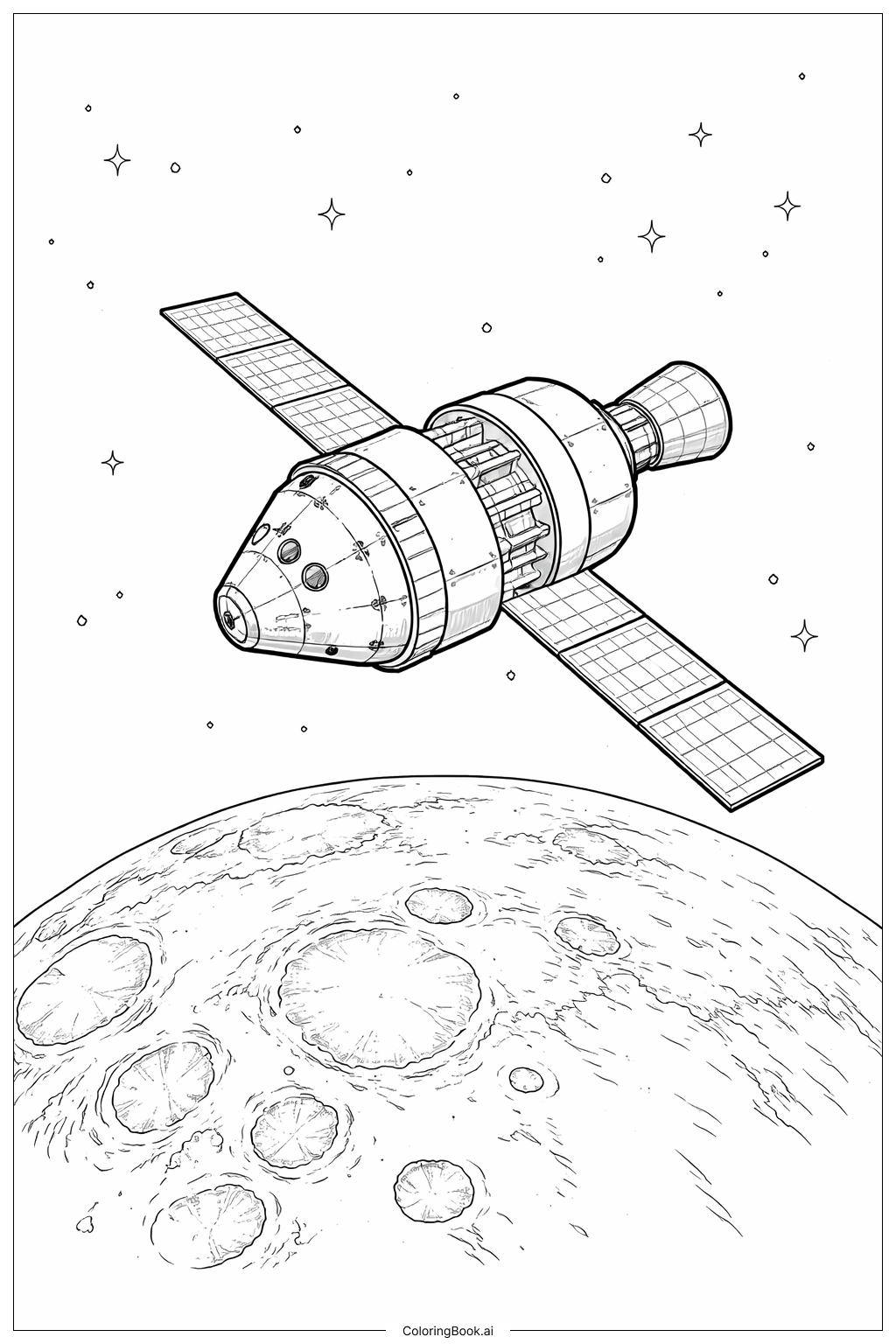
Coloring tips: How to color Artemis II Lunar Orbit View coloring page well?
Start with the darkest areas first. Use black or deep navy blue for the space background. Add small white or pale yellow dots for the stars. For the Moon's surface, try light gray or soft beige. Use darker gray to shade the craters and give the terrain depth. Color Earth in the background with soft blues and greens. For the Artemis II spacecraft, use silver and white for the capsule body. Add gold or bronze tones to the heat shield. The solar panels can be dark blue or purple. Use light yellow for any engine glow. Take your time with small details like panel lines on the spacecraft. This image is a great chance to practice blending light and dark colors to show the beauty of outer space.
Coloring challenges: Which parts are difficult to color and need attention for Artemis II Lunar Orbit View coloring page?
• Space Background Gradients: The deep space background needs a smooth transition from pure black to deep navy or dark purple near the Moon's edge. Achieving this gradient without harsh lines takes patience and careful blending, especially when working with colored pencils or crayons.
• Lunar Surface Texture: The Moon's surface is filled with craters, ridges, and rocky areas of varying depth. Coloring these details requires using multiple shades of gray and carefully applying shadow to give each crater a three-dimensional look. Rushing through this area can make the surface appear flat and dull.
• Spacecraft Panel Details: The Artemis II capsule and service module have many small mechanical details, including panel seams, thrusters, and antenna components. These tiny areas are difficult to color neatly, especially for younger artists. A fine-tipped marker or a sharpened colored pencil works best here.
• Earth in the Background: Earth appears as a small but detailed sphere in the distance. Blending blue and green smoothly while leaving white patches for clouds is a tricky task within such a small space. Using a light touch and layering colors gradually will help create a realistic look.
• Solar Panel Shading: The extended solar panels need careful shading to show their flat, reflective surface catching light from the Sun. Keeping the color even across each panel while adding subtle highlights is a challenge that rewards a steady, controlled hand.
Benefits of coloring books: Advantages of drawing Artemis II Lunar Orbit View coloring page
Coloring this Artemis II Lunar Orbit View page offers many wonderful benefits for kids and adults alike. It sparks curiosity about space exploration and teaches children about real NASA missions in a fun and hands-on way. As young artists color the Moon, spacecraft, and distant Earth, they naturally begin to ask questions about the universe around them.
This page also builds important skills. Staying inside detailed lines improves fine motor control and hand-eye coordination. Choosing colors for stars, craters, and the spacecraft encourages creative thinking and color awareness. Blending shades to show depth and shadow introduces early concepts of light and art technique.
For older children and Adults, this coloring page offers a calm, focused activity that helps reduce stress and improve concentration. Spending time on a detailed scene like this encourages patience and mindfulness.
Coloring together as a family can also inspire great conversations about science, history, and the future of human spaceflight. It connects art and learning in a meaningful way. Whether you are a space fan or just love a beautiful scene, this page invites everyone to explore the wonders of the cosmos one color at a time.