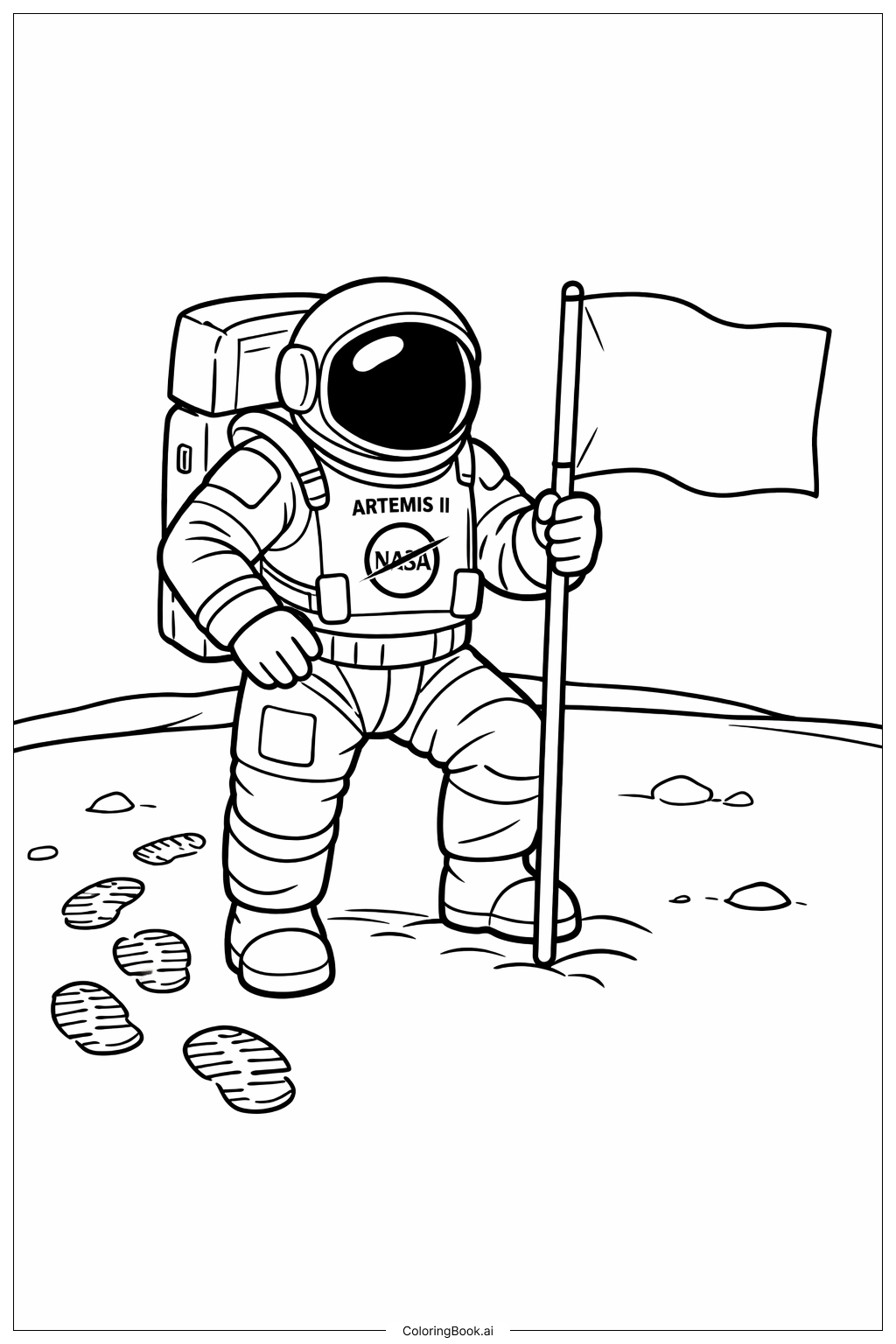
Coloring tips: How to color Artemis II Astronaut Planting Flag coloring page well?
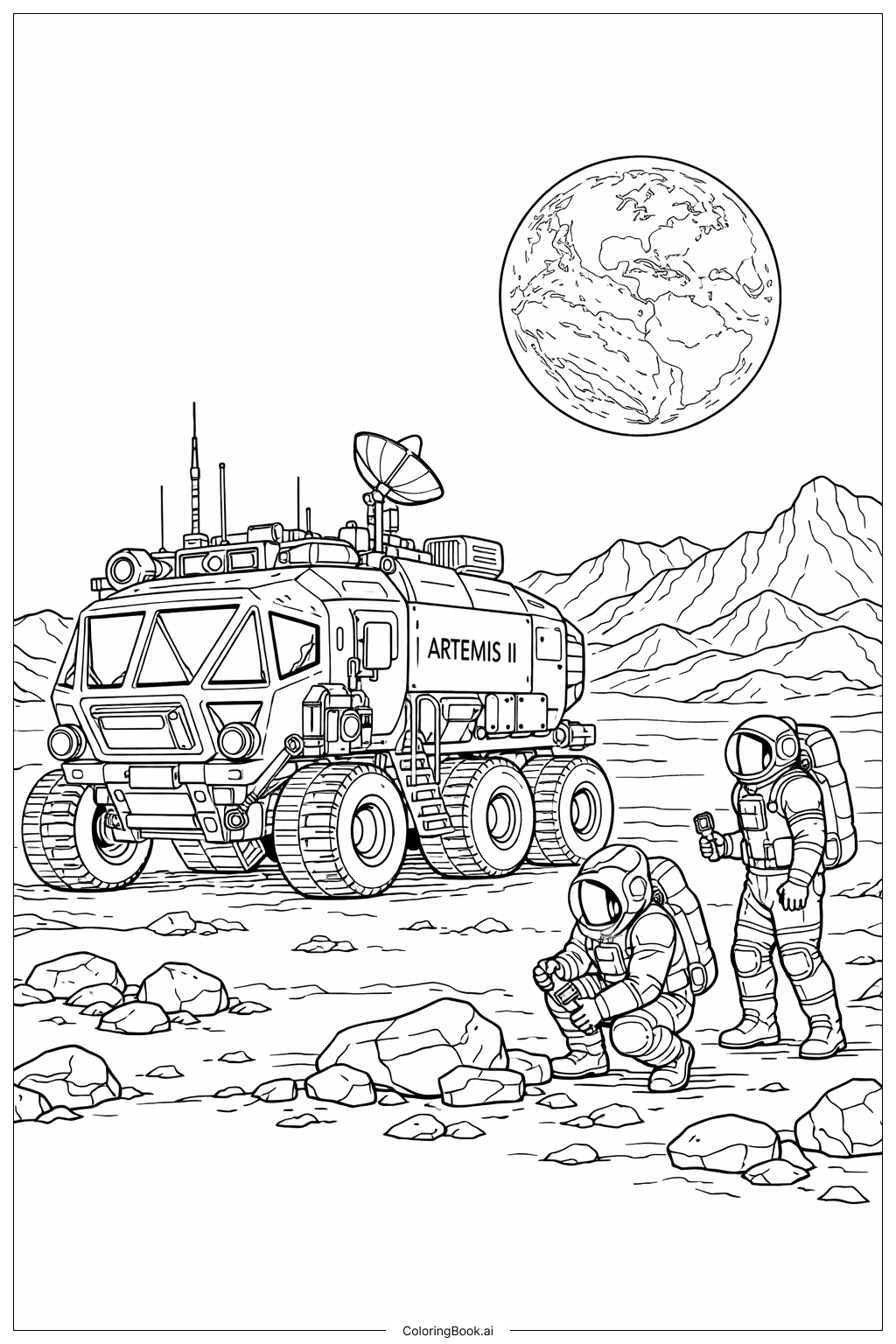
For coloring this Artemis II astronaut image, try using bright whites and silvers for the spacesuit to show its shiny, reflective material. You can color the helmet's visor with a gentle blue or dark gray tint to suggest glass. The lunar surface can be shaded with grays and light browns to create the dusty, rocky look of the Moon. Use deep black or navy blue for the sky, adding tiny white dots for stars. For the flag, use vibrant colors like red, white, and blue or the mission’s official colors to make it stand out. Feel free to get creative with shading to show light and shadow on the astronaut and rocks. Younger artists might enjoy using crayons or colored pencils to bring the scene to life with bold, fun colors.
Coloring challenges: Which parts are difficult to color and need attention for Artemis II Astronaut Planting Flag coloring page?
• Spacesuit Texture: The astronaut’s suit has many folds and layers, which can be tricky to color smoothly while showing light and shadow to give it a three-dimensional feel.
• Helmet Reflection: Coloring the helmet’s reflective visor is challenging because it should look like glass reflecting space and Earth’s glow without being too dark or flat.
• Lunar Surface Details: The Moon’s surface has many small rocks, shadows, and uneven textures that require careful shading to appear realistic instead of flat.
• Flag Design: Keeping the flag’s colors neat and coloring inside the lines while showing its waving motion can be difficult, especially for younger colorers.
• Starry Background: Creating a star-filled sky without making it look messy or too plain requires a balanced approach, adding small white dots that look like distant stars.
Benefits of coloring books: Advantages of drawing Artemis II Astronaut Planting Flag coloring page
Coloring this Artemis II astronaut scene encourages focus and patience as children work on detailed areas like the spacesuit and lunar surface. It helps develop fine motor skills through careful shading and coloring within lines. The image can inspire curiosity about space exploration and science, sparking imagination about what it feels like to be an astronaut. Coloring the flag and space sky also promotes creativity with color choices and contrast, giving a sense of accomplishment when finished. Overall, it combines learning about space with artistic expression, perfect for children interested in adventure and discovery.