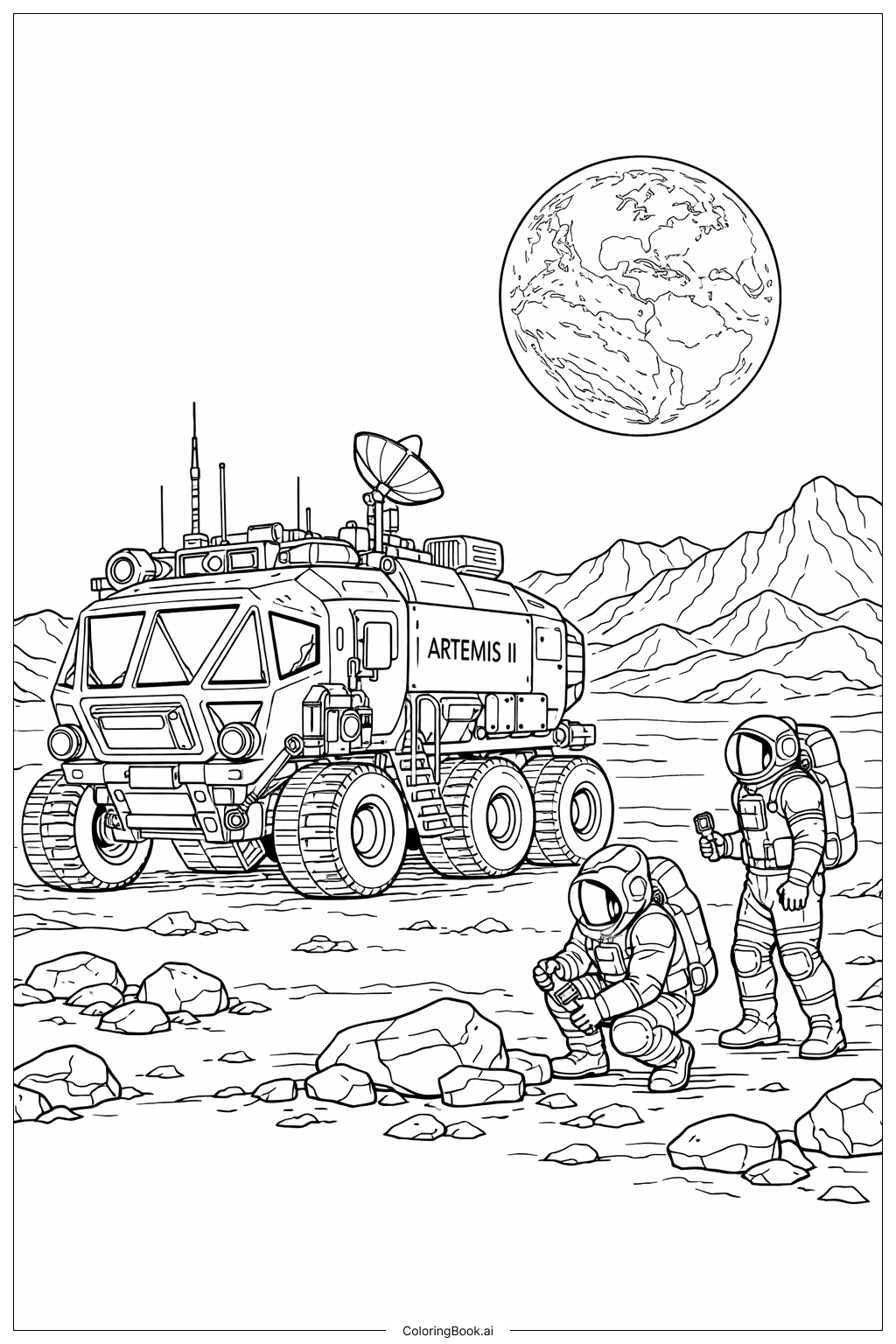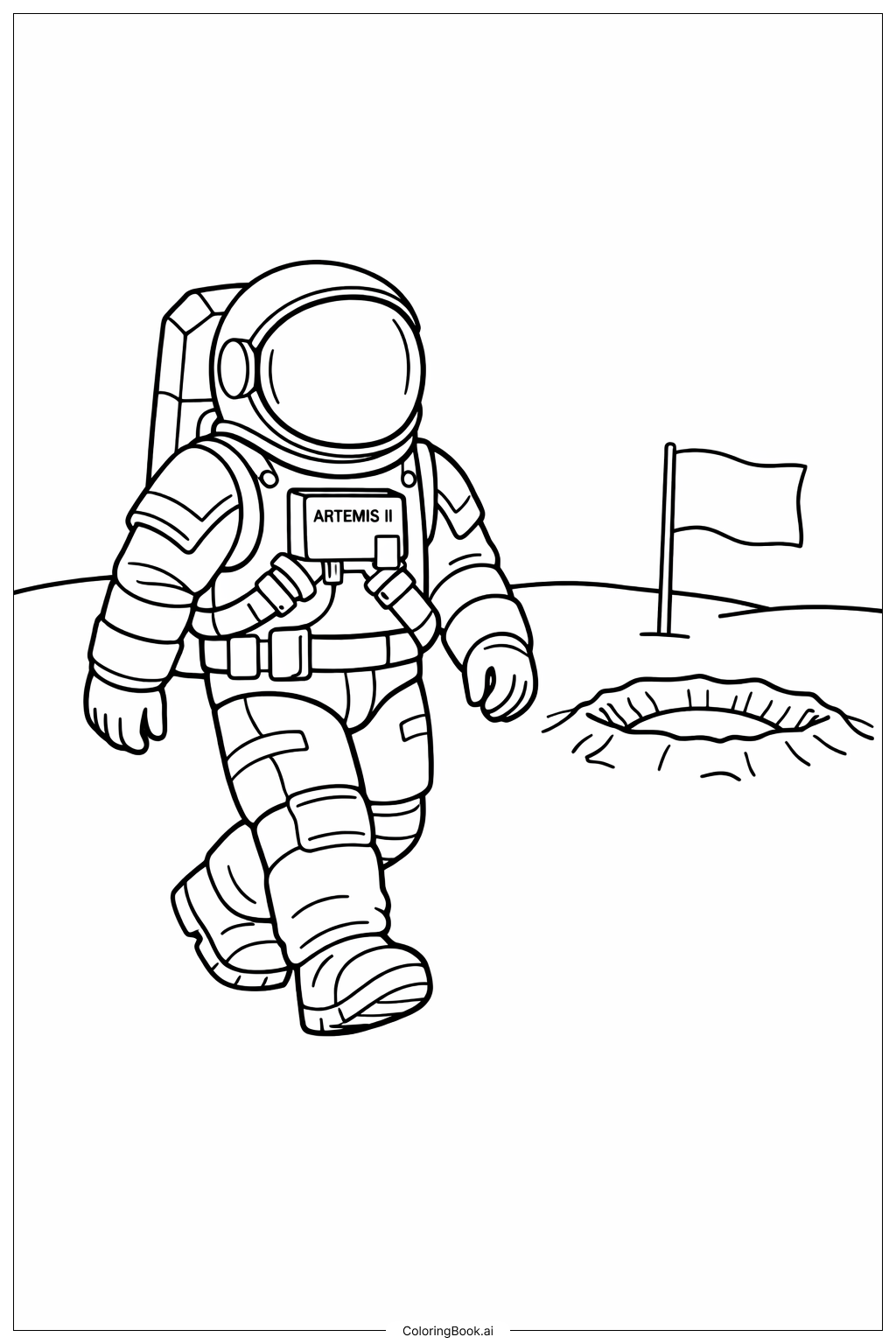
Coloring tips: How to color Artemis II Astronaut Moonwalk coloring page well?
For this image, start by choosing a cool gray or white for the astronaut’s suit to show it properly reflects sunlight. Use silver or light blue for the helmet glass to add a shiny effect. Color the moon’s surface with different shades of gray and hints of brown to show dust and rocks. For the starry sky, dark blue or black work well, with tiny white dots to represent stars. You can add subtle shadows under the astronaut to give depth. Feel free to use a mix of soft and sharp colors to highlight the suit’s panels and the uneven lunar terrain. This will make the coloring page come alive with both realistic tones and a hint of imagination.
Coloring challenges: Which parts are difficult to color and need attention for Artemis II Astronaut Moonwalk coloring page?
• Detailing the Space Suit: The astronaut’s suit has many small parts such as joints, patches, and the life support backpack which require careful coloring to keep the details clear without making the image look messy.
• Helmet Reflection: Coloring the helmet’s glass needs a mix of transparency and reflections, which can be hard to balance so the face underneath remains visible but shiny effects stand out.
• Lunar Surface Texture: The Moon’s uneven ground has many craters and rocks which need different shades and careful blending to show depth and texture realistically.
• Starry Background: Adding tiny stars in a large dark space can be challenging; too few stars might make it look empty, while too many can distract from the astronaut.
• Maintaining Contrast: It’s important to keep a good contrast between the astronaut and the background so the figure stands out and the details do not blend into the dark space.
Benefits of coloring books: Advantages of drawing Artemis II Astronaut Moonwalk coloring page
Coloring this image helps improve attention to detail because of the many small parts on the astronaut’s suit and the textured lunar surface. It encourages creativity by allowing you to choose colors for light, shadow, and reflection. Working on shading and layering colors enhances fine motor skills and hand-eye coordination. The space theme can inspire curiosity about space exploration and science. This activity also promotes patience and focus, as you carefully color the different parts to bring the picture to life while learning about the Artemis II mission.