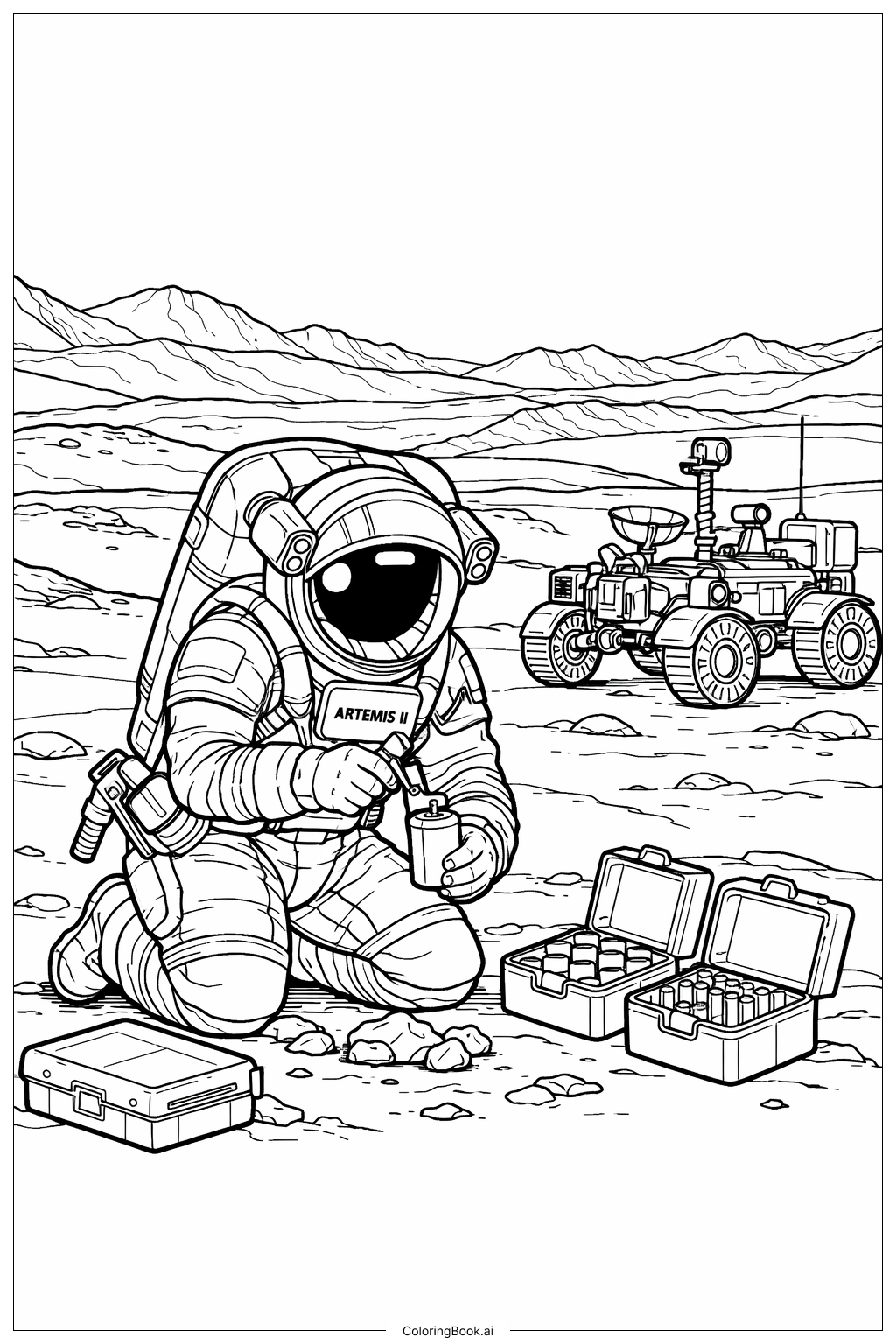
Coloring tips: How to color Artemis II Astronaut Collecting Moon Samples coloring page well?
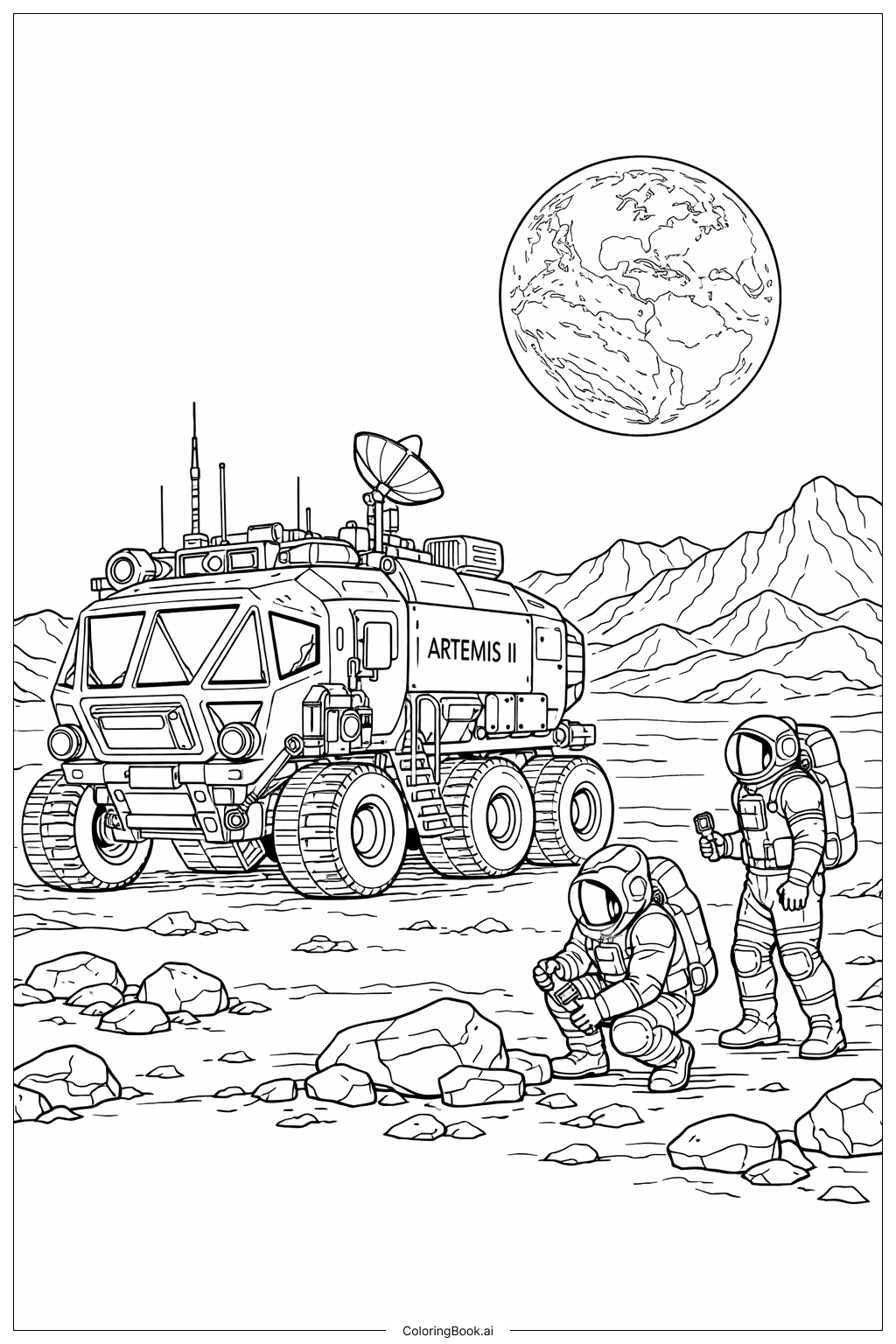
Use shades of white and light gray to color the astronaut’s spacesuit, adding shadows to show its folds and thickness. For the moon’s surface, choose different grays to highlight the rocky textures and craters. Add subtle touches of blue and green to the Earth in the sky to make it stand out. Use black or dark navy for the space background to create contrast. Try coloring the astronaut’s gloves and helmet details in metallic silver to give them a realistic look. You can also add hints of green or yellow on the sample container to make it pop. Keep the colors simple and realistic to reflect the space theme.
Coloring challenges: Which parts are difficult to color and need attention for Artemis II Astronaut Collecting Moon Samples coloring page?
• Spacesuit Details: The astronaut’s suit includes many small parts like tubes, gloves, and patches that require careful coloring to keep it neat and realistic.
• Moon Terrain Texture: Capturing the rough and uneven surface of the moon with craters and rocks can be challenging to show depth using only shades of gray.
• Earth in the Sky: The Earth is quite small and detailed from this distance, so coloring its colors carefully to make it recognizable can require patience.
• Lighting and Shadows: The harsh sunlight on the moon creates sharp shadows that should be reflected in the astronaut and terrain to make the scene believable.
• Space Background: Coloring a smooth, dark space sky evenly without over-coloring or uneven patches can be tricky for young colorers.
Benefits of coloring books: Advantages of drawing Artemis II Astronaut Collecting Moon Samples coloring page
Coloring this Artemis II astronaut image helps children develop fine motor skills by focusing on the intricate details of the spacesuit and moon surface. It encourages learning about space exploration and science, sparking curiosity about astronauts and the moon. The image also promotes patience and attention to detail as they work on shading shadows and textures. Coloring the realistic space scene inspires creativity while reinforcing understanding of colors and contrast. Overall, it is a fun and educational activity that connects kids to the exciting adventures of space travel.