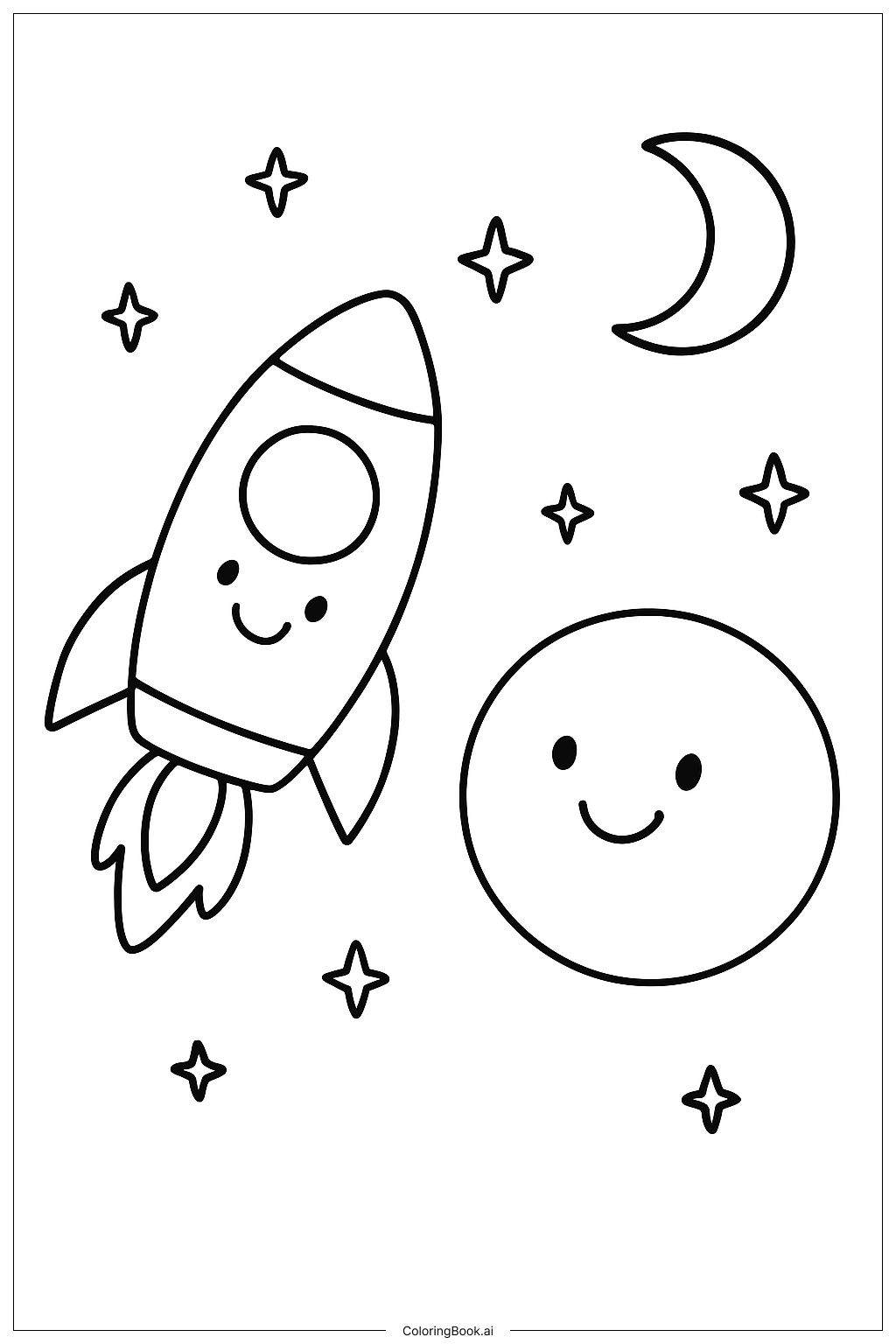
Coloring tips: How to color Aesthetic Space Adventure coloring page well?
Start with the astronaut by choosing metallic shades like silver, gray, or white for the spacesuit, adding darker grays for shadows and dimension. Use bright colors for any patches or equipment details to make them stand out. For the planets, let your creativity soar with vibrant purples, blues, oranges, and reds, giving each celestial body its own unique palette. Add yellow or beige rings to Saturn-like planets. Color the stars with bright yellows and whites, or try light blues for variety. The background space can be deep navy, midnight blue, or even purple and black gradients. Add soft pinks, purples, and blues to nebula areas for a dreamy aesthetic look. Use colored pencils or markers to create smooth blends between cosmic colors.
Coloring challenges: Which parts are difficult to color and need attention for Aesthetic Space Adventure coloring page?
• Spacesuit Details: The astronaut's suit contains many small technical elements including tubes, panels, buckles, and equipment attachments that require careful coloring within tight spaces. Young colorists may find it challenging to stay within these intricate lines and maintain consistency across similar components. Using fine-tipped markers or sharp colored pencils helps achieve clean results in these detailed areas.
• Planetary Textures and Shading: Creating realistic or visually appealing planets requires understanding of shading and color blending to give spheres dimension and depth. Flat coloring makes planets look two-dimensional, while proper gradient techniques bring them to life. Children may need practice blending light and dark shades smoothly to create the curved surface appearance that makes planets look three-dimensional and realistic.
• Space Background Gradients: Achieving a beautiful cosmic background involves creating smooth color transitions rather than solid blocks of color. Blending deep blues into purples or blacks requires patience and the right technique, whether using overlapping strokes or gentle pressure variations. This can be challenging for younger artists who are still developing their blending skills and color theory understanding.
• Star Field Balance: Distributing and coloring numerous small stars across the composition while maintaining visual balance requires planning and a steady hand. Making stars too uniform can look repetitive, while random placement needs to avoid clustering or bare spots. Deciding which stars should be brighter or larger adds another layer of artistic decision-making that develops with practice.
Benefits of coloring books: Advantages of drawing Aesthetic Space Adventure coloring page
This space adventure coloring page offers wonderful developmental benefits for young artists. It encourages imagination and curiosity about space exploration, science, and the universe beyond our planet. The detailed spacesuit components help develop fine motor skills and hand-eye coordination as children carefully color within small areas. Working with the cosmic theme introduces color theory concepts like creating gradients, choosing complementary colors for different planets, and understanding light and shadow. The composition teaches spatial awareness as colorists decide how to differentiate foreground elements like the astronaut from background stars and distant planets. Completing this detailed page builds patience, focus, and a sense of accomplishment. The aesthetic space theme also provides a calming, meditative coloring experience while sparking interest in astronomy and STEM subjects.