Coloring tips: How to color ABC Flower Pot coloring page well?
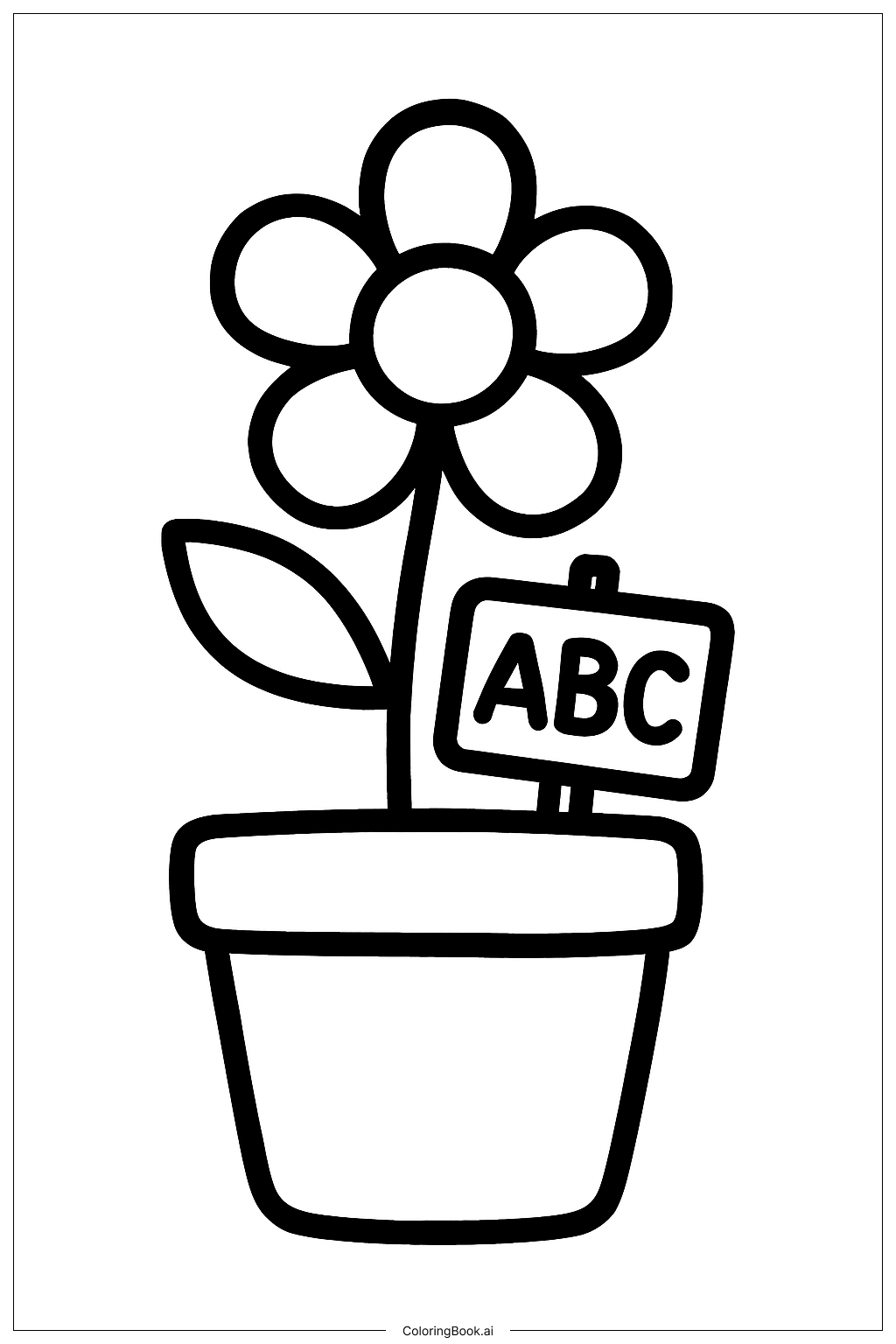
Start by coloring the flower pot first. Try a warm color like red, orange, or terracotta to make it look classic and earthy. For the letters A, B, and C on the pot, use contrasting colors like white, yellow, or blue so they stand out clearly. Move on to the flowers next. Each flower can be a different color — try pink, purple, yellow, or red for a fun and lively look. Color the centers in orange or brown. Use different shades of green for the leaves and stems to add depth. Darker green on the edges and lighter green in the middle works great. The background can be left white or lightly shaded in pale blue or yellow to give a sunny, cheerful feeling. Take your time with each section and don't worry about staying perfectly inside the lines — just enjoy the process!
Coloring challenges: Which parts are difficult to color and need attention for ABC Flower Pot coloring page?
• Lettering on the Pot: The letters A, B, and C are placed directly on the curved surface of the pot. Coloring inside and around these letters without smudging or overlapping into the pot's base color can be tricky. Use a fine-tipped colored pencil or marker to carefully outline each letter before filling in the surrounding area.
• Small Flower Centers: The round centers of each flower are relatively small and tightly bordered by petals. Filling them in neatly with a different color requires steady hands and a sharp coloring tool. Young colorists may find it helpful to use a thin marker or a well-sharpened pencil for this area.
• Leaf and Stem Shading: The leaves and stems overlap in places, which can make it hard to decide where one color ends and another begins. Choosing two or three different shades of green and applying them thoughtfully to separate each element will help the plant look natural and full.
• Petal Separation: Each flower has multiple petals that sit close together. Keeping each petal a distinct shade — or at least making the borders visible — takes patience. Lightly outlining petals in a darker version of your chosen color before filling them in can help define each one clearly.
• Color Balance Across the Whole Image: With so many elements — pot, letters, flowers, leaves, and stems — keeping the overall color palette balanced and visually pleasing can be a challenge. Try to plan your color choices ahead of time so no single area looks too heavy or too dull compared to the rest.
Benefits of coloring books: Advantages of drawing ABC Flower Pot coloring page
Coloring the ABC Flower Pot page offers a wonderful mix of creative and educational benefits, especially for young children. Here is what kids can gain from this activity:
Letter Recognition: The bold A, B, and C on the pot give children a fun, low-pressure way to become more familiar with the alphabet while doing something they enjoy.
Fine Motor Skills: Carefully coloring within the outlines of petals, leaves, letters, and the pot itself helps children develop hand control and coordination — skills that are essential for writing.
Color Awareness: Choosing colors for flowers, leaves, and the pot encourages kids to think about color combinations, contrast, and how colors interact with each other.
Focus and Patience: Working through a detailed image like this teaches children to slow down, concentrate, and complete a task from start to finish — a great habit to build early.
Creative Expression: There are no wrong color choices here. Kids get to make their own decisions, which builds confidence and nurtures a sense of personal style.
Relaxation and Joy: Coloring is a calm, screen-free activity that helps children unwind and feel a sense of pride and satisfaction when they finish their colorful masterpiece.