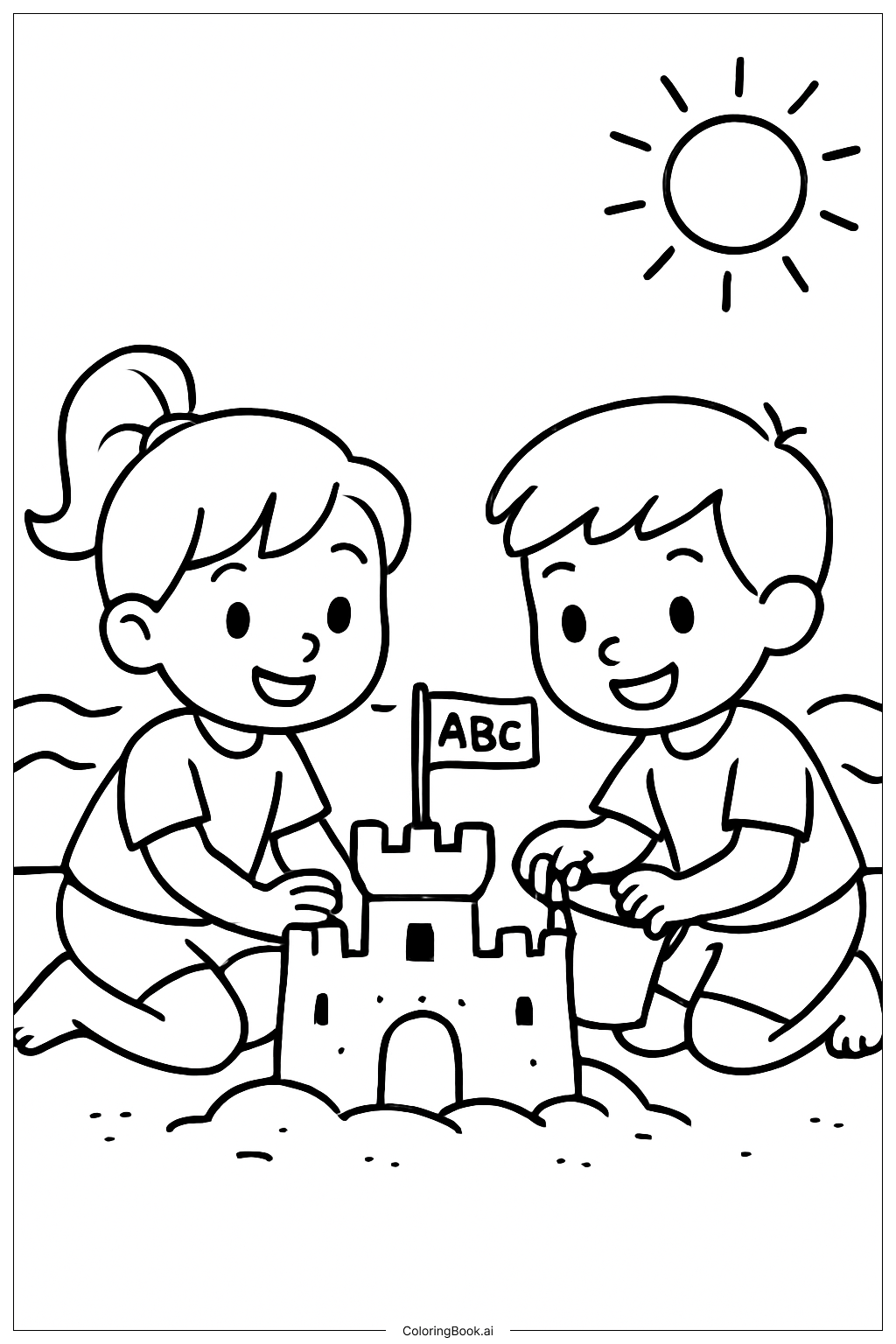
Coloring tips: How to color ABC Beach Day coloring page well?
Start with the sky and ocean using shades of blue. Use a lighter blue for the sky and a deeper teal or navy for the waves. Color the sandy beach in warm yellows and tans. Give the sun a bright yellow or orange glow. Use bold, vibrant colors for the letters A, B, and C to make them stand out. Try red, blue, and green to keep things fun and easy to identify. Color the beach ball in alternating bright colors like red, yellow, and blue. Use soft pinks and whites for the seashells. Palm trees look great in green and brown. For the cartoon characters or sea creatures, choose cheerful colors like orange, purple, or pink. Encourage kids to mix light and dark shades of the same color to add depth. There are no strict rules here — let creativity lead the way and make the beach scene as colorful and joyful as possible.
Coloring challenges: Which parts are difficult to color and need attention for ABC Beach Day coloring page?
• Letter Outlines and Details: The letters A, B, and C are central to this image and may have decorative edges or patterns inside them. Staying within the outlines of each letter while also coloring any inner details requires a steady hand and careful attention, especially for younger children who are still developing fine motor skills.
• Small Beach Elements: Items like seashells, tiny waves, and small sea creatures have narrow spaces that can be tricky to color neatly. Using a fine-tipped coloring tool helps here, but it still demands patience and focus to fill each small shape without going outside the lines.
• Transitioning Between Sand and Water: The border where the beach meets the ocean can be visually complex. Blending sandy yellow-tan tones smoothly into ocean blues without muddying the colors takes practice. Keeping each section clean while maintaining a natural-looking transition is a common challenge.
• Background Depth and Layering: Elements like palm trees, the sky, and distant waves appear at different levels in the scene. Coloring them in a way that suggests depth — using lighter shades in the background and richer tones in the foreground — requires some understanding of basic color perspective, which can be challenging for beginners.
• Consistency Across the Full Scene: With so many different elements spread across the page, maintaining a consistent and harmonious color palette throughout the entire image can be difficult. It is easy to end up with clashing colors if each section is colored without thinking about the overall look.
Benefits of coloring books: Advantages of drawing ABC Beach Day coloring page
Coloring this ABC Beach Day page offers a wonderful mix of fun and learning. For young children, tracing and filling in the letters A, B, and C helps reinforce early alphabet recognition in a hands-on, engaging way. Connecting letters to a joyful beach setting makes the learning experience memorable and positive.
Working through the many details of the scene — shells, waves, characters, and letters — builds fine motor skills and hand-eye coordination. Children practice controlling their coloring tools, which directly supports handwriting development.
The variety of shapes and textures in this image encourages creative thinking. Kids get to make color choices on their own, building confidence and a sense of personal expression. Deciding which colors to use for the ocean, the sand, or the letters promotes independent decision-making.
Coloring also has a calming effect. The focused, repetitive motion of filling in shapes helps children settle their minds and develop concentration. It is a screen-free activity that encourages stillness and patience.
Finally, completing a full page like this gives kids a real sense of accomplishment. Seeing their finished, colorful beach scene is a source of pride that boosts self-esteem. It is a simple but meaningful way to combine creativity, learning, and relaxation all in one activity.