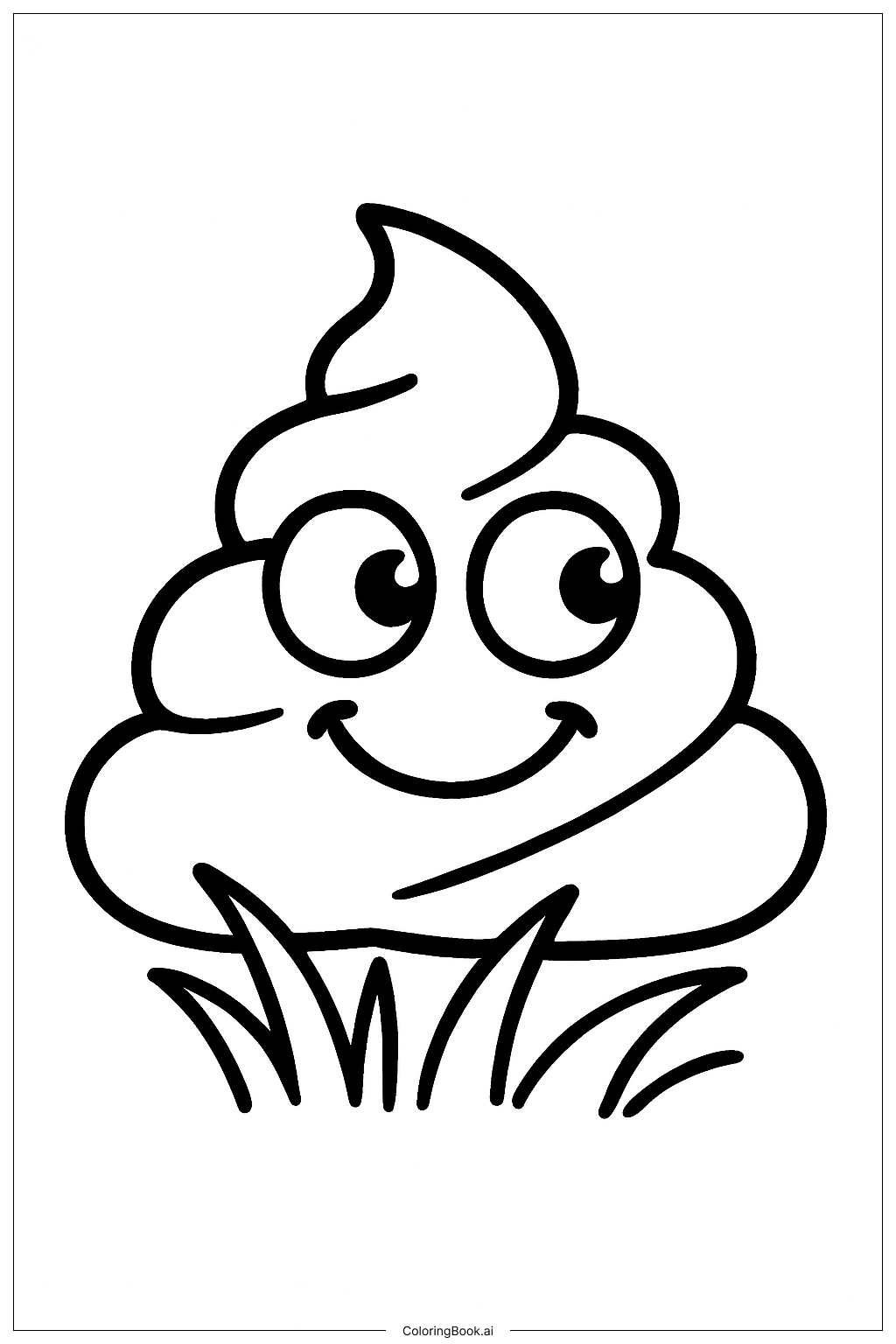
Coloring tips: How to color Poop Emoji Rolling on Grass coloring page well?
For this image, use warm brown shades to color the Poop Emoji's body. You can blend lighter browns for highlights and darker browns for shading to add depth. Bright white can be used to color the eyes and teeth to make them stand out. For the grass, try different shades of green—light green for sunlit areas and darker green for shadows under the Poop Emoji. Adding some yellow or even tiny flowers with red or blue colors can make the grass more lively. Keep the colors cheerful and bright to match the happy mood of the scene.
Coloring challenges: Which parts are difficult to color and need attention for Poop Emoji Rolling on Grass coloring page?
• Small Details on the Poop Emoji: The curves and spirals of the Poop Emoji’s shape may be tricky to color neatly, especially for younger children. They need to stay inside the lines to keep the smooth, rounded look.
• Facial Features: Coloring the eyes and smile requires care so the expression remains friendly. Small mistakes can easily change how the emoji looks.
• Grass Texture: The grass includes many thin blades and some overlapping shapes. This requires patience to color each section distinctly without blending too much.
• Shading and Highlights: Adding shadows and highlights can be challenging but helps create a 3D effect. Beginners might find it hard to decide where to use darker or lighter shades.
• Keeping the Background Clean: Since the grass covers the background, it might be difficult to prevent coloring outside the edges and mixing colors unintentionally.
Benefits of coloring books: Advantages of drawing Poop Emoji Rolling on Grass coloring page
Coloring this image helps children develop fine motor skills through careful coloring of curves and small details. It encourages creativity by allowing them to choose different shades for the Poop Emoji and the grass. Working on the grass texture improves patience and attention to detail. Using shading techniques can introduce basic lessons in light and shadow, fostering artistic growth. Finally, coloring this playful and funny image can boost mood and make the activity more fun and engaging for kids aged 4 to 16.