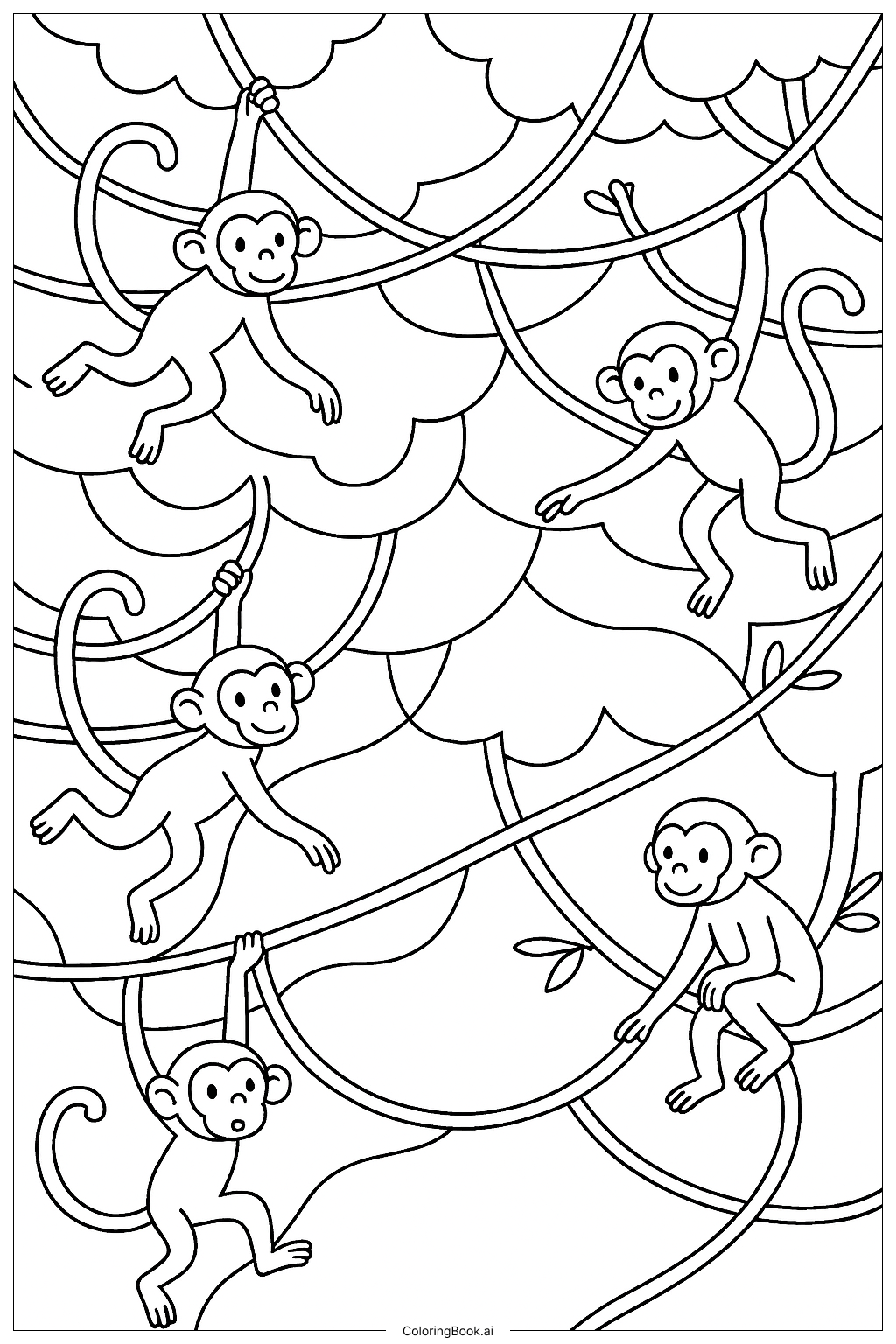
Coloring tips: How to color Zoo Animal Monkeys Swinging In Vines coloring page well?
For this image, you can use different shades of brown and gray to color the monkeys’ fur, adding lighter colors like beige or cream on their faces and bellies to make them look realistic. The vines are perfect for using rich greens to show their freshness and vibrancy. Don’t hesitate to mix different greens, like dark green and bright lime, for leaves to give depth. The background can be colored with earth tones like browns and soft yellows to suggest the forest floor and sunlight filtering through. You might add touches of blue or purple in the shadows for contrast. Try using colored pencils or crayons for details on the monkeys’ faces and fingers to bring out their expressions.
Coloring challenges: Which parts are difficult to color and need attention for Zoo Animal Monkeys Swinging In Vines coloring page?
• Detail Variety: The monkeys have lots of small features like their fingers, toes, and facial expressions, which require careful coloring to avoid going outside the lines.
• Overlapping Elements: The vines and leaves overlap with the monkeys in many places, making it tricky to choose which areas to color first and how to keep the colors from blending unintentionally.
• Fine Line Work: The twisting vines have thin curves that challenge motor skills and require steady hand control to color cleanly.
• Shading Challenge: To make the monkeys and vines look three-dimensional, you need to experiment with shading and blending, which can be difficult for younger children.
• Color Choices: Selecting colors that show natural jungle tones and still make the monkeys stand out requires some planning and creativity, especially with many similar greens and browns.
Benefits of coloring books: Advantages of drawing Zoo Animal Monkeys Swinging In Vines coloring page
Coloring this picture helps develop fine motor skills because it involves careful coloring of many small parts like hands and vines. It encourages creativity as children decide how to use different colors for natural materials like fur and leaves. The complexity of overlapping elements also improves focus and patience while filling in spaces. Kids can learn about monkeys and their jungle environment through this fun activity, deepening their appreciation for animals and nature. Coloring this dynamic scene boosts hand-eye coordination and allows for self-expression while engaging in a relaxing and educational pastime.