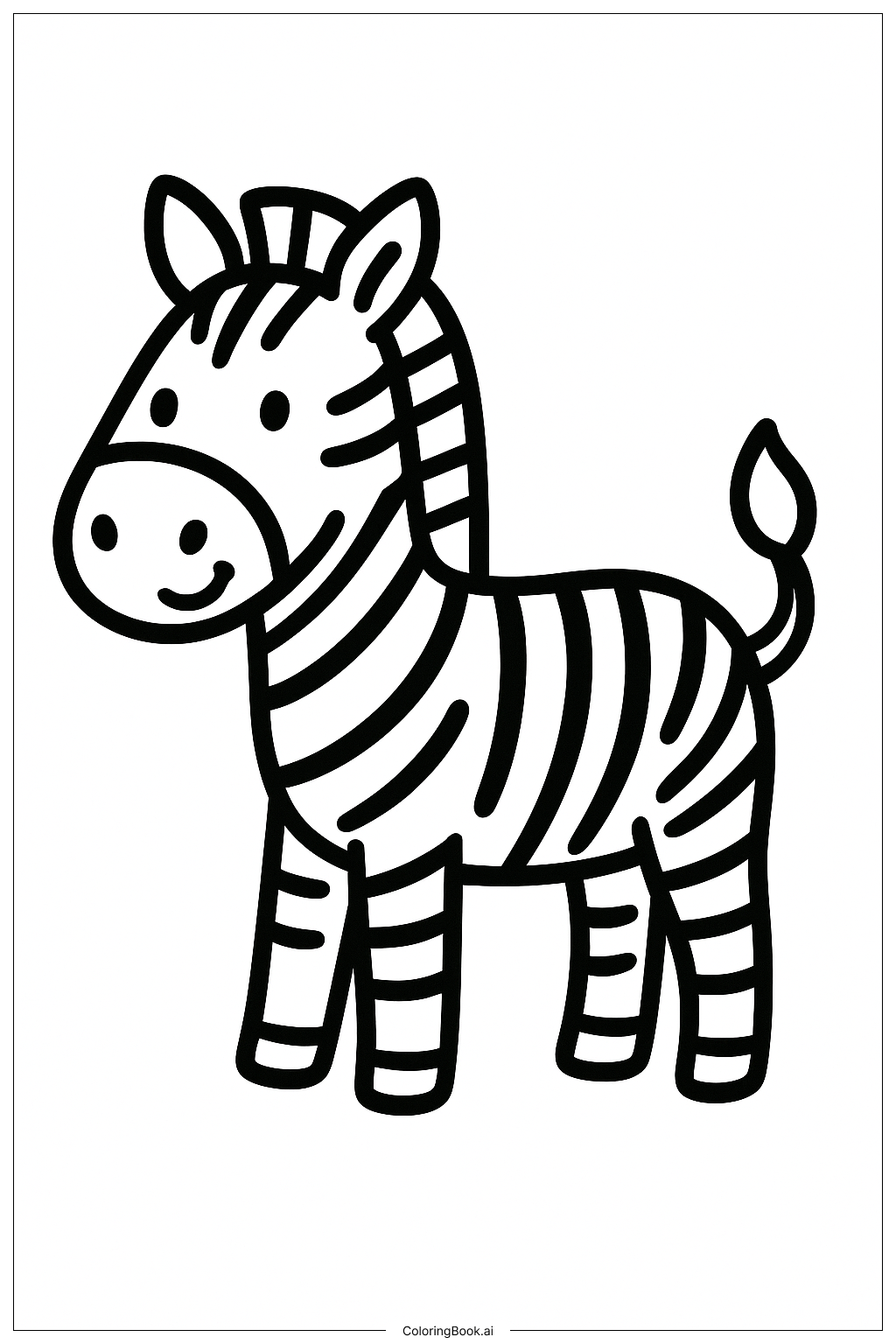
Coloring tips: How to color Zebra With Simple Pattern coloring page well?
Start by choosing a base color for the zebra's body. Traditional zebras are black and white, but feel free to get creative! Try light gray or cream for the base coat. Use black or dark navy for the bold stripes. You can also try a fun, colorful version — use purple stripes on a yellow body, or rainbow stripes for a magical look. Color the mane and tail a slightly darker shade than the body to add depth. Use a soft brown or golden yellow for the hooves. For the eyes, use dark brown or black with a small white dot to make them look shiny and alive. Add a light blue or green background to make the zebra stand out. Grassy patches or a simple sky behind the zebra can make the scene feel more complete. Take your time with the stripes — staying inside the lines helps make the finished picture look neat and polished. Most importantly, have fun and make it your own!
Coloring challenges: Which parts are difficult to color and need attention for Zebra With Simple Pattern coloring page?
Coloring this zebra image looks simple at first, but there are a few tricky spots to watch out for. Here are the main challenges you might face:
• Stripe Consistency: The zebra's body is covered with many stripes of varying shapes and sizes. Keeping each stripe the same color and making sure they do not bleed into each other requires a steady hand and careful attention. This can be especially tricky in curved areas where the stripes bend around the body.
• Small Detail Areas: Around the face, ears, and legs, the stripes become smaller and closer together. These tight spaces are harder to color neatly, especially with thick crayons or markers. Colored pencils or fine-tip markers work best in these sections.
• Mane and Tail Texture: The mane along the neck and the tail have a flowing, slightly layered look. Blending two shades of the same color — one lighter, one darker — can help show depth and texture, but this technique takes patience and practice.
• Color Contrast Balance: If you choose non-traditional colors for the stripes, making sure there is enough contrast between the stripe color and the body color is important. Too similar in shade and the stripes will not stand out clearly, losing the bold zebra look.
• Background Integration: Deciding how to color the background without it clashing with the zebra's busy stripe pattern can be a challenge. A simple, calm background color works best to let the zebra remain the focal point of the image.
Benefits of coloring books: Advantages of drawing Zebra With Simple Pattern coloring page
Coloring this zebra page offers many wonderful benefits for kids and beginners alike. Working with the zebra's repeating stripe pattern is a great way to practice focus and concentration. Staying inside the lines and keeping the stripes consistent helps build fine motor skills and hand control, which are important for writing and everyday tasks.
This image also encourages creativity. Children can follow nature's black-and-white design or invent their own colorful zebra — both choices are equally valid and fun. Making those decisions builds confidence and independent thinking.
The simple, clear design of this page makes it approachable for younger children, while the detail in the stripes and facial features gives older kids something more challenging to work on. This makes it a great activity for a wide age range.
Coloring is also a calming, relaxing activity. Focusing on a creative task like this can reduce stress and help kids unwind after a busy day. It encourages mindfulness without screens or pressure.
Finally, completing a coloring page gives children a real sense of accomplishment. Finishing the zebra and seeing the colorful result is rewarding and motivating, encouraging them to keep creating and exploring art.