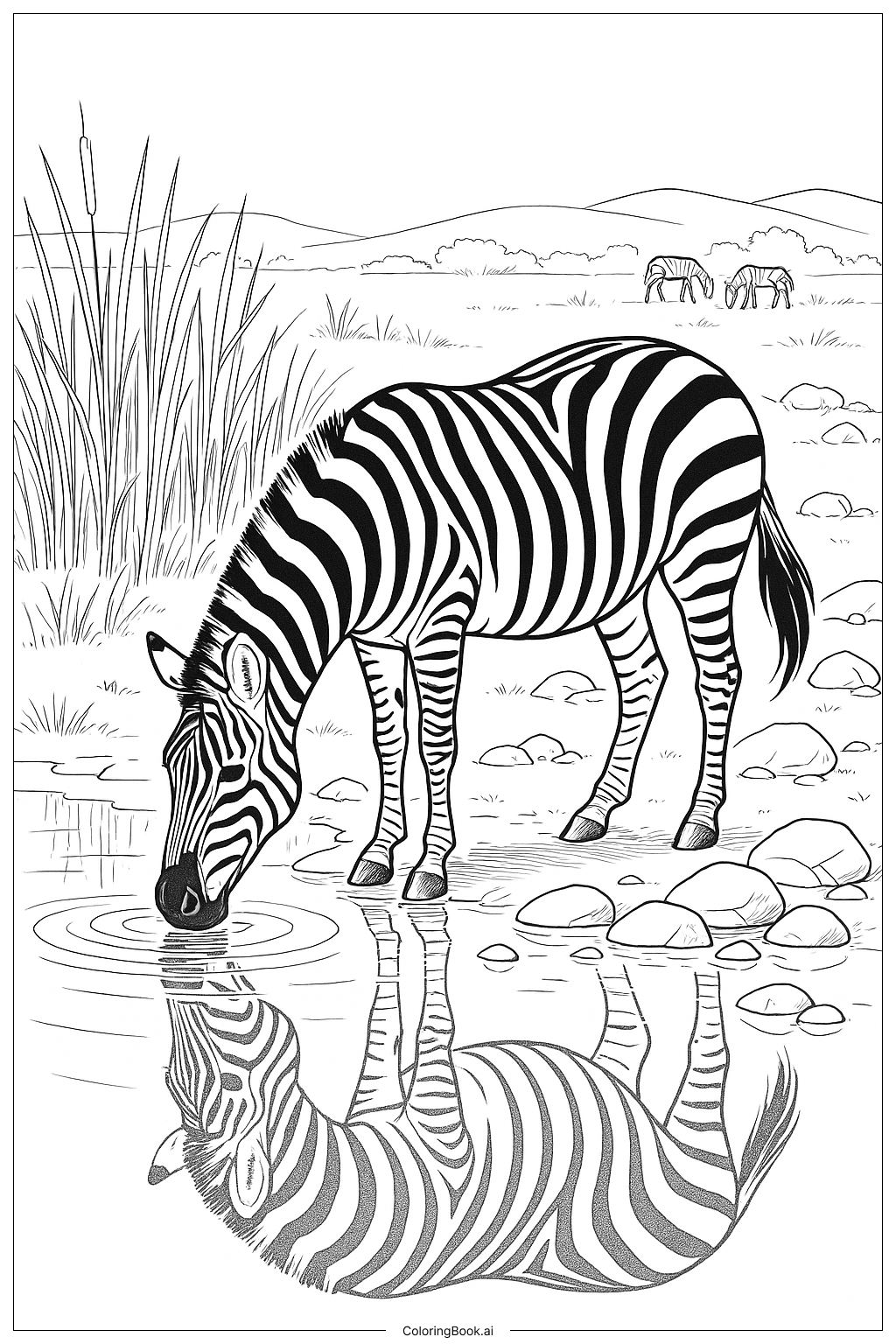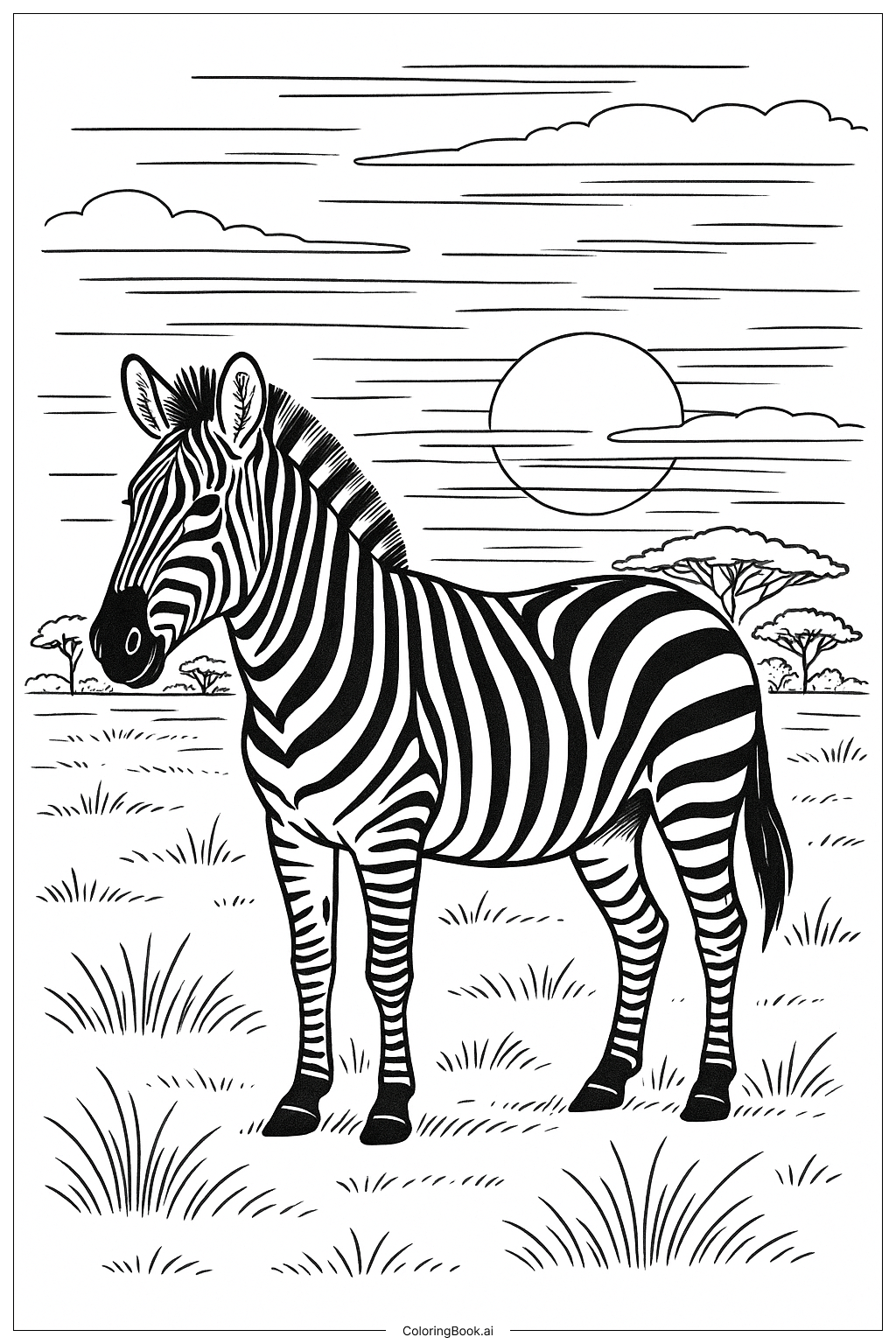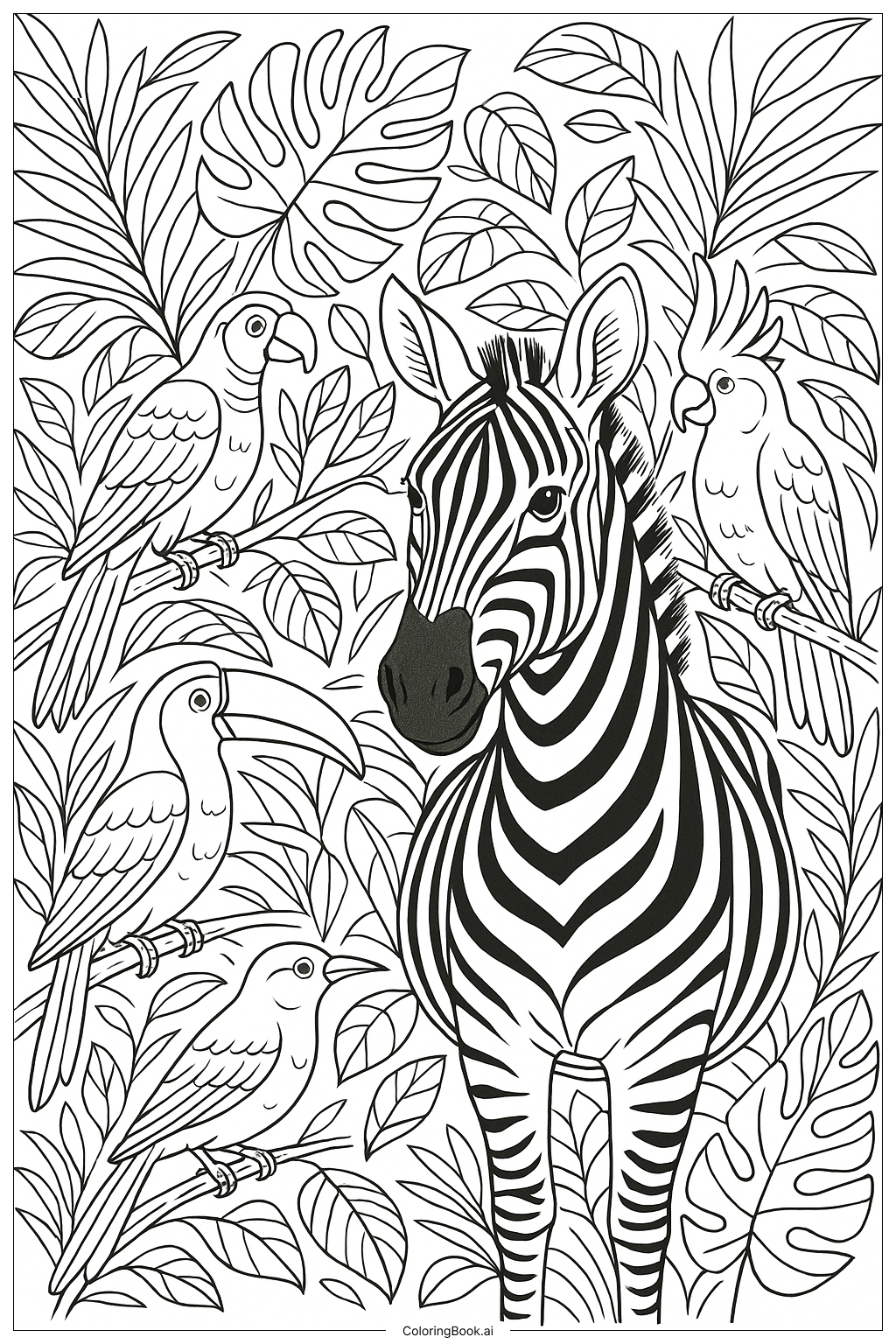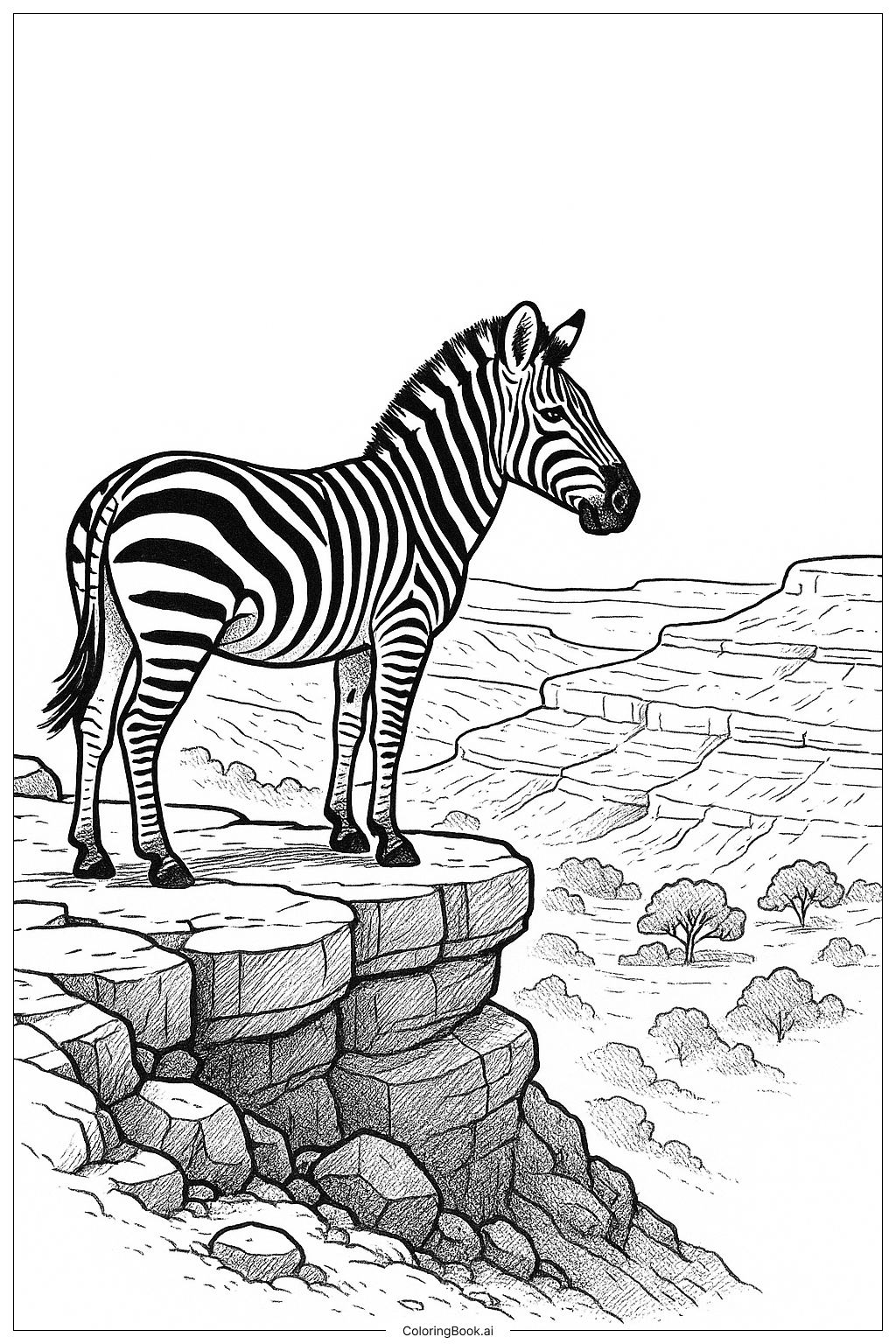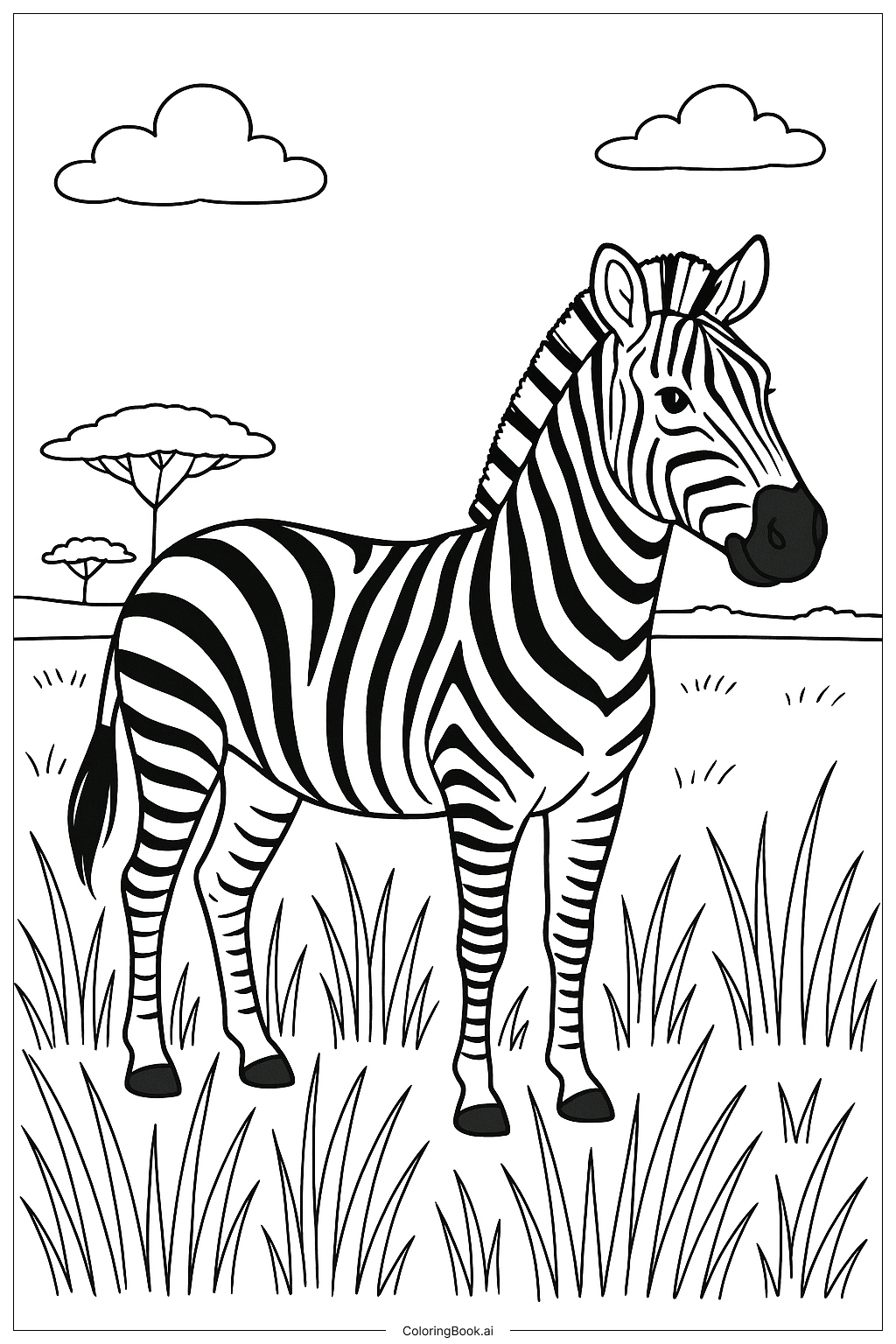
Coloring tips: How to color Zebra in Tall Grass coloring page well?
To color this image, start by using light green and yellow shades for the tall grass to give it a warm, natural feel. You can mix different greens to make the grass look lively and varied. For the Zebra’s body, use bold black for the stripes and leave the white stripes blank or use a very light gray for some shading. Adding soft shadows under the Zebra and between the grass will create depth. You can also add hints of brown or tan on the Zebra’s face or ears for realism. Lastly, use gentle blues or warm tones for the background if you want to add more color beyond the main subjects.
Coloring challenges: Which parts are difficult to color and need attention for Zebra in Tall Grass coloring page?
• Pattern Complexity: The Zebra’s signature black and white striped pattern requires careful attention to detail. Staying inside the narrow stripes can be challenging for younger colorers. • Tall Grass Details: The grass blades overlap and intertwine, which means colorers must use varied green shades while avoiding coloring outside the lines. • Contrast Balancing: Maintaining the strong contrast between the Zebra’s stripes and the surrounding grass is important so the Zebra stands out clearly. • Small Areas: The Zebra’s face and legs have smaller sections, demanding precision to avoid mixing colors unintentionally. • Layering Shadows: Creating the illusion of depth with grass layers and shadows under the Zebra requires blending and layering skills, which can be tricky for beginners.
Benefits of coloring books: Advantages of drawing Zebra in Tall Grass coloring page
Coloring this image helps develop fine motor skills by practicing precise strokes around stripes and grass blades. It encourages children to observe patterns and contrasts in nature closely. Filling in the Zebra’s stripes can improve focus and patience, while mixing greens for the grass boosts creativity and understanding of color blending. The scene also inspires appreciation for wildlife and natural habitats, making coloring both relaxing and educational for children aged 4 to 16.