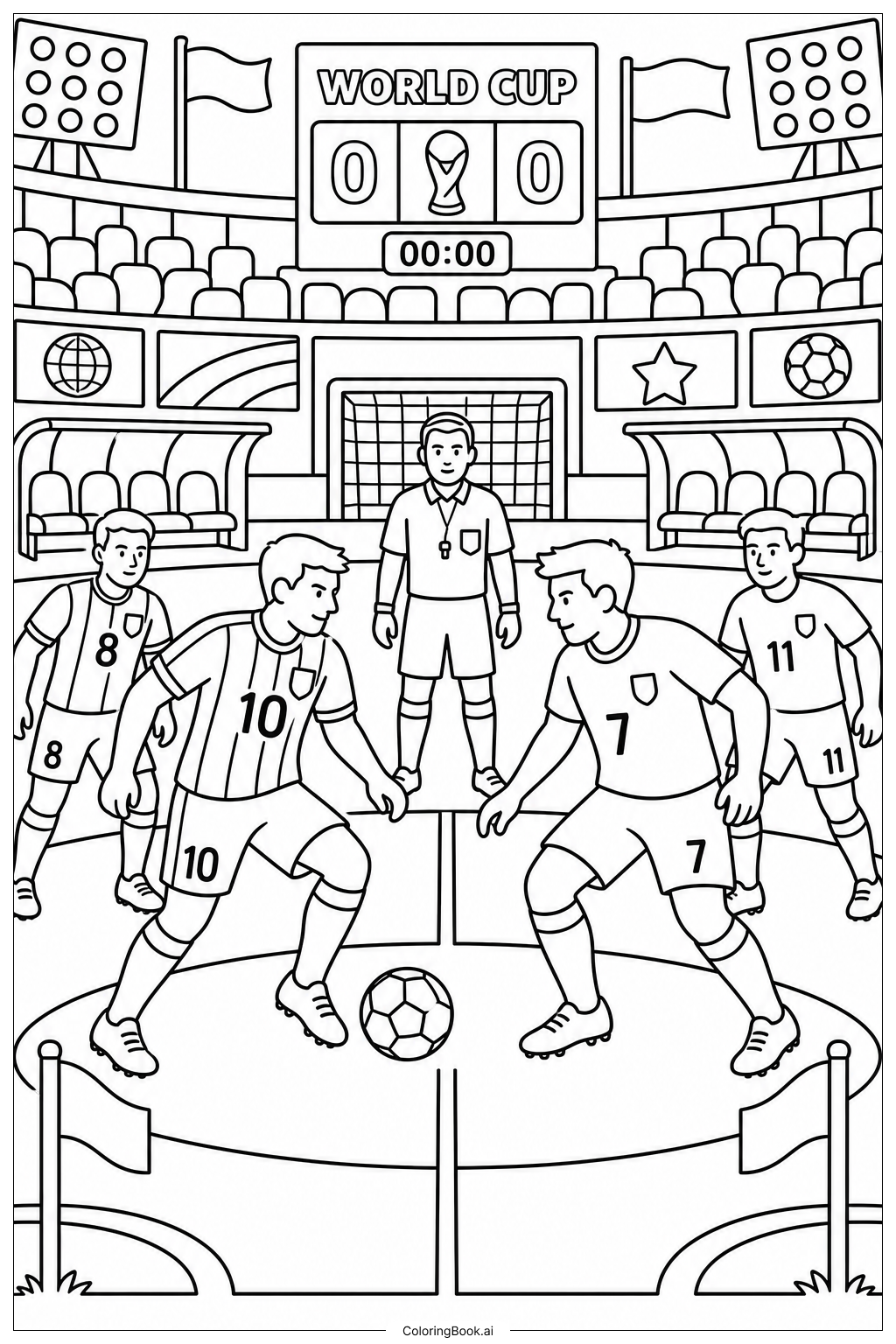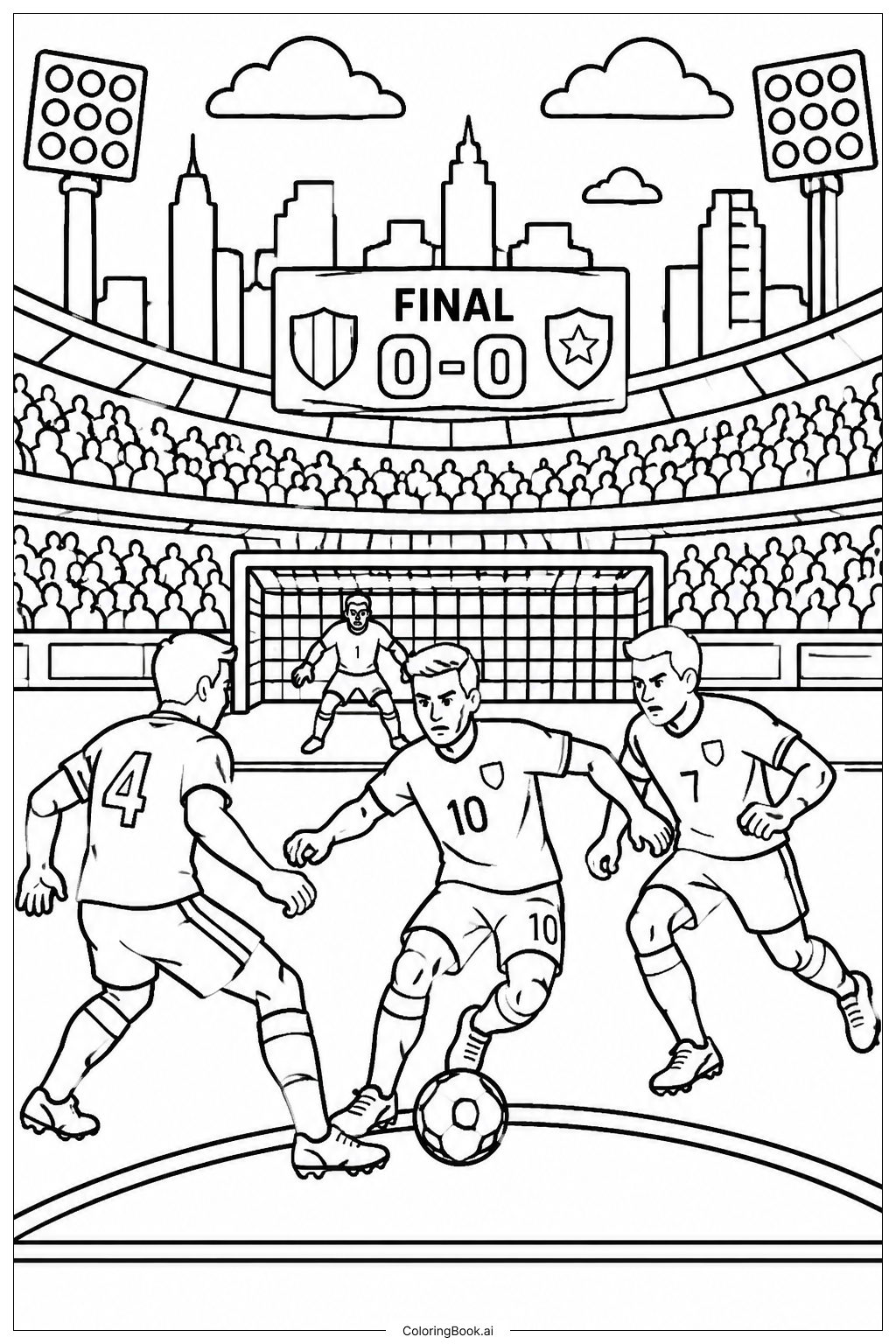
Coloring tips: How to color World Cup Yellow Card coloring page well?
Start with the yellow card itself — use a bold, bright yellow to make it the focal point of the whole scene. For the referee's uniform, classic black with white trim works great, though you can try dark navy or charcoal for variety. The player's jersey is a perfect chance to use your favorite national team colors. Skin tones on the faces and hands can be done with light peach, warm brown, or any shade you like. Use lighter, softer colors for the background crowd and stadium to keep the focus on the foreground figures. Try adding a green field at the bottom to ground the scene. Don't be afraid to press harder with your pencil or marker on the yellow card to make it really pop against the rest of the image.
Coloring challenges: Which parts are difficult to color and need attention for World Cup Yellow Card coloring page?
• The Yellow Card Itself: The yellow card is the most important element in this scene, but getting the right shade of yellow can be tricky. Too pale and it loses impact, too orange and it no longer reads as yellow. Use a pure, vivid yellow and apply even pressure to keep it consistent across the card's surface without streaks or uneven patches.
• Referee Uniform Details: The referee's shirt and shorts have small folds, creases, and collar details that require careful attention. Coloring inside these tight areas without going over the lines takes patience and a sharpened pencil or a fine-tipped marker. Switching between a broader tool for large areas and a fine tip for details helps a lot here.
• Player Facial Expression: The player's face shows emotion — surprise, frustration, or protest — and capturing that with color adds life to the scene. Subtle shading around the eyes, mouth, and brow lines helps bring out the expression. This is one of the most challenging parts for younger colorists and requires steady, controlled strokes.
• Stadium Background Crowd: The background features a crowd and stadium structure with many small shapes packed closely together. Coloring this section without muddying the image requires restraint. Using lighter, less saturated colors for the crowd keeps the background from competing with the main figures in the foreground.
• Depth and Contrast: Making the foreground figures stand out from the background is a real skill. Using darker, richer tones on the referee and player versus softer tones in the background creates a natural sense of depth and keeps the composition visually balanced.
Benefits of coloring books: Advantages of drawing World Cup Yellow Card coloring page
Coloring this World Cup Yellow Card page offers a great mix of fun and learning for kids and soccer fans of all ages. It builds fine motor skills as children carefully fill in details like the referee's uniform, the player's expression, and the bright yellow card. Staying inside the lines sharpens hand-eye coordination and focus.
This page also sparks curiosity about the rules of soccer. Kids naturally start asking questions about what a yellow card means, how referees make decisions, and how players respond — turning a coloring activity into a learning conversation.
Choosing colors for jerseys, skin tones, and the stadium background encourages creative thinking and personal expression. There are no wrong choices, which builds confidence. Kids who support a specific national team can color the player in their team's colors, adding a personal connection to the artwork.
For older kids and Adults, the detailed background crowd and shading challenges offer a satisfying level of complexity. Completing the page gives a genuine sense of accomplishment. Overall, this page combines the excitement of World Cup soccer with the calming, focused benefits of a great coloring session.