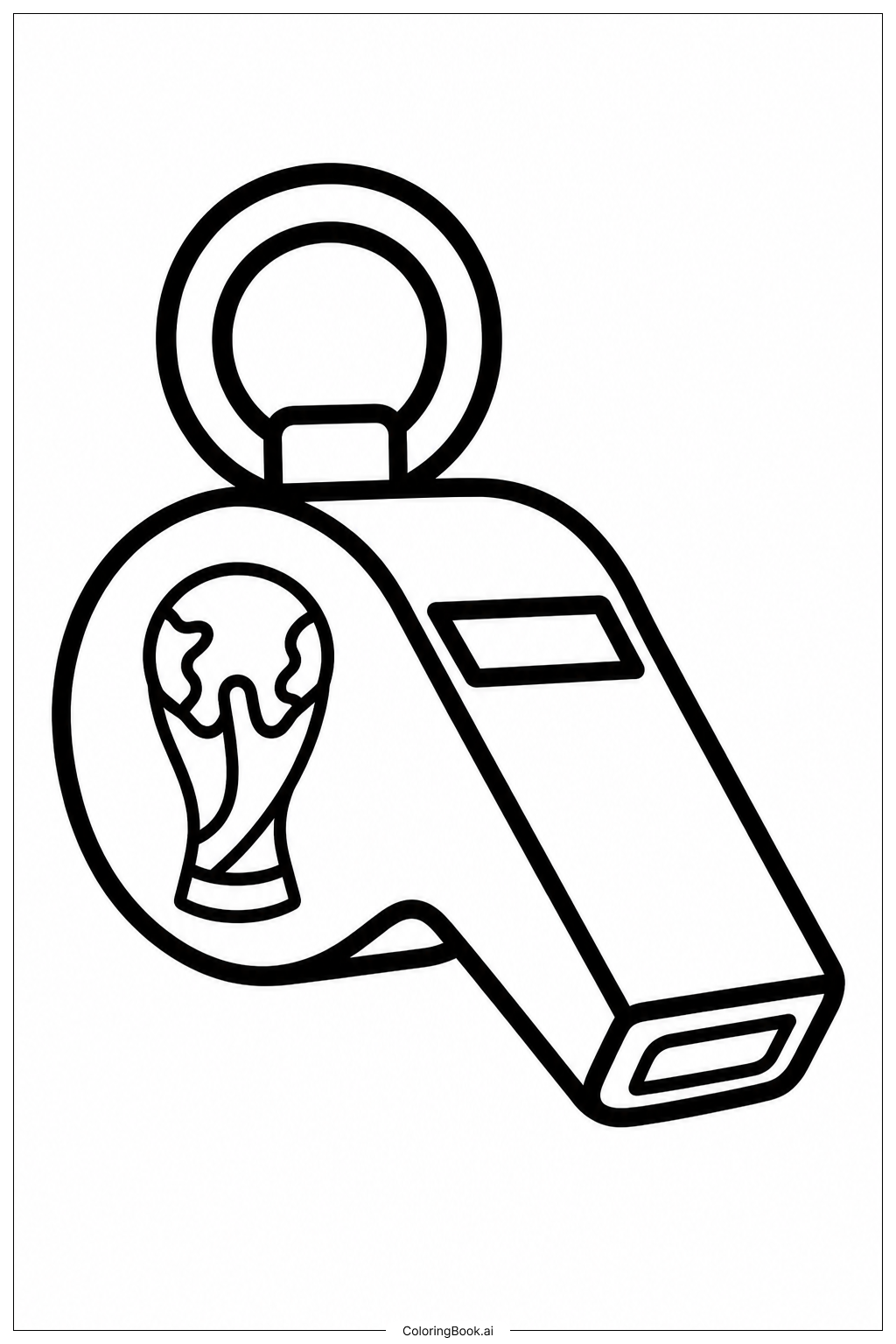
Coloring tips: How to color World Cup Whistle coloring page well?
Start with the whistle body. A classic referee's whistle is usually silver or gold, so light gray, metallic silver, or bright yellow are great choices. You can add a shiny effect by leaving a thin strip uncolored or using white along one edge to mimic reflected light. For the cord or lanyard, try bold colors like red, black, or green to match World Cup team colors. The ring at the top can be colored darker than the body to give it depth. Use darker shades of your chosen color around the edges and lighter shades in the center to make the whistle look round and three-dimensional. Take your time with the small details around the mouthpiece and air chamber, as careful coloring there makes the whole image pop. Have fun mixing colors and making it your own.
Coloring challenges: Which parts are difficult to color and need attention for World Cup Whistle coloring page?
• Metallic Surface Shading: Creating a realistic metallic look is one of the trickiest parts of this image. A whistle is typically made of shiny metal, so you need to layer light and dark tones carefully. Without proper shading, the whistle can look flat. Try using at least two or three shades of the same color, placing the darkest tone along the edges and the lightest near the center or top where light would naturally hit.
• Curved Body Proportions: The cylindrical shape of the whistle means the coloring must follow its curves. Applying color in straight strokes can break the illusion of a round object. Using curved, even strokes that follow the shape of the body will help the whistle look more realistic and three-dimensional.
• Fine Details Around the Mouthpiece: The mouthpiece area has small, tight curves and edges that require a sharp pencil or a fine-tipped marker. Coloring outside these lines can make the detail area look messy. Going slowly and using a light hand gives you more control in these narrow zones.
• Cord and Lanyard Texture: The looping cord beside the whistle has overlapping sections and subtle shadows where one part crosses over another. Coloring each overlapping section with a slightly different shade of the same color helps show depth and keeps the cord from looking like a flat ribbon.
• Consistent Color Temperature: Keeping the entire image looking unified requires using colors that belong to the same warm or cool family. Mixing warm yellows with cool blues without intention can make the image look disconnected. Choosing a clear color palette before starting will help everything feel balanced.
Benefits of coloring books: Advantages of drawing World Cup Whistle coloring page
Coloring this World Cup Whistle page offers a wonderful mix of fun and learning for kids and young fans alike. The whistle is a powerful symbol of the World Cup, so coloring it builds a connection to the excitement of the sport and the global event it represents.
Working through the details of the whistle, from its round body to the looping cord, helps children develop fine motor skills and hand-eye coordination. Carefully staying within the lines and switching between tools strengthens the small muscles in the hand, which supports everyday tasks like writing.
Choosing colors and deciding how to shade the metallic surface encourages creative thinking and artistic confidence. Kids learn about light and shadow in a playful, low-pressure way that builds real art skills over time.
Focusing on a single image from start to finish also trains patience and concentration, which are skills that carry over into school and other activities. Completing the page gives children a real sense of accomplishment.
For any soccer fan, this page is also a great conversation starter about the World Cup, its rules, and the role of a referee. Learning through coloring makes the experience both educational and enjoyable.