Coloring tips: How to color World Cup Trophy coloring page well?
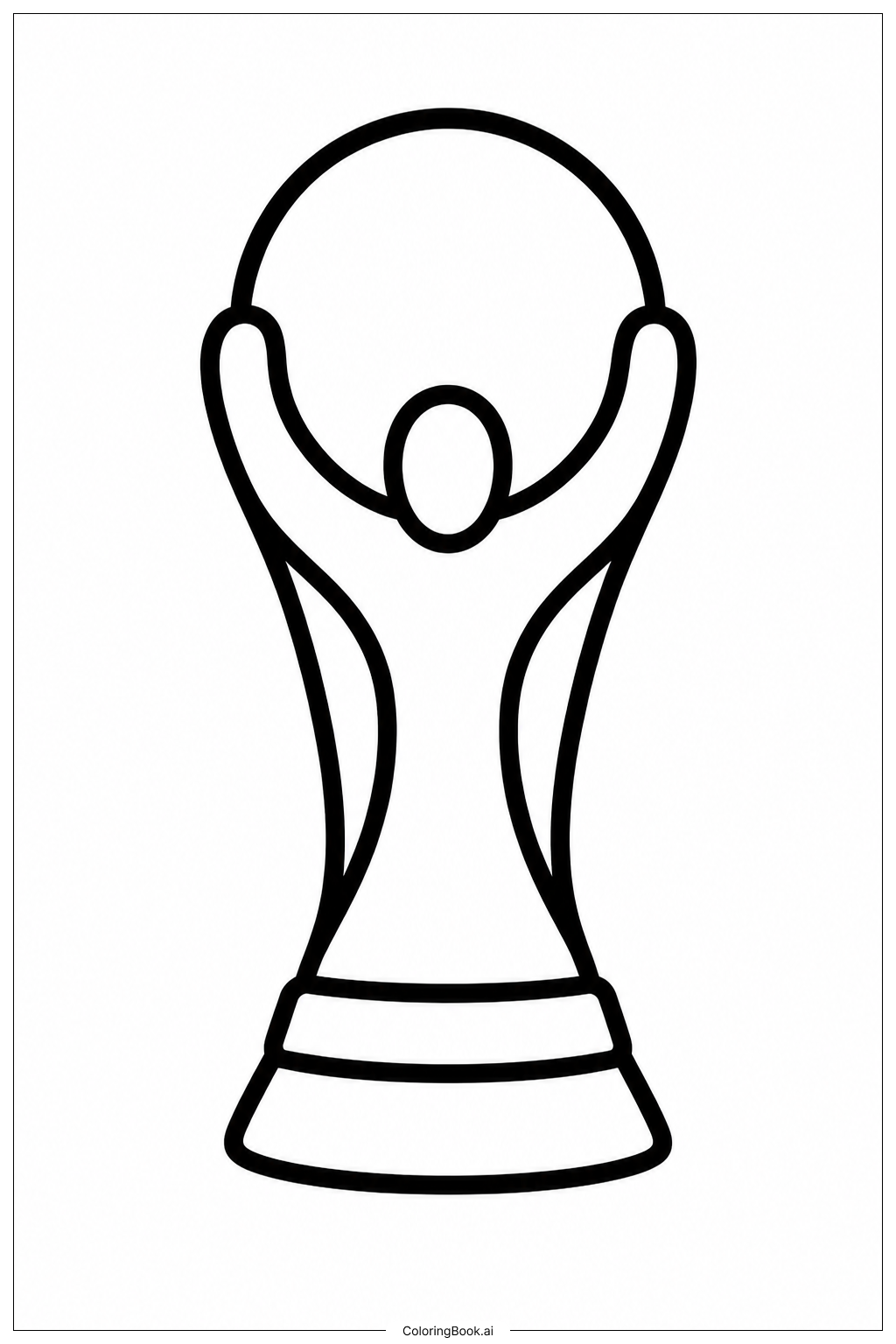
Start with the main body of the trophy and use a rich golden yellow as your base color. You can layer a slightly darker gold or orange-brown along the edges to create a sense of depth and shine. For the human figures near the top, use a warm tan or bronze tone to make them stand out from the trophy body. The globe held at the top can be colored in shades of blue and green to represent Earth. The base of the trophy looks great in deep brown or dark gray to give it a solid, heavy feel. If you want to add extra realism, try using a white colored pencil or gel pen to add bright highlight streaks down the sides. Kids can keep it simple with just one or two golden shades, while older colorists can experiment with metallic effects and shading to make the trophy truly glow.
Coloring challenges: Which parts are difficult to color and need attention for World Cup Trophy coloring page?
• Human Figure Details: The two small figures near the top of the trophy are highly detailed and closely positioned. Their arms, legs, and body contours require a fine-tipped marker or colored pencil to fill in accurately without bleeding into the surrounding trophy surface. Rushing through this section can result in a messy finish.
• Achieving a Metallic Gold Look: The trophy is meant to look like gleaming gold metal, but recreating that effect on paper is not easy. You need to layer at least two or three shades of yellow, gold, and brown, and then add highlights carefully. Getting the gradient smooth and natural-looking takes patience and practice.
• Base and Pedestal Shading: The multi-tiered base has several distinct layers, each requiring its own shade to look three-dimensional. If all layers are colored the same, the trophy will look flat. Taking time to shade each tier slightly differently is key to making the overall shape look realistic and solid.
• Globe at the Top: The small globe balanced at the very top of the trophy needs careful coloring. The continents and ocean areas are tiny, and switching between blue and green in such a small space demands a very sharp pencil tip and a steady hand.
• Maintaining Consistent Highlights: Keeping highlight areas consistent across the entire trophy is one of the trickiest parts. The shiny spots should follow a single imaginary light source, so planning where your light comes from before you start coloring is strongly recommended to avoid a confusing or uneven result.
Benefits of coloring books: Advantages of drawing World Cup Trophy coloring page
Coloring the World Cup Trophy is a wonderful activity for kids and adults alike. For younger children, it helps build fine motor skills as they carefully fill in the detailed shapes and curves of the trophy. Staying within the lines and switching between colors sharpens hand-eye coordination in a fun and engaging way.
For older kids and teens, this coloring page offers a great opportunity to learn about shading and color mixing. Trying to recreate the look of shiny gold metal teaches them how light and shadow work together to create depth and dimension on a flat page.
Beyond the artistic benefits, this image connects colorists to the exciting world of soccer. It can spark conversations about the World Cup, favorite teams, and sporting goals. This makes coloring both a creative and educational experience.
For adults, the focused nature of coloring detailed illustrations like this one is known to reduce stress and promote mindfulness. Concentrating on each small section of the trophy brings a calming sense of flow and accomplishment. Completing the page gives a real feeling of pride — much like lifting the trophy itself.