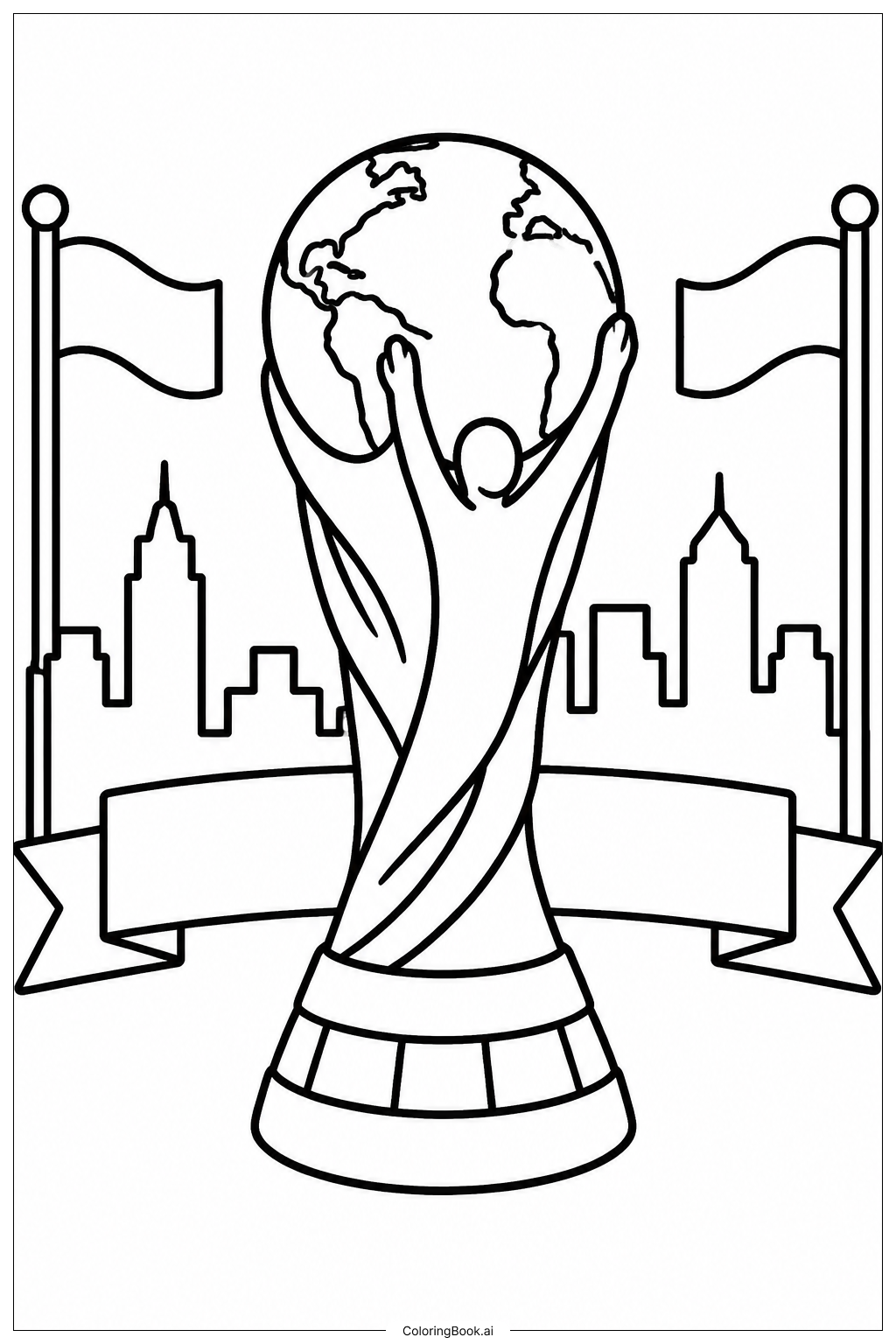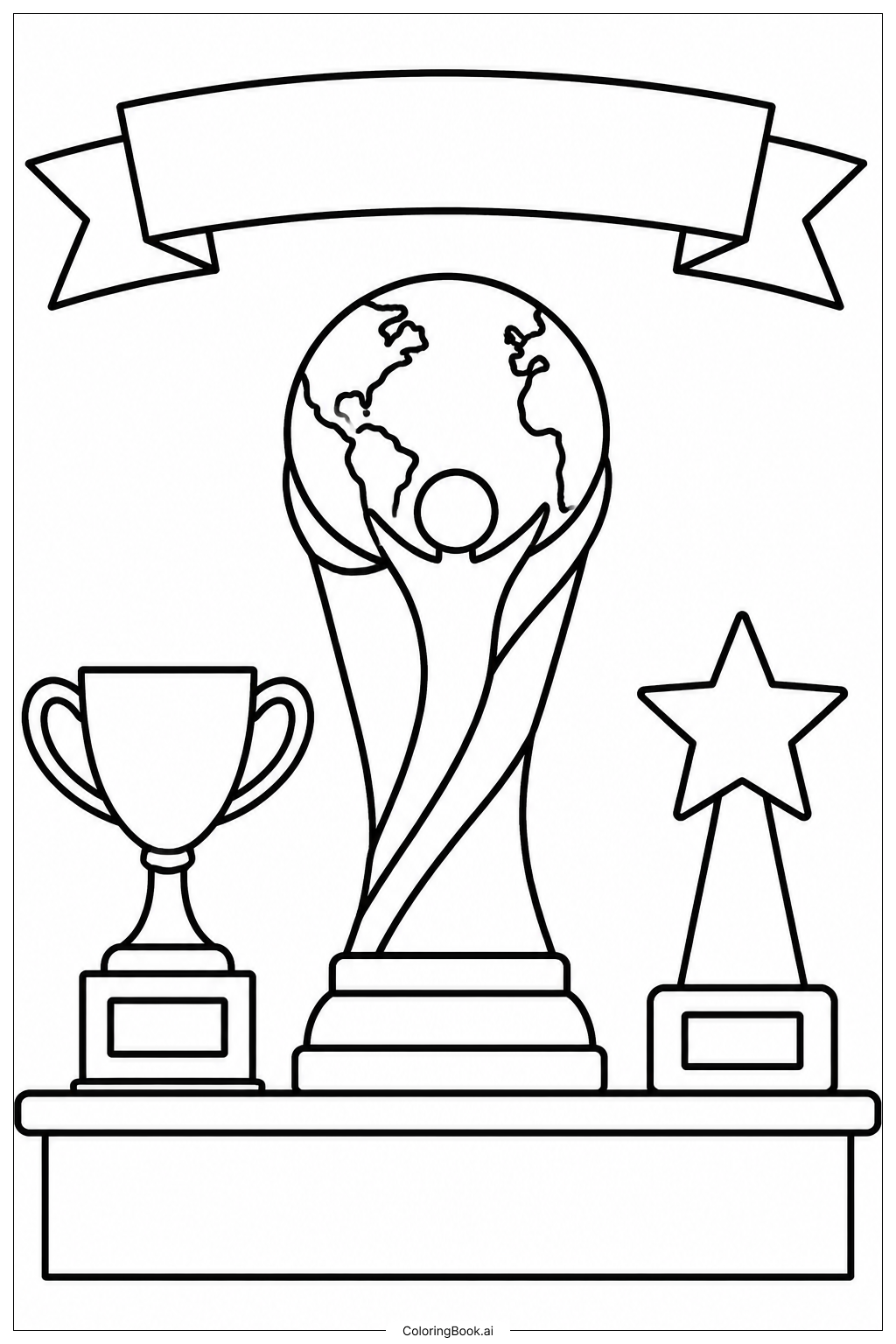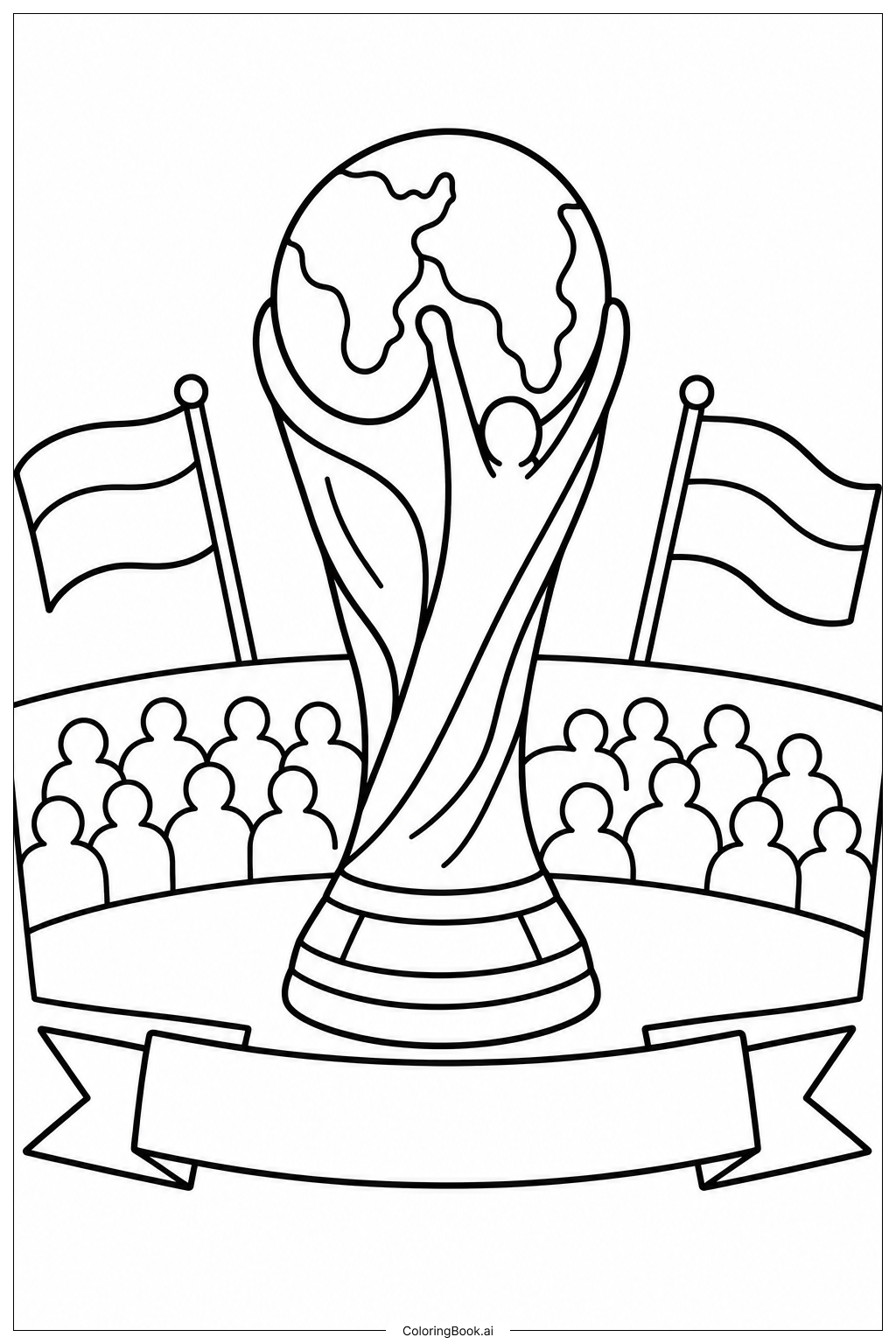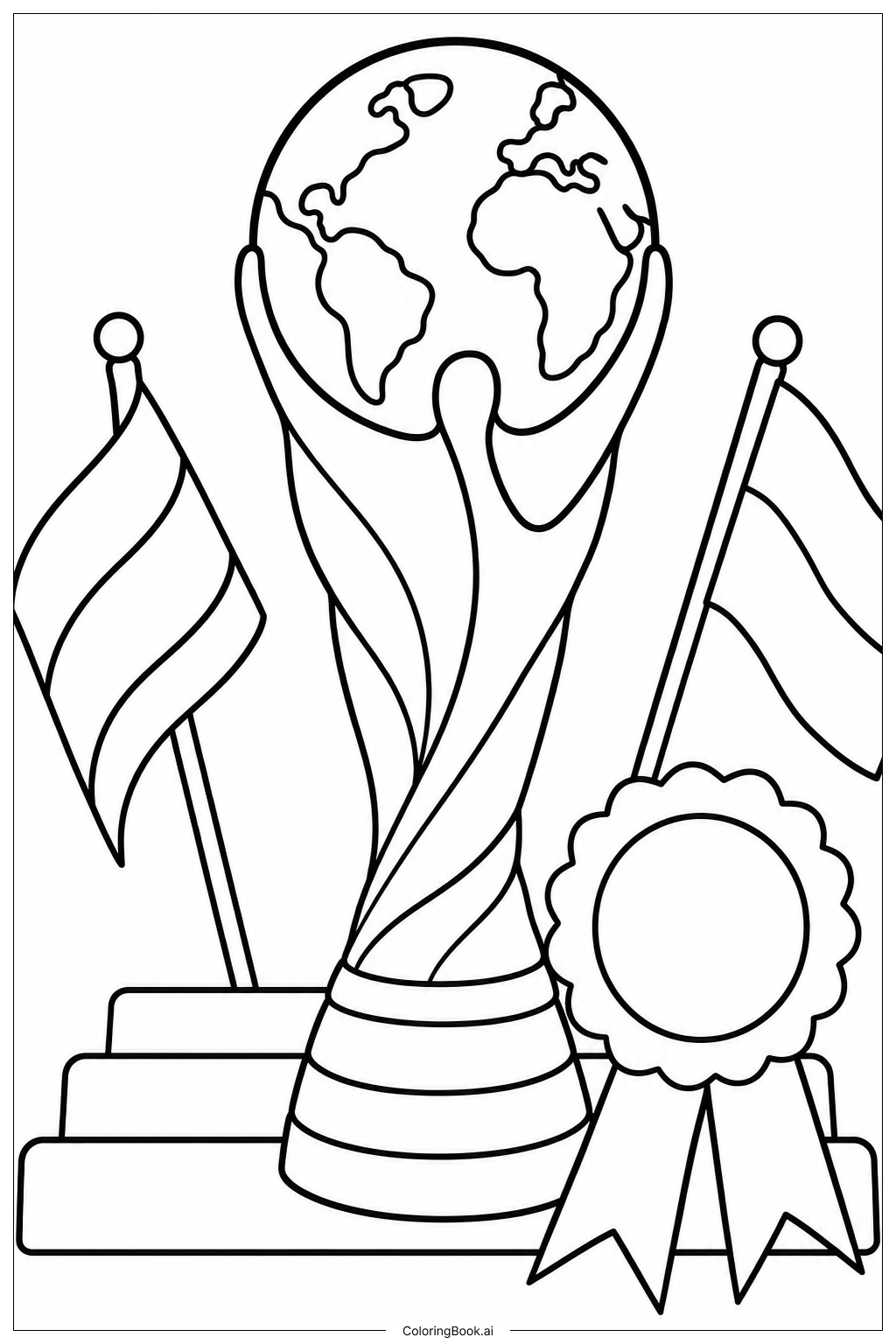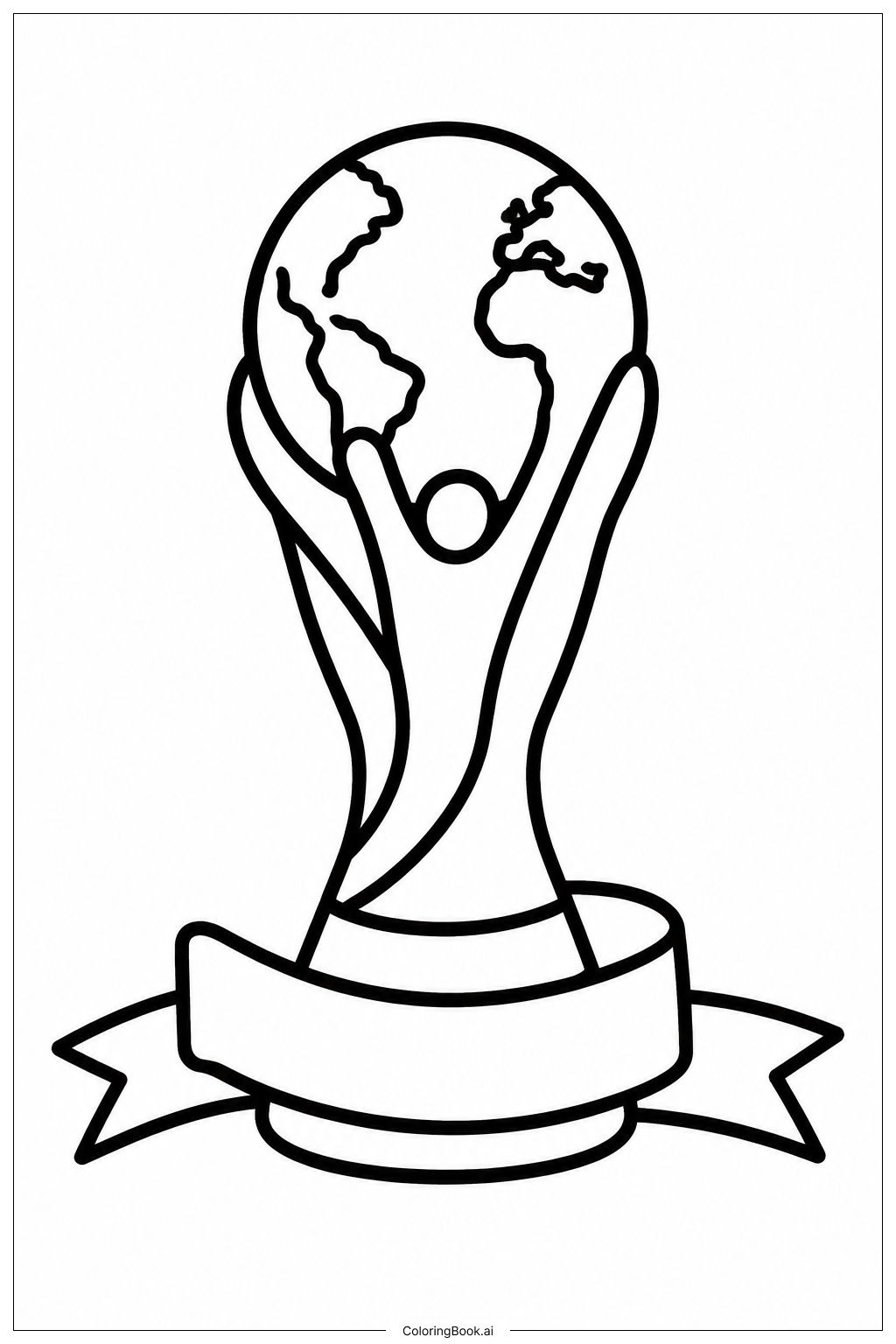
Coloring tips: How to color World Cup Trophy With Single Ribbon coloring page well?
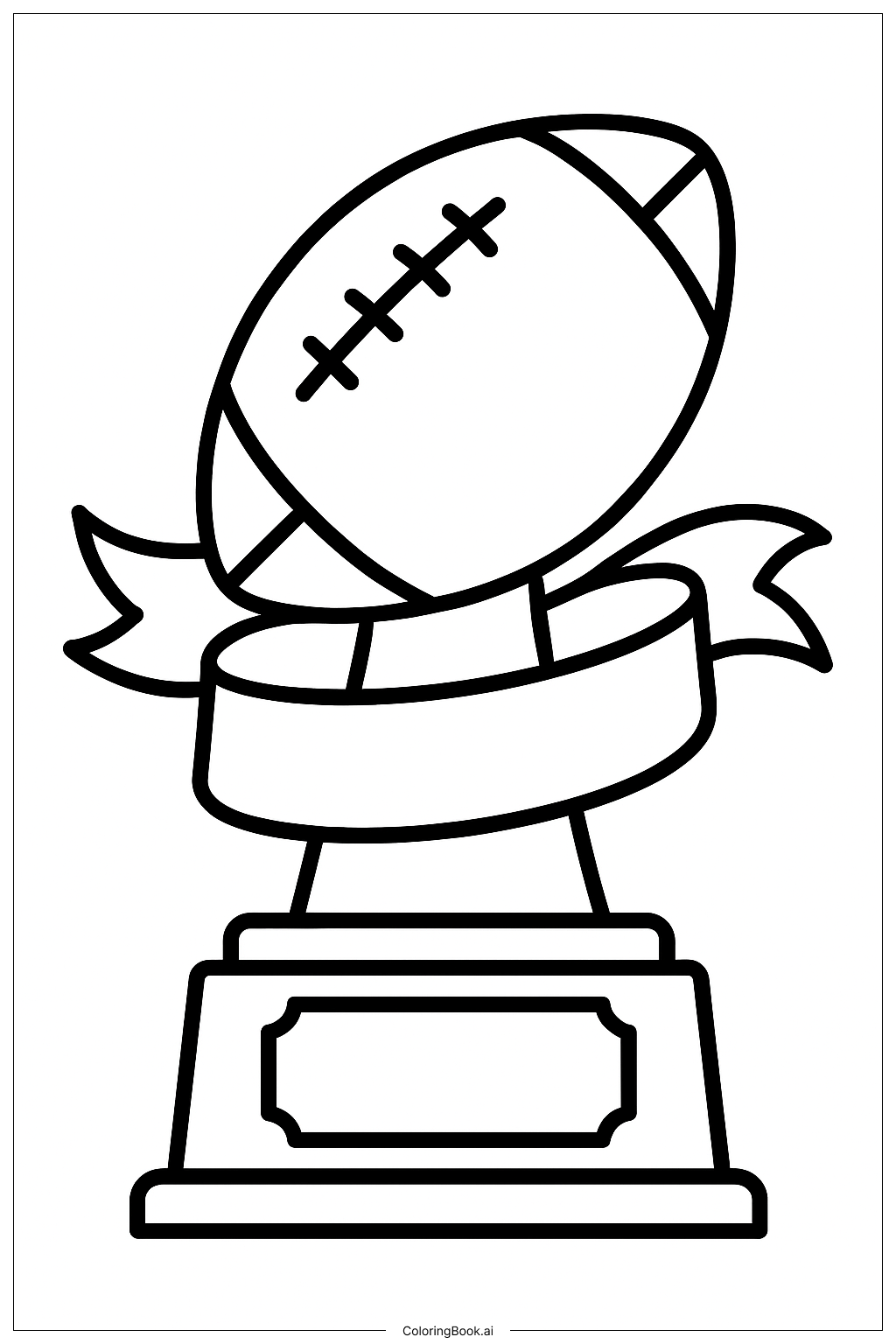
Start with the trophy itself. Use a bright golden yellow as your base color. Add a slightly darker gold or orange along the edges and in the curved areas to create a shiny, metallic look. For the very brightest spots, leave some areas white or use a pale yellow to mimic reflected light. The base of the trophy can be colored in a deeper bronze or dark brown to separate it from the main cup. For the ribbon, choose a bold, fun color like red, blue, or green. Add shading along the folds of the ribbon to make it look like it is really wrapping around the trophy. Use a slightly darker version of your ribbon color in the creases. If you want a dramatic finish, try adding a soft gradient from light to dark across each section. Take your time with the small details on the base — these tiny bands of pattern make the trophy look realistic and impressive.
Coloring challenges: Which parts are difficult to color and need attention for World Cup Trophy With Single Ribbon coloring page?
• Metallic Trophy Surface: Capturing the shiny, golden look of the World Cup Trophy is one of the biggest challenges. Metal reflects light in many directions, so you need to use multiple shades of yellow, gold, and orange together. Blending these colors smoothly takes patience and a steady hand, especially for younger colorists.\n\n• Curved and Flowing Shapes: The trophy has organic, flowing curves from top to base. Staying within the lines while following these curves can be tricky. Using the tip of your pencil or marker and moving slowly will help you keep colors inside each section without going over the outlines.\n\n• Ribbon Folds and Depth: The single ribbon wraps around the trophy and creates natural folds and creases. To make these look realistic, you need to add shading in the folded areas. This means using two or three tones of the same color, which requires some understanding of light and shadow — a concept that can be challenging for younger children.\n\n• Separating the Trophy from the Base: The trophy has distinct sections — the main cup, the stem, and the decorative base. Each section has a slightly different texture and shape. Choosing colors that are close but still different enough to separate these parts without losing the overall golden theme requires careful color planning.\n\n• Fine Detail on the Base Bands: The base of the trophy contains narrow, layered bands with intricate line details. These small areas are hard to color neatly, especially with thick markers or crayons. Fine-tipped colored pencils or thin markers work best in these tight spaces.
Benefits of coloring books: Advantages of drawing World Cup Trophy With Single Ribbon coloring page
Coloring this World Cup Trophy page offers a wide range of benefits for kids and young fans of the sport. First, it builds fine motor skills. Following the curved lines of the trophy and staying within the ribbon folds helps strengthen hand muscles and improves pencil control. Second, it introduces color theory in a fun and practical way. Choosing gold tones for a metallic effect teaches children how shading and blending work. Third, it encourages creativity. Kids can design the ribbon in any color they like, making each finished page unique and personal. Fourth, it connects coloring to a real-world subject — the world's most famous soccer trophy. This connection makes the activity more meaningful and engaging, especially for young sports fans. Fifth, completing a detailed image like this builds patience, focus, and a sense of accomplishment. When the page is finished, children feel proud of what they created. Overall, this coloring page is a fun, educational, and inspiring activity that blends art with a love of the beautiful game.