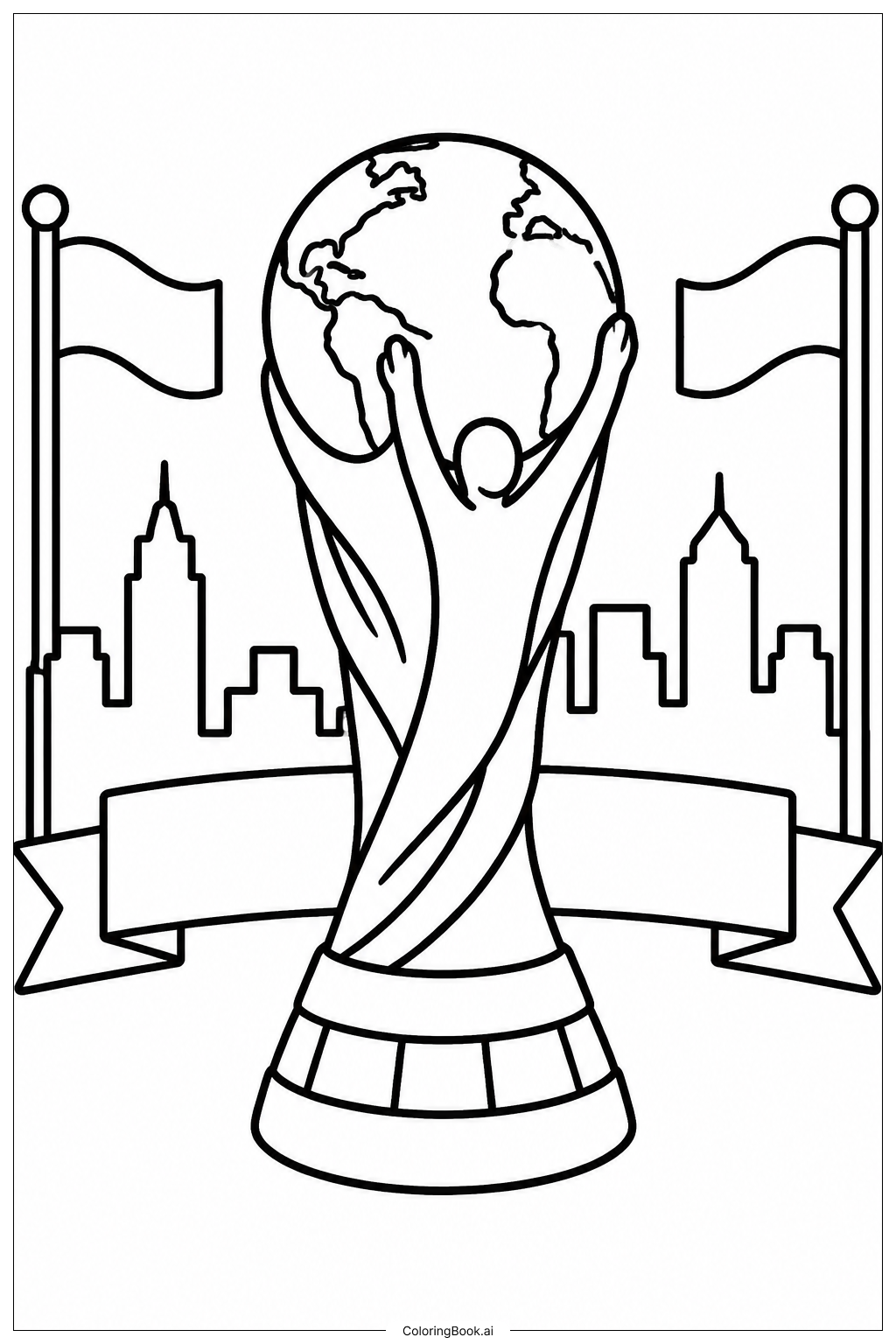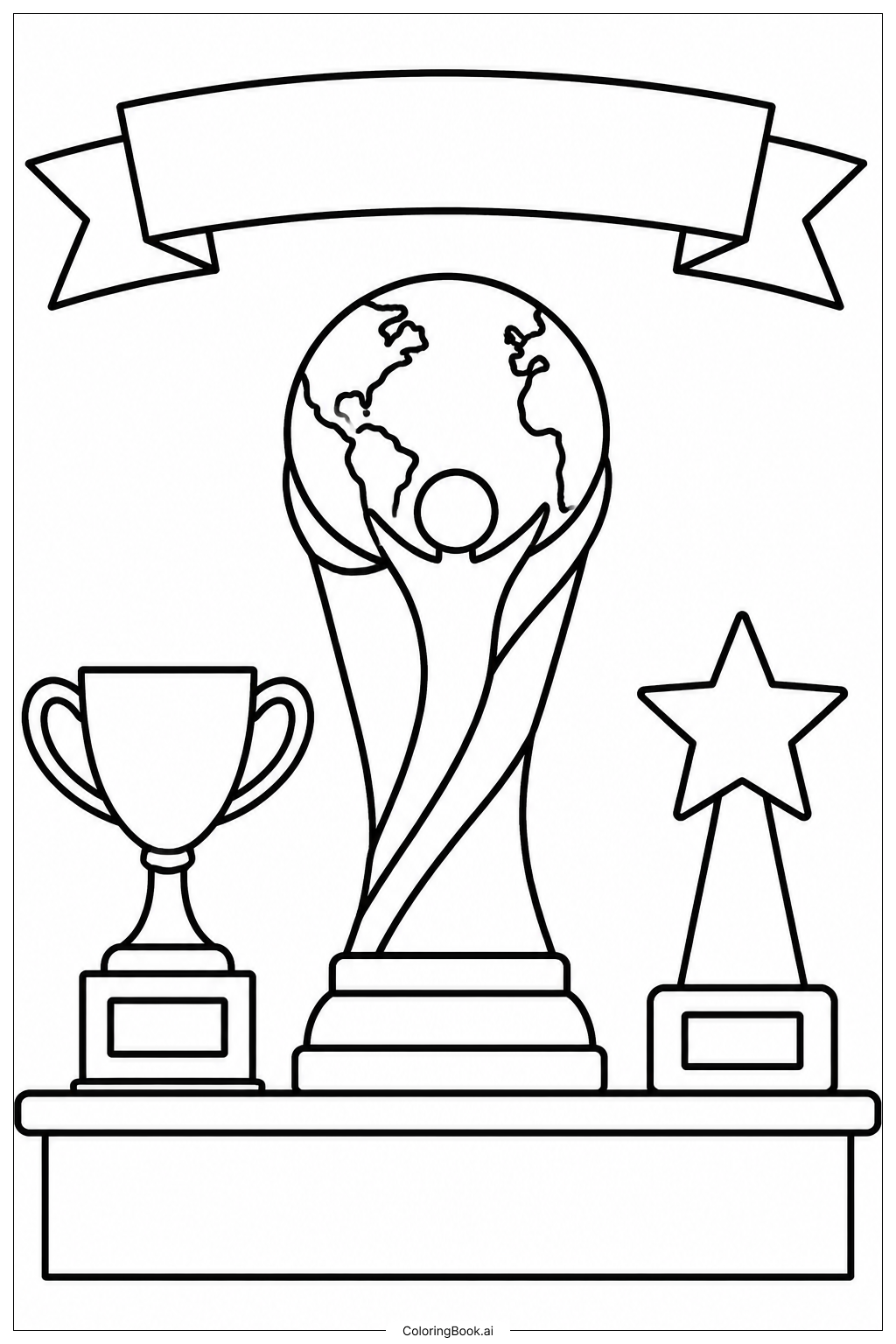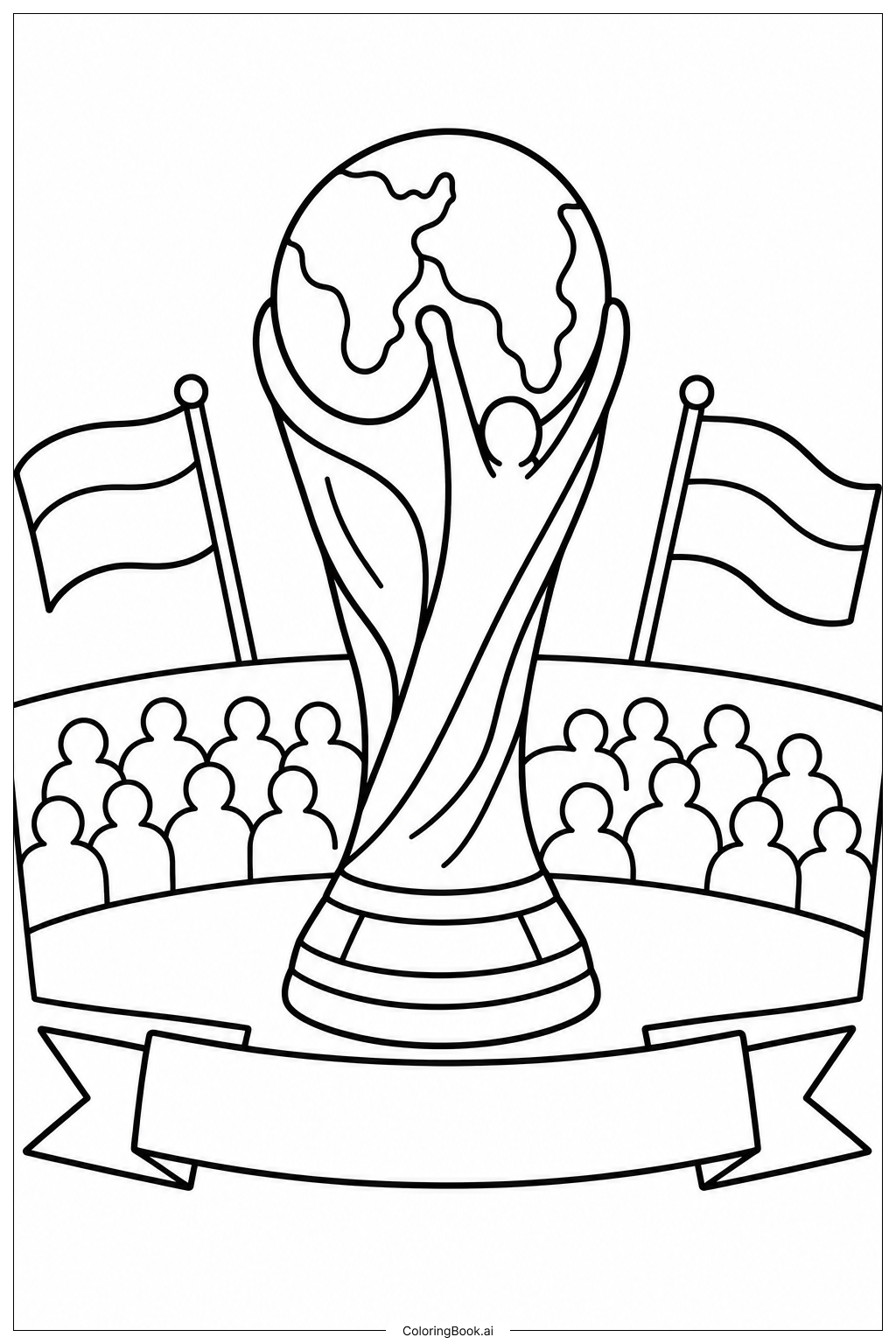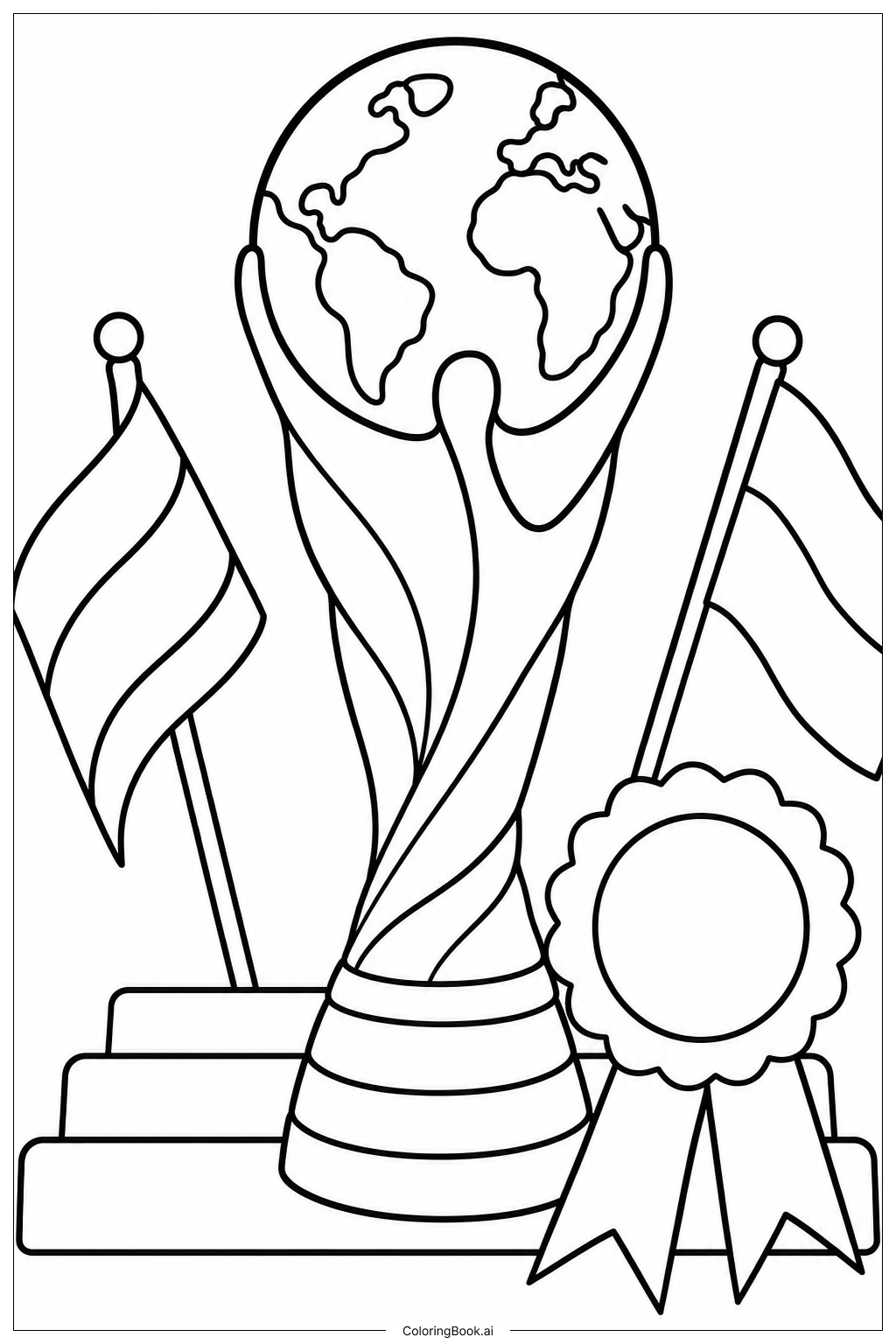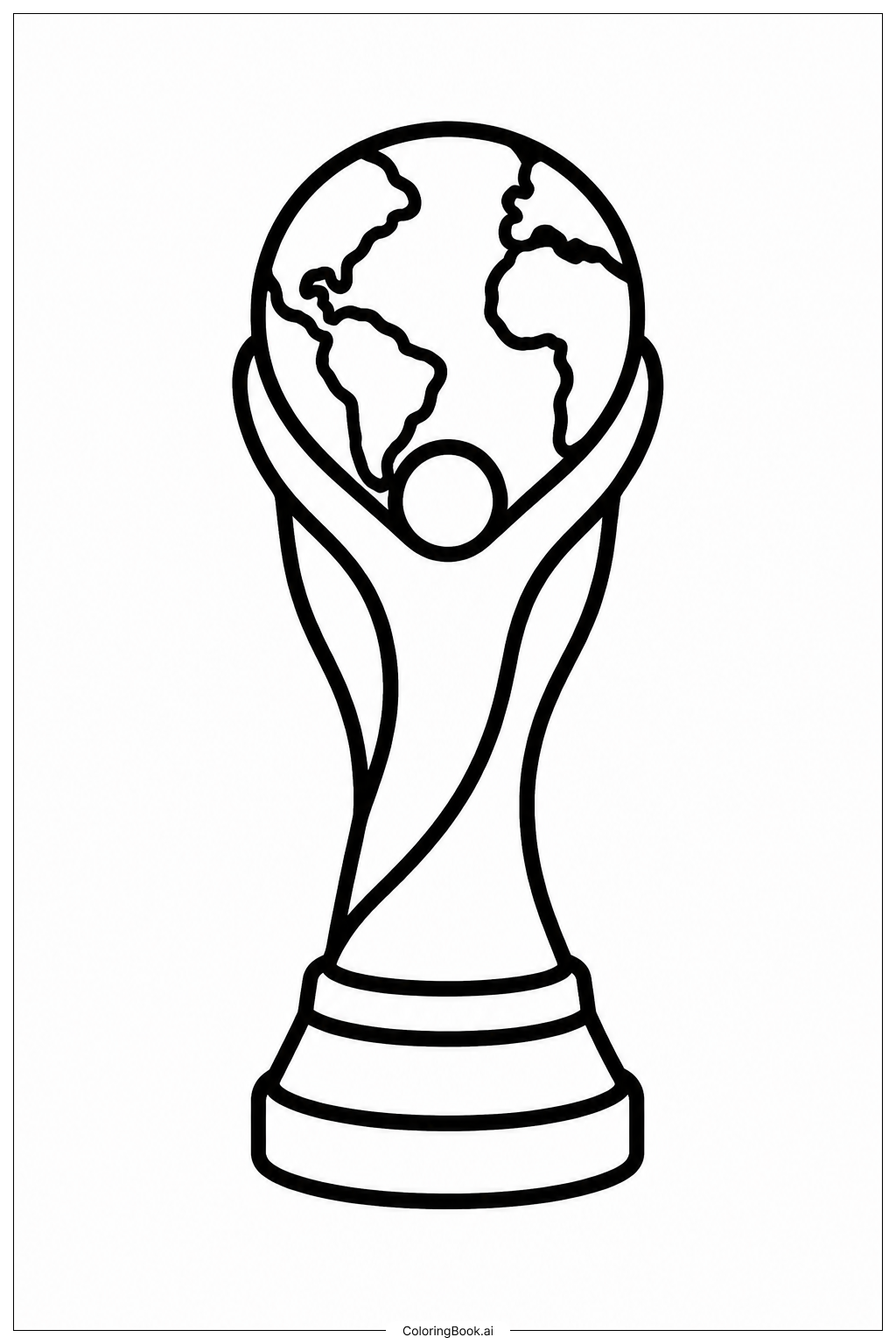
Coloring tips: How to color World Cup Trophy On Pedestal coloring page well?
Start with the trophy itself. Use bright gold or yellow tones to fill in the main body of the cup, giving it a shiny, metallic look. For the two figures at the top, use a slightly darker gold or bronze shade to make them stand out. The globe they hold can be colored in blue and green to represent Earth. For the pedestal, try a deep brown or dark gray to suggest a marble or stone material. You can add lighter shades along the edges to create a highlight effect and give it a three-dimensional feel. Use tan or cream tones for the base trim. Take your time with each section and try to stay inside the lines for a clean finish. Younger kids can keep it simple with flat colors, while older kids and Adults can experiment with shading and blending to make the trophy look like it's glowing with championship glory.
Coloring challenges: Which parts are difficult to color and need attention for World Cup Trophy On Pedestal coloring page?
• Trophy Surface Shading: The curved surface of the World Cup Trophy is one of the hardest parts to color well. To make it look metallic and shiny, you need to use at least two or three shades of gold or yellow. Placing lighter tones in the center and darker tones toward the edges helps create a rounded, reflective effect. This technique takes patience and a steady hand.
• Figure Details at the Top: The two human figures holding the globe at the top of the trophy are small and have fine details. Coloring them neatly without going outside their outlines can be tricky, especially for younger children. Using a thin-tipped marker or a sharp colored pencil is recommended for this area.
• Globe Coloring: The globe held by the figures needs careful attention. Coloring the land masses in green and the oceans in blue while keeping them separated by clean lines requires focus and precision. The small scale of the globe makes this section particularly challenging.
• Pedestal Layers and Texture: The pedestal has multiple tiers and decorative edges. Each layer may need a slightly different shade to look distinct. Giving the stone or marble texture a realistic look involves using blended grays, browns, or beiges, which can be difficult for beginners.
• Consistent Color Harmony: Keeping all the colors across the trophy and pedestal looking balanced and unified is a challenge. If gold on the trophy is too bright but the pedestal is too dark, the overall image can look uneven. Planning your color palette before starting helps avoid this problem.
Benefits of coloring books: Advantages of drawing World Cup Trophy On Pedestal coloring page
Coloring the World Cup Trophy On Pedestal offers a wide range of benefits for kids and Adults alike. First, it helps build fine motor skills. Carefully filling in the detailed lines of the trophy and pedestal trains hand-eye coordination and strengthens the small muscles used in writing and drawing. Second, it encourages focus and patience. The intricate details of this image require concentration, helping children practice staying on task for longer periods. Third, it sparks creativity. Choosing colors for the trophy, globe, and pedestal lets kids express their own artistic vision and experiment with shading and blending. Fourth, it connects children to the world of sports. Coloring this iconic trophy can inspire conversations about soccer, teamwork, and global culture, making learning fun and engaging. Fifth, it provides a calming activity. The repetitive, focused nature of coloring is known to reduce stress and anxiety, making it a great quiet-time activity for both children and Adults. Overall, this coloring page turns artistic fun into a meaningful, enriching experience.