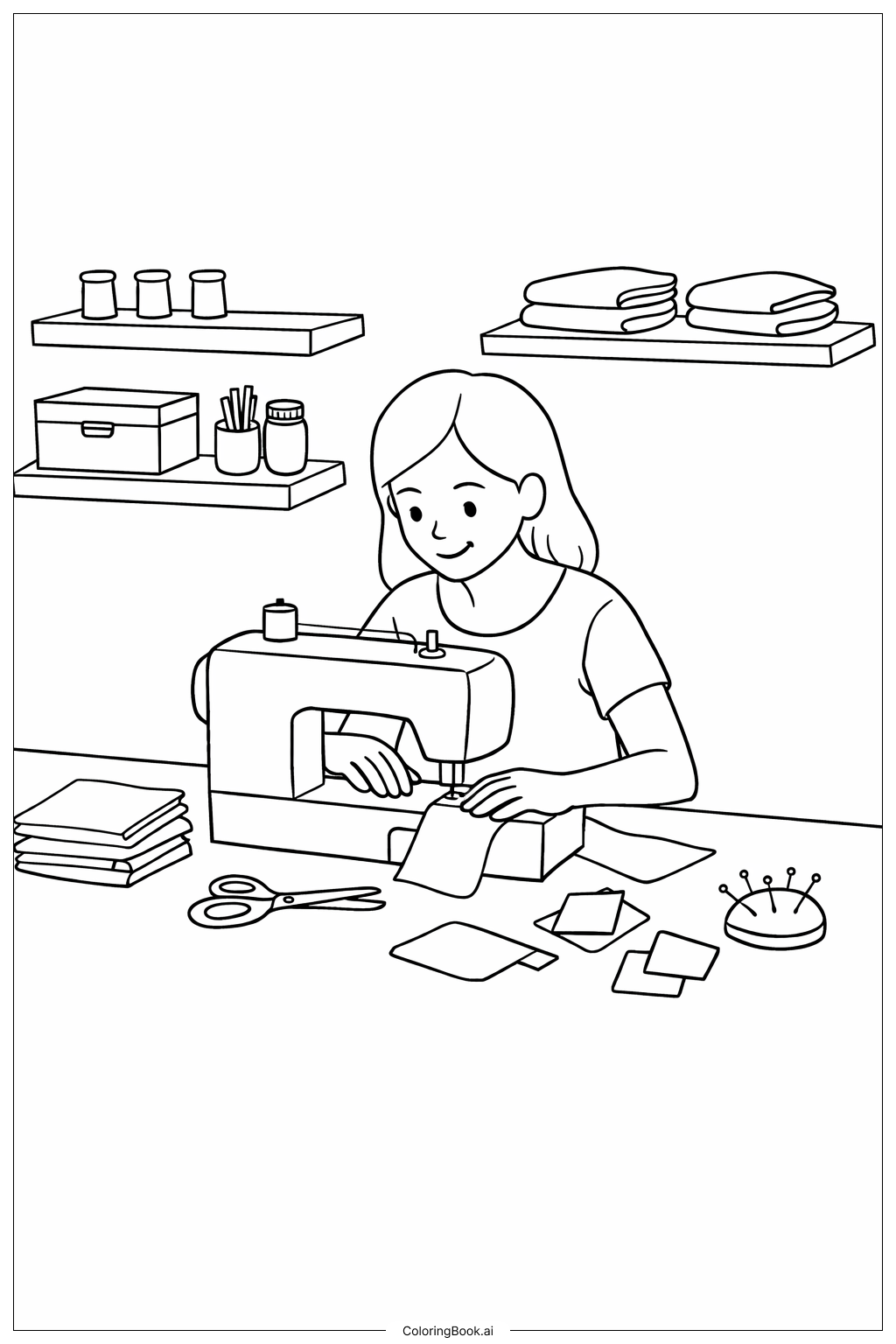
Coloring tips: How to color Woman Sewing Fabric coloring page well?
Start with the woman's skin using peach, tan, or brown tones for a realistic look. Her hair can be colored in natural shades like brown, black, blonde, or gray. For her clothing, consider warm colors like burgundy, mustard, or teal for the blouse, and neutral tones for other garments. The sewing machine can be colored in classic shades like black, silver, or vintage cream with metallic accents for the wheel and mechanical parts. Use bright, varied colors for the fabric she's working on—perhaps floral patterns with pinks, purples, and greens, or geometric designs with bold contrasts. Thread spools offer opportunities for rainbow colors. The background workspace can feature warm wood tones for furniture and soft pastels for walls, creating a cozy, inviting atmosphere that highlights the peaceful nature of sewing.
Coloring challenges: Which parts are difficult to color and need attention for Woman Sewing Fabric coloring page?
• Fabric Texture and Folds: The draped fabric presents complex folds and overlapping layers that require careful shading to show depth and dimension. Coloring these areas demands understanding of light and shadow, with darker tones in the creases and lighter shades on raised surfaces. The flowing nature of fabric means smooth color transitions are essential to avoid a flat appearance.
• Sewing Machine Mechanical Details: The sewing machine contains numerous small mechanical components including the wheel, needle housing, thread guides, and various knobs and levers. These intricate parts require precision coloring with steady hands. Metallic elements need special attention to create realistic shine effects through careful blending of grays, silvers, and highlighted white areas.
• Facial Features and Expression: Capturing the woman's concentrated expression requires subtle coloring of facial features. The eyes, nose, and mouth contain small detailed areas where color mistakes are easily noticed. Skin tone consistency across the face, neck, and hands is challenging, requiring careful blending to avoid patchy results.
• Pattern Details on Clothing: The patterned blouse contains repetitive designs that must be colored consistently throughout while maintaining the garment's shape and folds. Each pattern element needs individual attention, making this a time-consuming section that tests patience and precision, especially where patterns curve around the body's contours.
Benefits of coloring books: Advantages of drawing Woman Sewing Fabric coloring page
Coloring this detailed sewing scene offers excellent fine motor skill development through its intricate mechanical and textile elements. The small components of the sewing machine and delicate fabric folds require precise hand control, strengthening hand-eye coordination. This image promotes patience and focus as children work through complex areas, teaching them to break large projects into manageable sections. The crafting theme encourages appreciation for traditional skills and handmade creativity, potentially inspiring interest in real-world sewing and textile arts. Color choice exploration is enhanced through the variety of materials present—fabric, metal, skin, and various textures each respond differently to color application. The peaceful, productive scene depicted promotes mindfulness and concentration, offering a calming activity that reduces stress while building artistic confidence through the satisfaction of completing a detailed, meaningful image.