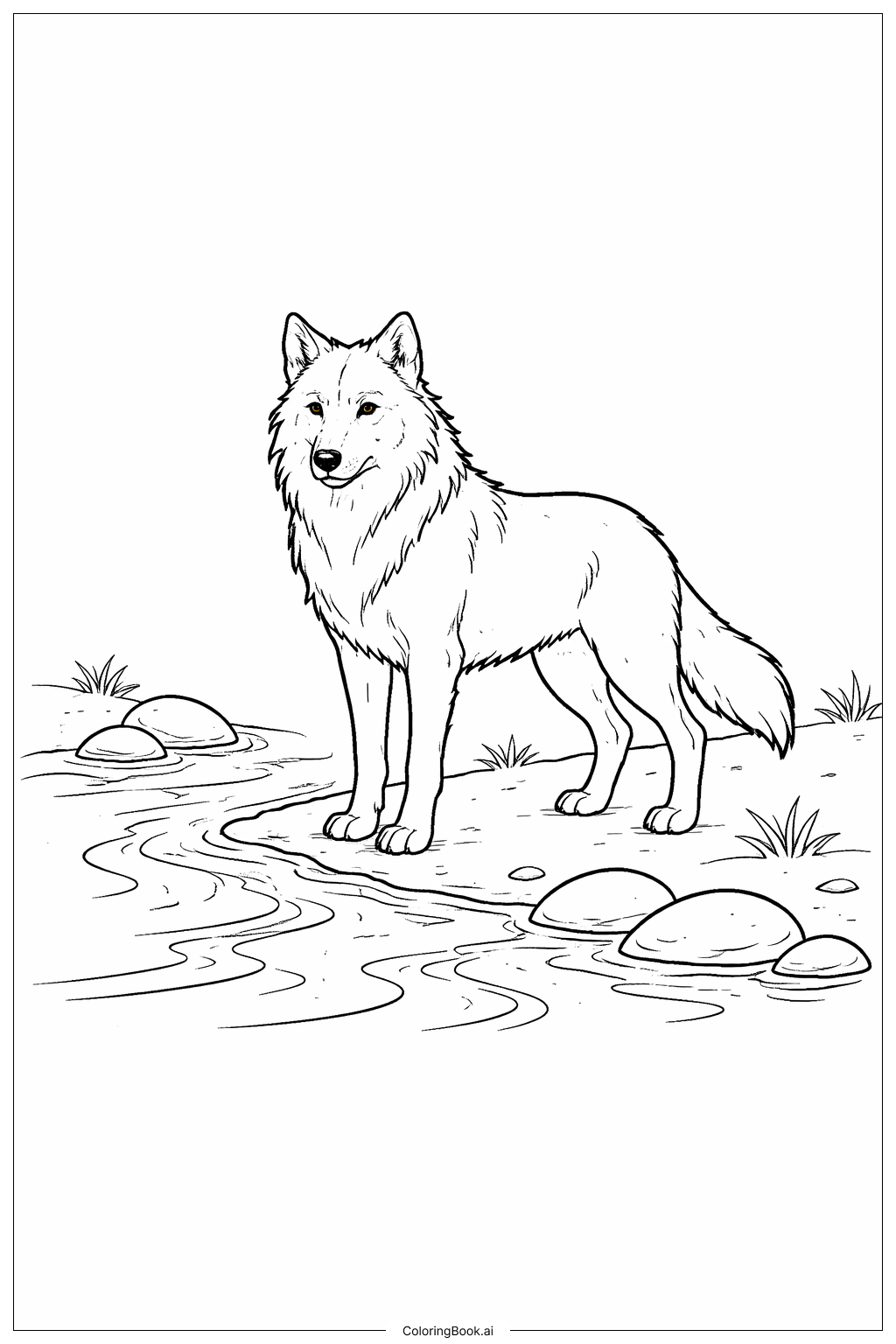
Coloring tips: How to color Wolves Looking At River coloring page well?
Start with the wolves' fur using shades of gray, brown, and white. Mix light gray for the chest and belly, and darker gray or charcoal for the back and head. Add hints of tan or warm brown for depth. For the eyes, use amber, gold, or pale yellow to bring them to life. Color the river in soft blues and teals, adding white streaks to show movement and reflections. Use dark greens and forest greens for the pine trees. The rocky cliffs can be shaded in gray and brown tones. The riverbed stones work well in light gray and beige. Finish the grass and leaves with earthy greens, yellows, and oranges for a natural seasonal feel. Take your time blending colors to create a realistic and beautiful wilderness scene.
Coloring challenges: Which parts are difficult to color and need attention for Wolves Looking At River coloring page?
• Wolf Fur Texture: The wolves' fur is made up of many short, overlapping strokes that require careful layering. Coloring each section in the right direction takes patience. You need to blend multiple shades of gray, brown, and white smoothly to create a realistic fur effect without making it look flat or muddy.
• Facial Details and Eyes: The wolves' faces have fine details including the nose, whiskers, and expressive eyes. The eyes in particular need careful shading with amber or gold tones, and adding a small white highlight can make them look alive. Getting the snout shading right without losing the shape of the face is a tricky balance.
• Flowing River Water: Water is one of the most challenging elements to color. The river needs light and dark blue tones blended together to suggest movement and depth. White highlights along the ripples help show the current. It is easy to over-color the water and lose that transparent, flowing look.
• Background Depth and Distance: The pine trees and rocky cliffs in the background need to appear farther away than the wolves. This means using slightly lighter, less saturated colors for distant elements. Building this sense of depth with color alone, without outlines to guide you, can be difficult for younger colorists.
• Foreground Ground Details: The grass, pebbles, and fallen leaves around the wolves' paws involve many small, separate shapes close together. Keeping each element distinct while making the whole ground area look natural and cohesive requires steady hands and careful color choices.
Benefits of coloring books: Advantages of drawing Wolves Looking At River coloring page
Coloring this wolves and river scene offers a wonderful range of benefits for kids and adults alike. Working on the wolves' detailed fur builds fine motor skills and hand control, as small careful strokes are needed to fill in each texture. Choosing colors for the forest, water, and animals encourages creativity and helps develop a natural sense of color harmony. Kids learn about real wilderness environments as they color, sparking curiosity about wolves, rivers, and forest life. The scene's calm, natural setting makes it a relaxing and meditative activity, great for reducing stress and quieting a busy mind. Completing a detailed image like this builds patience and focus, giving colorists a strong sense of accomplishment when finished. For younger children, it also supports early art skills and the ability to stay within lines and plan ahead. This image is a great way to connect with nature through art, making it both educational and deeply enjoyable for the whole family.