Coloring tips: How to color Wild Kratts Deep Sea Exploration coloring page well?
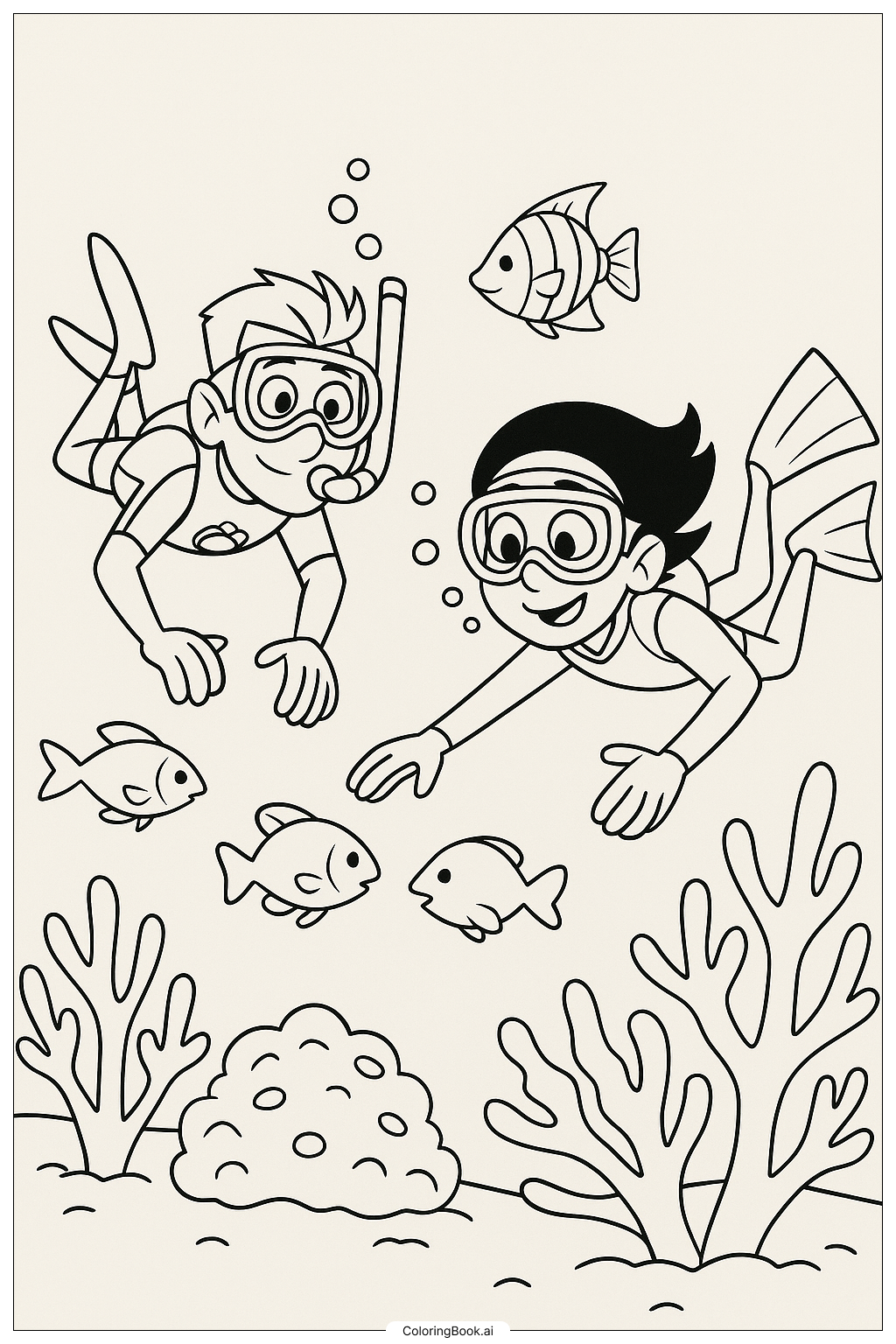
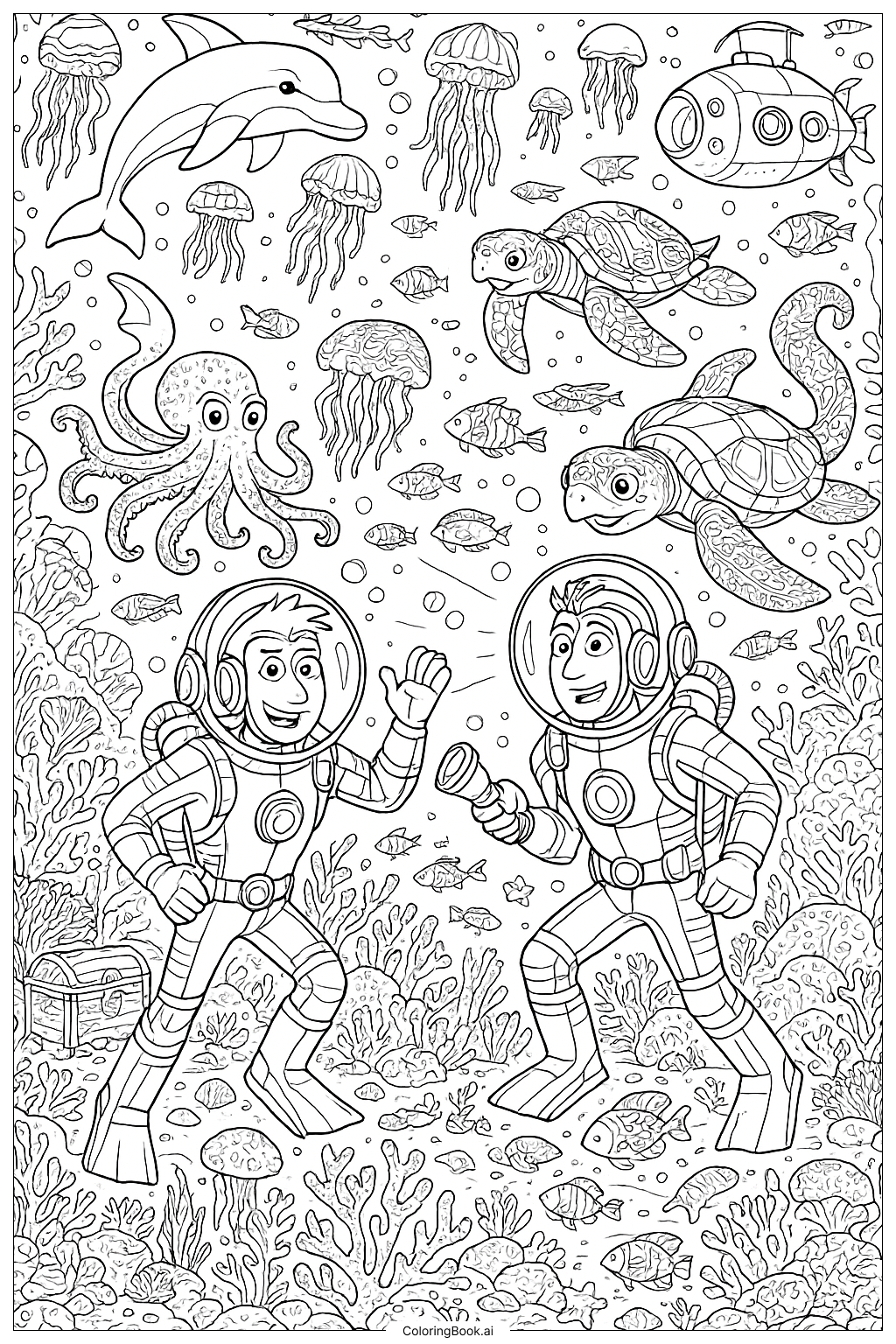
Start with the darkest background areas first. Use deep navy blue and dark purple for the water in the background to create the feeling of the deep ocean. Leave lighter areas near any glowing creatures to show off bioluminescence. For Chris and Martin's Creature Power Suits, use their classic green and blue colors. Add bright yellow or pale green to the anglerfish's lure and to glowing jellyfish to make them pop against the dark background. Use soft pinks and reds for coral and sea anemones. For the giant squid, try a dark reddish-brown or gray. Bright orange and white work great for smaller fish. Use light blue or white for the rising bubbles. Don't be afraid to use many shades of the same color — darker tones in corners and lighter tones near light sources will make the deep sea feel real and dramatic.
Coloring challenges: Which parts are difficult to color and need attention for Wild Kratts Deep Sea Exploration coloring page?
• Dark Background Gradients: The deep ocean setting requires smooth color transitions from nearly black at the edges to slightly lighter blues or purples near the center. Blending these dark shades without making the page look muddy is tricky and takes patience, especially for younger colorists.
• Bioluminescent Glow Effects: Showing the natural glow of deep-sea creatures like jellyfish and anglerfish is one of the hardest parts of this page. To create a believable glow, you need to layer light colors such as yellow, pale green, or white outward from the light source, which requires careful control of your coloring tool.
• Small and Intricate Details: The Creature Power Suits worn by Chris and Martin have small logos, panels, and design lines that are easy to smudge or color outside of. Tiny sea creatures like shrimp and crabs also have fine legs and antennae that require a sharp pencil or a fine-tipped marker to fill in neatly.
• Layering Textures on Sea Creatures: Animals like the giant squid and anglerfish have unique skin textures including spots, stripes, and rough surfaces. Representing these textures with color alone — using shading and stippling — is a challenging technique that adds realism but demands extra effort and skill.
• Color Contrast Balance: Because so many elements are dark, keeping the main characters and featured creatures visually distinct from the background is a real challenge. You need to pick colors that are noticeably different from the surrounding deep-sea tones so that Chris, Martin, and the sea life do not blend into the dark water.
Benefits of coloring books: Advantages of drawing Wild Kratts Deep Sea Exploration coloring page
Coloring this Wild Kratts Deep Sea Exploration page offers a wonderful mix of fun and learning. As kids color the deep-sea scene, they naturally become curious about real ocean creatures like anglerfish, giant squid, and jellyfish. This sparks an interest in marine biology and science in a totally stress-free way.
Choosing colors for a dark underwater world encourages creative thinking. Kids learn how light and shadow work together and discover how artists use color contrast to make images come alive. These are real artistic skills that grow with practice.
The detailed sections of the Creature Power Suits and tiny sea creatures help develop fine motor skills and hand-eye coordination. Staying within small lines and blending colors carefully builds the kind of steady focus that also helps with writing, drawing, and other school activities.
Spending time on a complex coloring page also builds patience and concentration. Completing a detailed scene gives kids a real sense of accomplishment and pride. This boosts confidence and encourages them to take on new challenges.
Finally, coloring is a calming activity. It reduces stress and gives kids a healthy, screen-free way to relax and express themselves. Sharing the finished page with family or friends adds a social and joyful element to the whole experience.