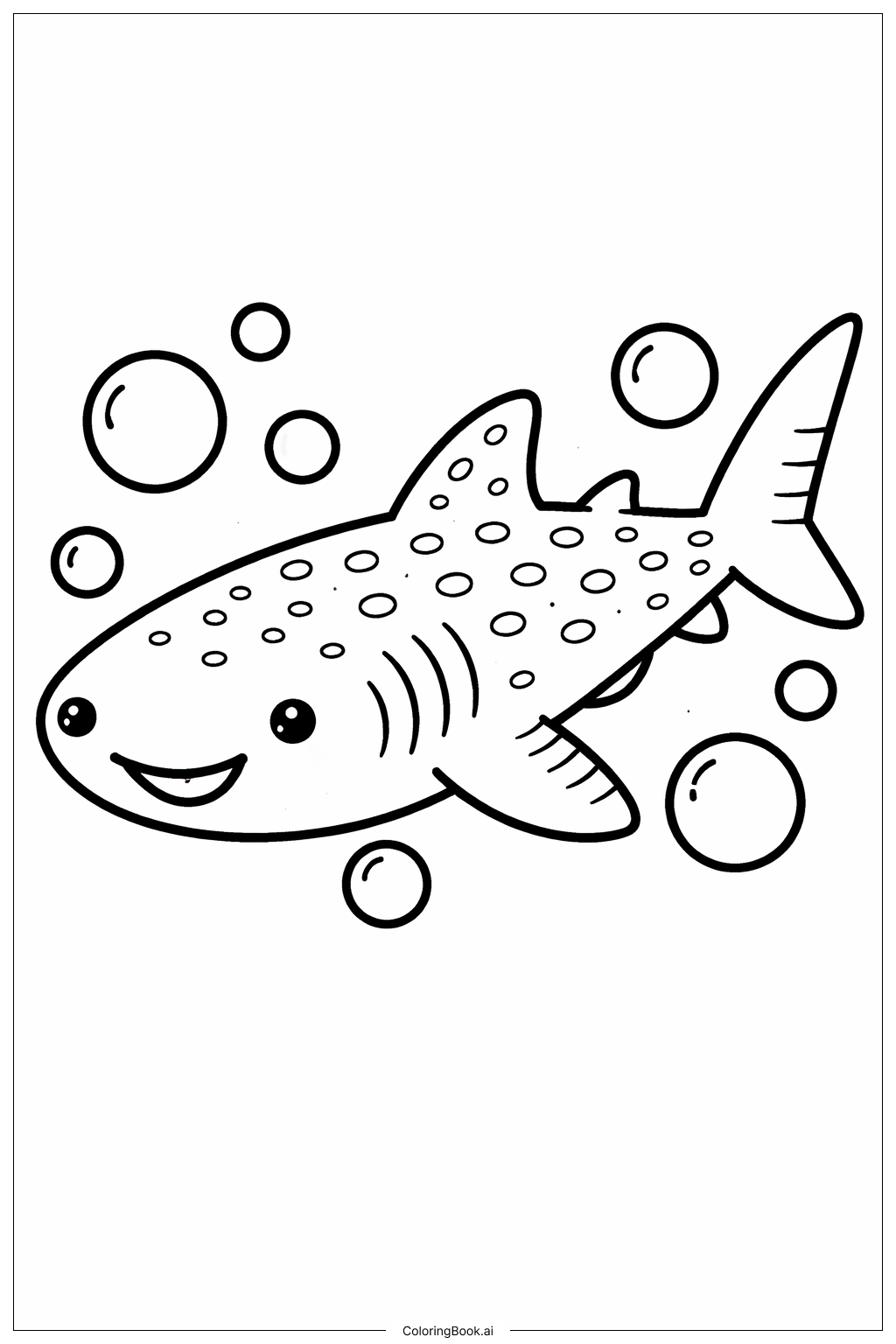
Coloring tips: How to color Whale Shark With Round Bubbles coloring page well?
Start with the whale shark's body using a deep blue-gray or dark blue as your base color. Then use a lighter blue or white to add the classic spots and stripes on its back and sides. The belly can be colored a soft cream or pale white, since real whale sharks have lighter undersides. For the round bubbles, try light blue, sky blue, or even a shimmery silver. You can leave a small white circle inside each bubble to make them look shiny and three-dimensional. Color the background water in shades of teal, ocean blue, or aqua to give the scene depth. Try blending darker blue at the bottom and lighter blue near the top to create a real underwater feeling. Kids can also get creative by adding coral, small fish, or colorful sea plants in the background to bring the ocean to life. Use colored pencils for smooth blending or markers for bold, bright results.
Coloring challenges: Which parts are difficult to color and need attention for Whale Shark With Round Bubbles coloring page?
• Spot and Stripe Pattern: The whale shark's body is covered in a detailed pattern of spots and stripes. Carefully staying inside each small spot without accidentally blending into the surrounding areas takes steady hands and patience. Using a fine-tipped colored pencil or thin marker will help keep each spot neat and well-defined.
• Smooth Body Shading: The whale shark has a large, curved body that benefits from gentle shading to look rounded and realistic. Blending two or three shades of blue or gray smoothly across such a big area can be tricky, especially for younger colorists. Working in light circular strokes helps avoid visible streaking.
• Round Bubbles with Highlights: The many bubbles scattered around the image need to look transparent and round. Leaving a small white or light highlight inside each bubble while coloring the rest in light blue gives them a glassy, realistic look. Doing this consistently across bubbles of different sizes requires careful control and planning.
• Background Ocean Depth: Creating a convincing underwater background means gradually shifting from lighter shades near the top to deeper, darker blues toward the bottom. This gradient effect is challenging to achieve smoothly without the colors looking patchy or uneven, especially when working around the shark's large body.
• Staying Inside Fine Outlines: The image contains many fine lines, especially along the edges of the fins and around each spot. Younger children may find it hard to stay precisely within these narrow outlines. Taking your time and using sharpened pencils makes this much easier to manage.
Benefits of coloring books: Advantages of drawing Whale Shark With Round Bubbles coloring page
Coloring this whale shark page offers a wonderful range of benefits for children and beginners alike. Working on the large, flowing body of the whale shark helps build fine motor skills and hand control, which are important for writing and other everyday tasks. The intricate spot and stripe pattern encourages focus and concentration, helping kids practice patience as they carefully fill in each section. Choosing colors for the ocean background and the bubbles sparks creativity and imagination, allowing children to design their very own underwater world. Learning about the whale shark's unique look also gently introduces kids to marine biology and nature, making this a fun educational activity as well. The repetitive, calming motion of coloring reduces stress and anxiety, making it a great way for children to unwind after a busy day. Completing the full page gives a strong sense of achievement and pride, building confidence and encouraging kids to take on bigger creative challenges. Overall, this page combines artistic expression, learning, and relaxation in one enjoyable activity that is suitable for a wide range of ages and skill levels.