Coloring tips: How to color Whale Shark Feeding At Surface coloring page well?
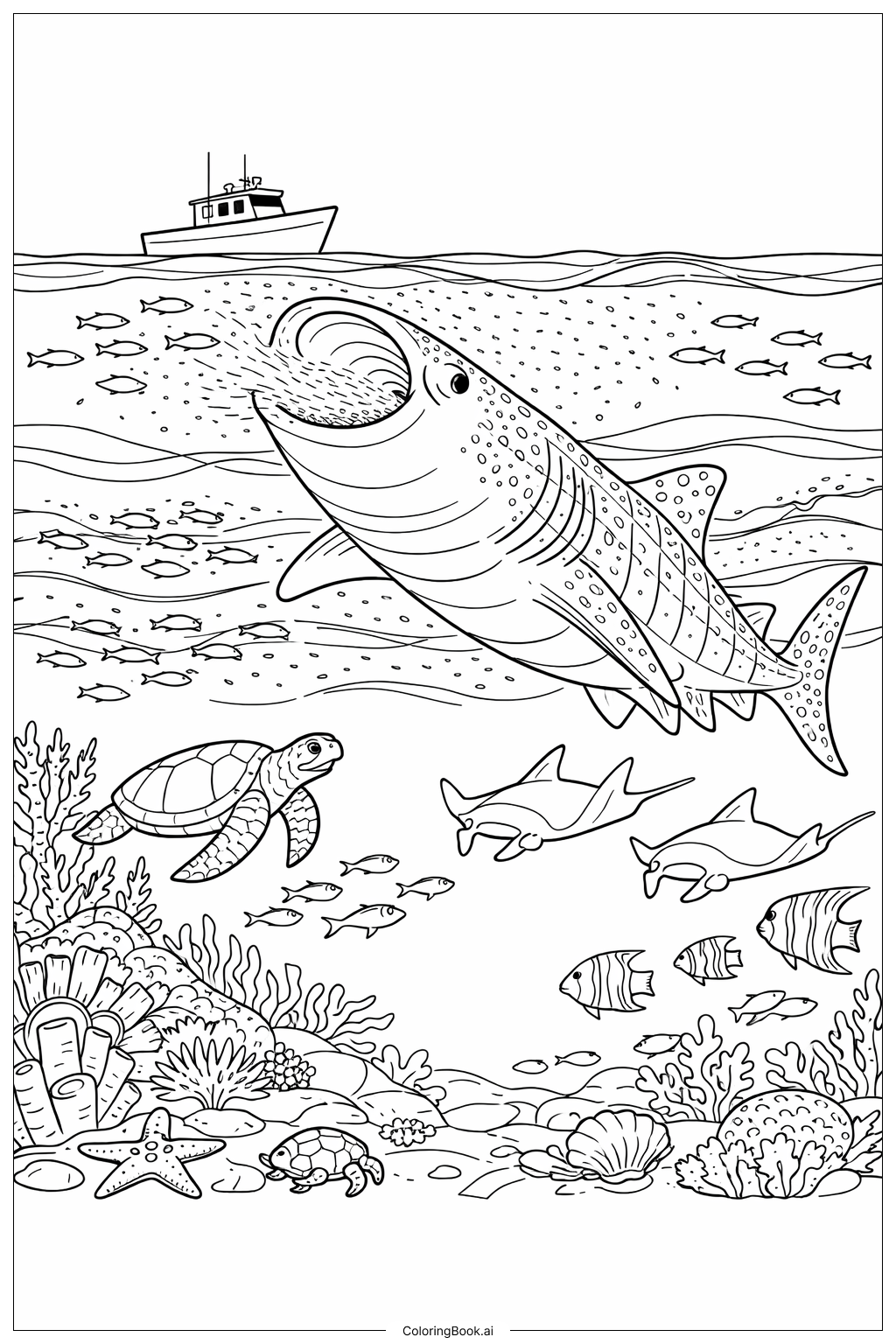
Use soft blues and turquoise shades for the water to create a clear ocean feeling. For the Whale Shark’s body, pick a dark gray or deep blue base color with white or pale yellow dots and stripes to highlight its unique pattern. You can color the smaller fish with lively colors like yellows, oranges, or silvers to make them stand out. Consider adding light reflections on the water surface using lighter blues or white to show sunlight. Keep the colors gentle and smooth to match the calm mood of the scene.
Coloring challenges: Which parts are difficult to color and need attention for Whale Shark Feeding At Surface coloring page?
• Whale Shark Patterns: Coloring the many small spots and stripes on the Whale Shark requires careful attention to keep the shapes neat and consistent. It can be tricky to balance color contrast so the pattern looks natural. • Water Surface Details: Showing the movement and shine of water means blending different shades of blue and white smoothly. It may be challenging to create a realistic ripple effect without harsh lines. • Small Fish Coloring: The fish are tiny and close to the Whale Shark, needing precise coloring to avoid overlapping or blurring edges. • Proportions and Scale: Keeping the Whale Shark looking large and majestic relative to the small fish and waves demands careful coloring to emphasize size differences. • Light and Shadow: To make the scene lively, you must think about where light hits the Whale Shark and water. Shading and highlighting areas can be difficult but important to create depth.
Benefits of coloring books: Advantages of drawing Whale Shark Feeding At Surface coloring page
Coloring this Whale Shark Feeding At Surface image helps improve focus and fine motor skills due to its detailed patterns and small elements. It encourages children to study nature closely, learning about marine life and the unique features of Whale Sharks. Adding color to water and animals supports creativity and understanding of light and color blending. This activity also promotes relaxation and patience as users work slowly to fill in the spots, stripes, and gentle waves. Overall, it’s a fun way to combine art with ocean education.