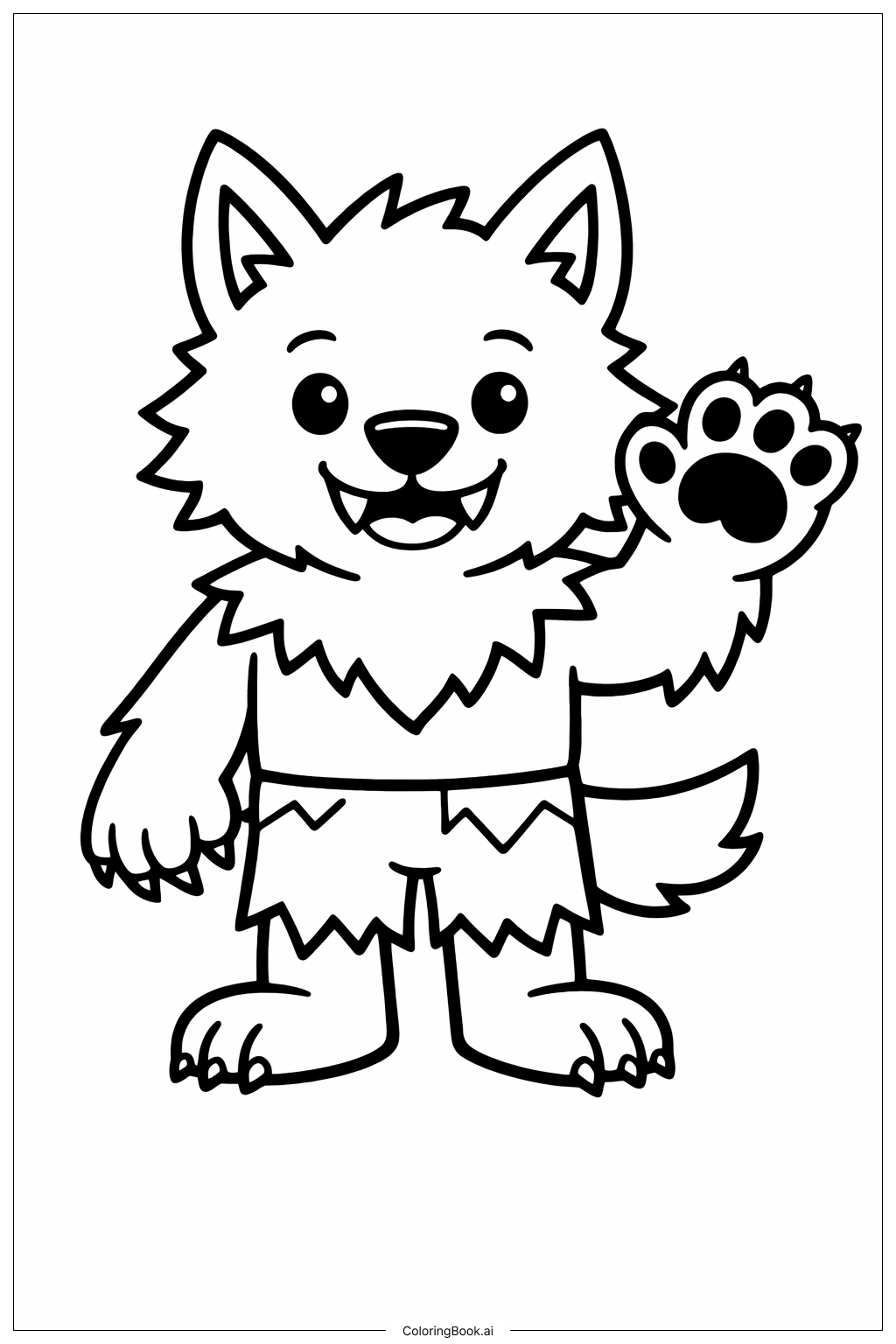
Coloring tips: How to color Werewolf Waving Paw coloring page well?
Use shades of gray, brown, or black for the werewolf's fur to make it look natural. You can add lighter colors inside the ears and on the paw pads for contrast. The shorts can be colored in bright colors like red, blue, or green to add a fun touch. Don’t forget to color the eyes shiny black with white spots to make them sparkle. Use different shades on the fur to create texture and depth. Background colors like green for grass or blue for the sky will make the character stand out.
Coloring challenges: Which parts are difficult to color and need attention for Werewolf Waving Paw coloring page?
1. Fur Texture: Coloring the shaggy fur evenly without going outside the lines can be tricky. It needs patience to show the fluffiness. 2. Paw Details: The paw with its pads and claws has small shapes that require careful coloring. 3. Face Features: The eyes and mouth are small and need detail to keep the friendly look. 4. Shorts Patterns: The torn edges and designs on the shorts may be difficult to stay inside. 5. Balance of Colors: Choosing colors that work well together while making the werewolf look lively can be challenging.
Benefits of coloring books: Advantages of drawing Werewolf Waving Paw coloring page
Coloring this werewolf helps improve focus and fine motor skills as children carefully fill in areas of different shapes and sizes. It encourages creativity by letting kids experiment with colors for fur, clothes, and background. The friendly pose and happy face make coloring fun and reduce stress. It also helps children learn to keep colors within lines, boosting hand-eye coordination. Overall, this activity is a joyful way to practice artistic skills and imagination.