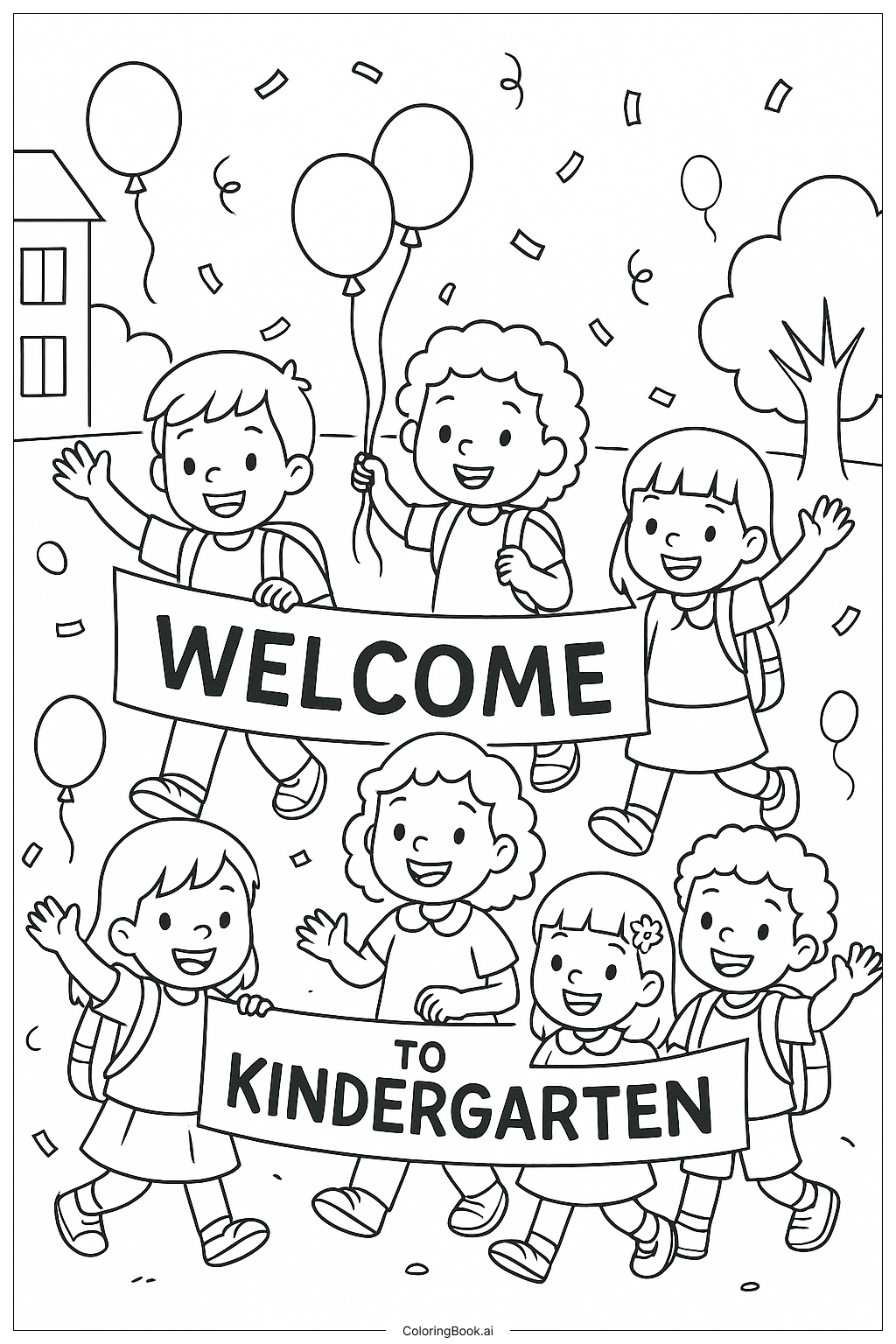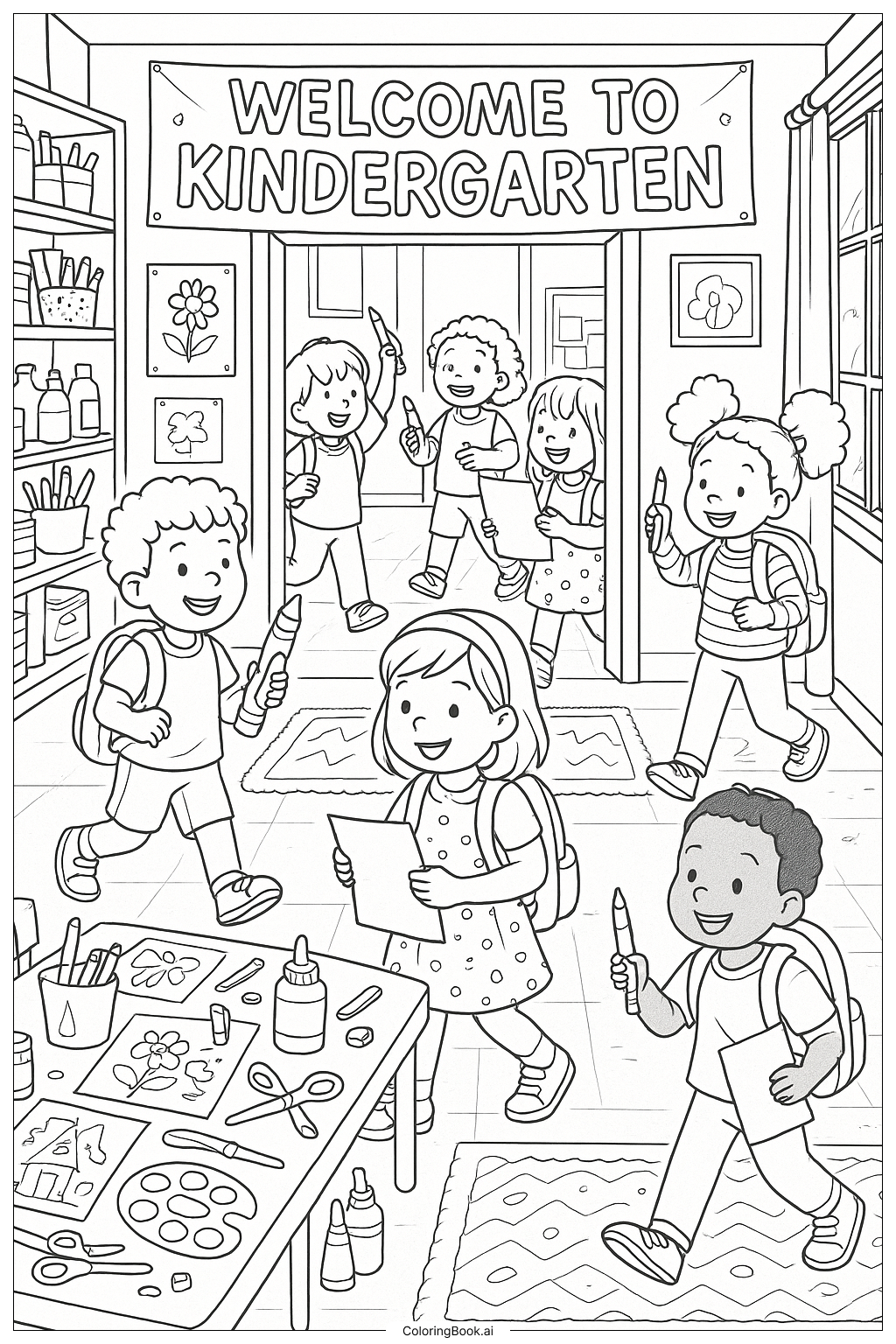
Coloring tips: How to color A Busy Welcome To Kindergarten Art Center coloring page well?
Start with the children's skin tones using soft peach, tan, or brown shades. Then move to their clothing — use bright, cheerful colors like red, yellow, blue, and green to make the kids pop. Color the art supplies in bold, vivid hues: yellow pencils, red paintbrushes, and multicolored crayon boxes. For the shelves and furniture, use warm wood tones like light brown or tan. Paint jars can be filled with rainbow colors to show a variety of paints. The wall decorations and children's artwork on display can be colored however you like — the more colorful, the better! Use a soft yellow or cream for the walls to keep the room feeling warm and inviting. Save bright accent colors for small details like the supply bins and labels on shelves.
Coloring challenges: Which parts are difficult to color and need attention for A Busy Welcome To Kindergarten Art Center coloring page?
• Coloring the Children's Faces and Expressions: The small faces of the kindergarten students have fine details like eyes, noses, and smiling mouths. These tiny features require a steady hand and a sharp colored pencil or fine-tip marker. Rushing through these areas can cause colors to bleed into one another and ruin the expressions that give the scene its charm.
• Managing the Art Supplies Clutter: The art center is packed with many small objects — crayons, scissors, paintbrushes, glue sticks, and paper stacks. Each item is distinct and needs its own color to stand out. Keeping these items visually separate without the image looking too chaotic takes careful color planning and patience.
• Coloring the Background Shelves and Bins: The shelves in the background contain multiple containers and materials placed close together. Coloring each bin or jar a different color while maintaining clean borders between items is tricky, especially in a busy, densely packed scene.
• Handling Wall Decorations and Hanging Artwork: The decorative elements on the walls — posters, children's drawings, and hanging crafts — are small and detailed. Coloring these mini artworks within the artwork requires creativity. You need to choose colors that complement the surrounding scene without blending into the wall.
• Balancing the Overall Color Palette: With so many characters, objects, and background elements, it can be hard to keep the whole image balanced. Using too many bright colors at once can make the scene look overwhelming, while too few can make it look flat. Planning a cohesive color palette before you start will make a big difference.
Benefits of coloring books: Advantages of drawing A Busy Welcome To Kindergarten Art Center coloring page
Coloring this Welcome To Kindergarten art center scene offers a wonderful range of benefits for young learners and older colorists alike. For children, filling in the details of a familiar school setting helps build a positive emotional connection to learning and creativity. It can ease any nervousness about starting school by making the classroom feel fun and friendly.
This image also develops fine motor skills. Carefully coloring small items like crayons, paintbrushes, and tiny faces strengthens hand-eye coordination and pencil control — skills that are directly useful in the classroom.
Working through a busy, detail-rich scene like this one builds focus and patience. Kids learn to slow down, plan ahead, and pay attention to small details without feeling rushed.
For adults, this type of nostalgic school scene can be a calming and meditative activity. It invites reflection on childhood memories while providing a satisfying creative outlet.
The image also sparks imagination. Choosing colors for the mini artworks hanging on the classroom walls or decorating the supply bins gives colorists a chance to express their own artistic voice within the page.
Overall, this coloring page is a joyful, enriching activity that blends creativity, focus, and emotional warmth into one rewarding experience.