Coloring tips: How to color Watermelon Wedge On Plate coloring page well?
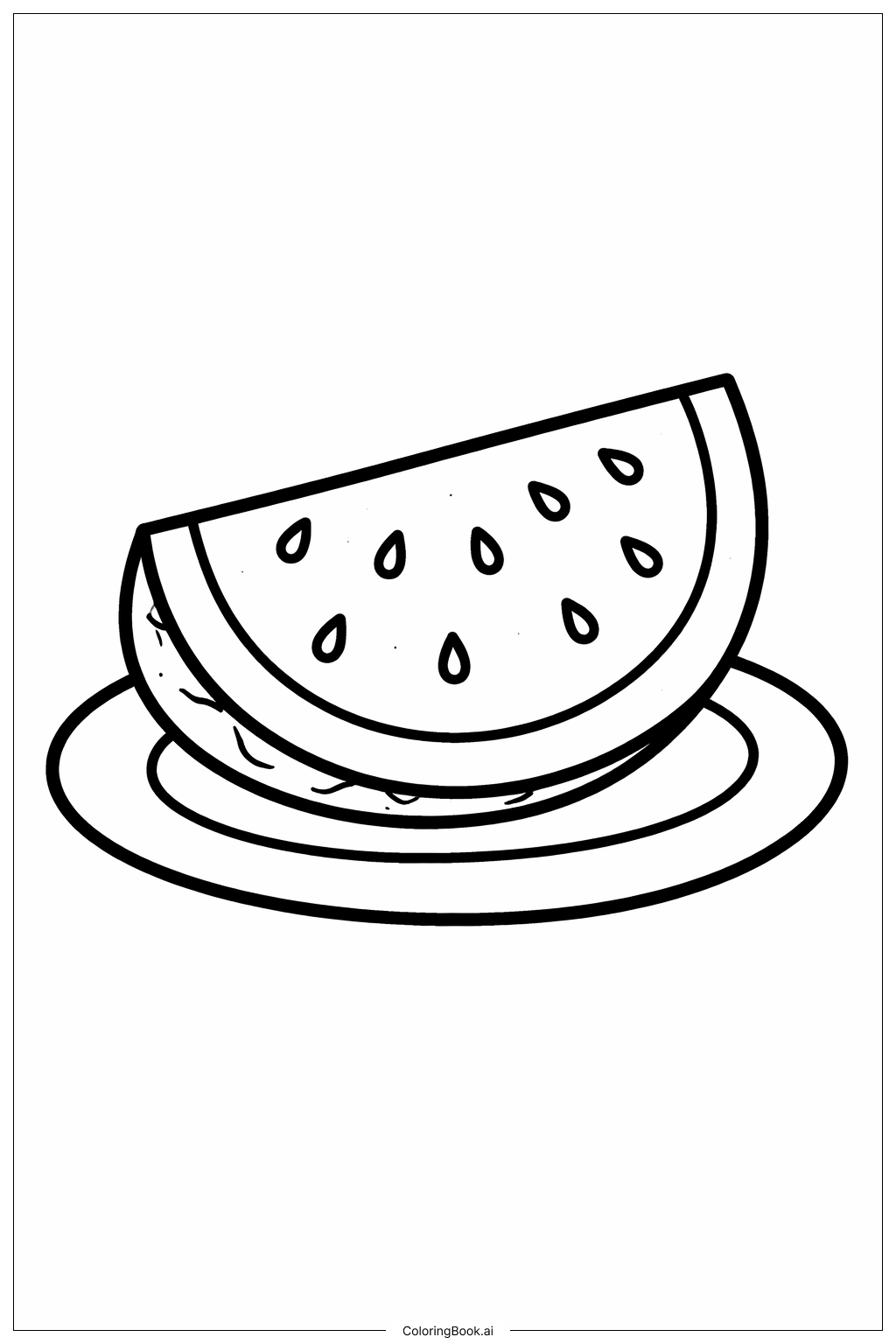
Use bright red or pink for the watermelon flesh to show its juicy inside. Color the seeds black or dark brown to make them stand out against the flesh. For the rind, use different shades of green, starting with a dark green outer edge and a lighter green inner stripe. The plate can be colored in light pastel colors or keep it simple with white and grey shades to not take attention away from the watermelon. Try using coloring pencils or crayons for smooth blending of colors. Add gentle shading to show the round shape of the watermelon wedge and plate.
Coloring challenges: Which parts are difficult to color and need attention for Watermelon Wedge On Plate coloring page?
1. Coloring the watermelon seeds can be tricky because they are small and need to stay clear and distinct from the red flesh. Stay within the seed outlines carefully.
2. Adding texture to the rind is challenging. The rind has to look natural with different green shades while keeping clean lines.
3. Coloring the plate evenly without making it too dark can be hard because it needs to look smooth and simple.
4. Shading the curved shape of the watermelon wedge to give it a three-dimensional look requires careful blending.
5. Keeping the colors inside the lines, especially around the edges of the watermelon and plate, needs focus and control.
Benefits of coloring books: Advantages of drawing Watermelon Wedge On Plate coloring page
Coloring this picture helps children develop fine motor skills by practicing careful coloring inside small spaces like the seeds. It encourages their creativity through choosing different shades of red and green to represent the watermelon. The image also helps improve concentration and attention to detail when shading and coloring smooth areas like the plate. Overall, it offers a fun and educational way to learn about fruits and food presentation while enjoying art.