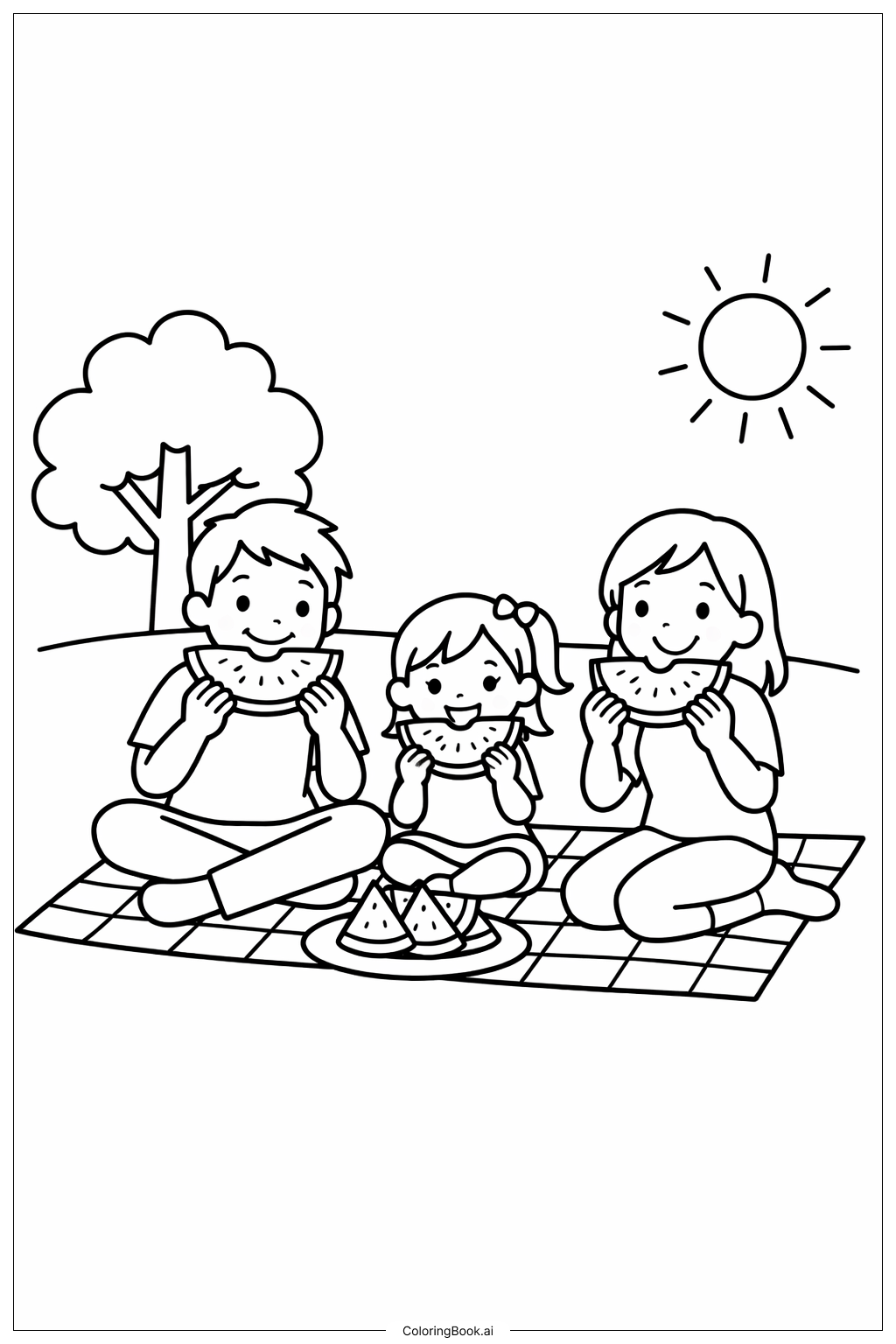
Coloring tips: How to color Watermelon On Table coloring page well?
Use bright green and dark green to color the watermelon’s outer skin, showing the wavy patterns with alternating shades. The stem on top can be colored brown or green. For the table, you can use light brown, beige, or grey to give it a wooden look. Adding shading under the watermelon on the table will create a nice effect of the watermelon sitting on the surface. Try to use smooth and even strokes to keep the table looking solid and stable. You can also add some highlights or light spots on the watermelon for a fresh, shiny appearance.
Coloring challenges: Which parts are difficult to color and need attention for Watermelon On Table coloring page?
1. Coloring the wavy stripes on the watermelon can be tricky, as it requires careful attention to keep the lines neat and follow the curves. 2. Creating a realistic wooden texture on the table might be difficult for beginners who want to show wood grain and shadows. 3. Shading under the watermelon to make it look three-dimensional needs gradual color transitions, which can be challenging. 4. The small drops or marks on the table need fine coloring to avoid smudging neighboring areas. 5. Keeping the overall picture balanced with contrasting colors without making it too crowded can be a bit complex for young artists.
Benefits of coloring books: Advantages of drawing Watermelon On Table coloring page
Coloring this image helps kids learn about colors and patterns. It encourages attention to detail, especially with the watermelon stripes. It also improves hand-eye coordination and fine motor skills because of the small shapes and areas to color. The image promotes creativity by allowing children to choose colors for the table and watermelon. It can be a fun way to understand natural objects and practice patience while coloring within the lines.