Coloring tips: How to color Watermelon Garden Patch coloring page well?
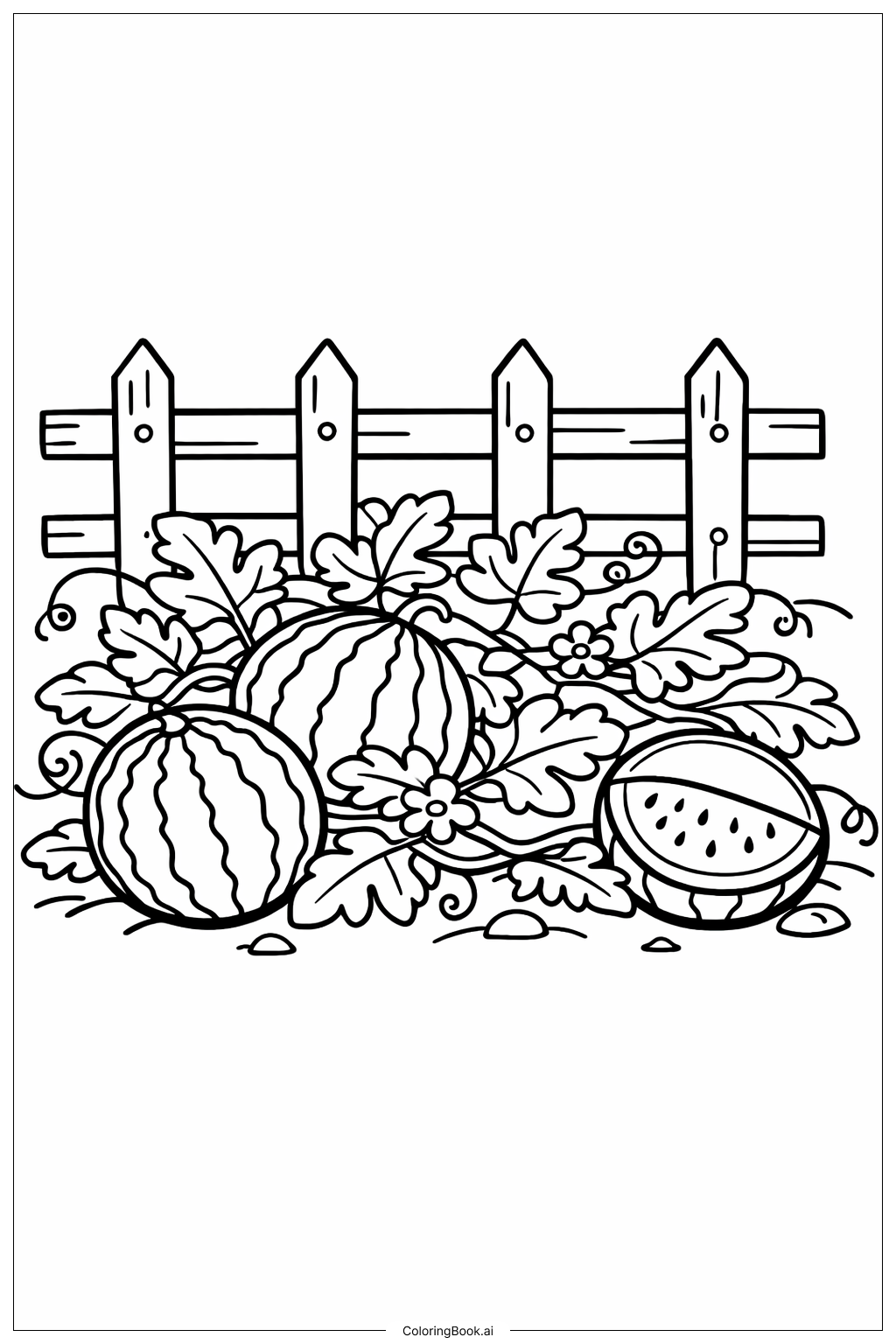
For coloring this picture, start with bright green shades for the leaves and vines to make them look fresh and lively. Use different greens to show depth. Watermelons can be colored with a smooth dark green for the outer skin and a mix of pink, red, and light green for the inside flesh and rind of the cut watermelon. The seeds should be small dark brown or black dots. The wooden fence can be colored with light browns and tans, using darker shades to add texture. The ground can be a mix of brown and beige to show soil and rocks. Try using lighter colors for flowers to make them stand out gently.
Coloring challenges: Which parts are difficult to color and need attention for Watermelon Garden Patch coloring page?
1. Coloring the watermelon vines and leaves can be tricky because they have many small, detailed shapes that need careful attention to stay inside the lines. 2. Adding depth with different shades of green requires some blending skills that can be hard for younger children. 3. The cut watermelon inside has many small seeds that require precise coloring, which may be challenging to do neatly. 4. Coloring the wooden fence to look realistic means using multiple shades to show wood texture, which can be difficult. 5. Staying inside the thin lines of small flowers and vine tendrils needs patience and fine motor control.
Benefits of coloring books: Advantages of drawing Watermelon Garden Patch coloring page
Coloring this watermelon garden patch helps children develop fine motor skills through the detailed leaves and seeds. It encourages creativity in choosing colors for natural elements like fruits, leaves, and wood. The task also improves focus and patience, as the picture has many small parts needing careful attention. Coloring the garden scene can teach kids about nature and growing plants, making it a fun and educational activity.