Coloring tips: How to color Watermelon Ball Toy coloring page well?
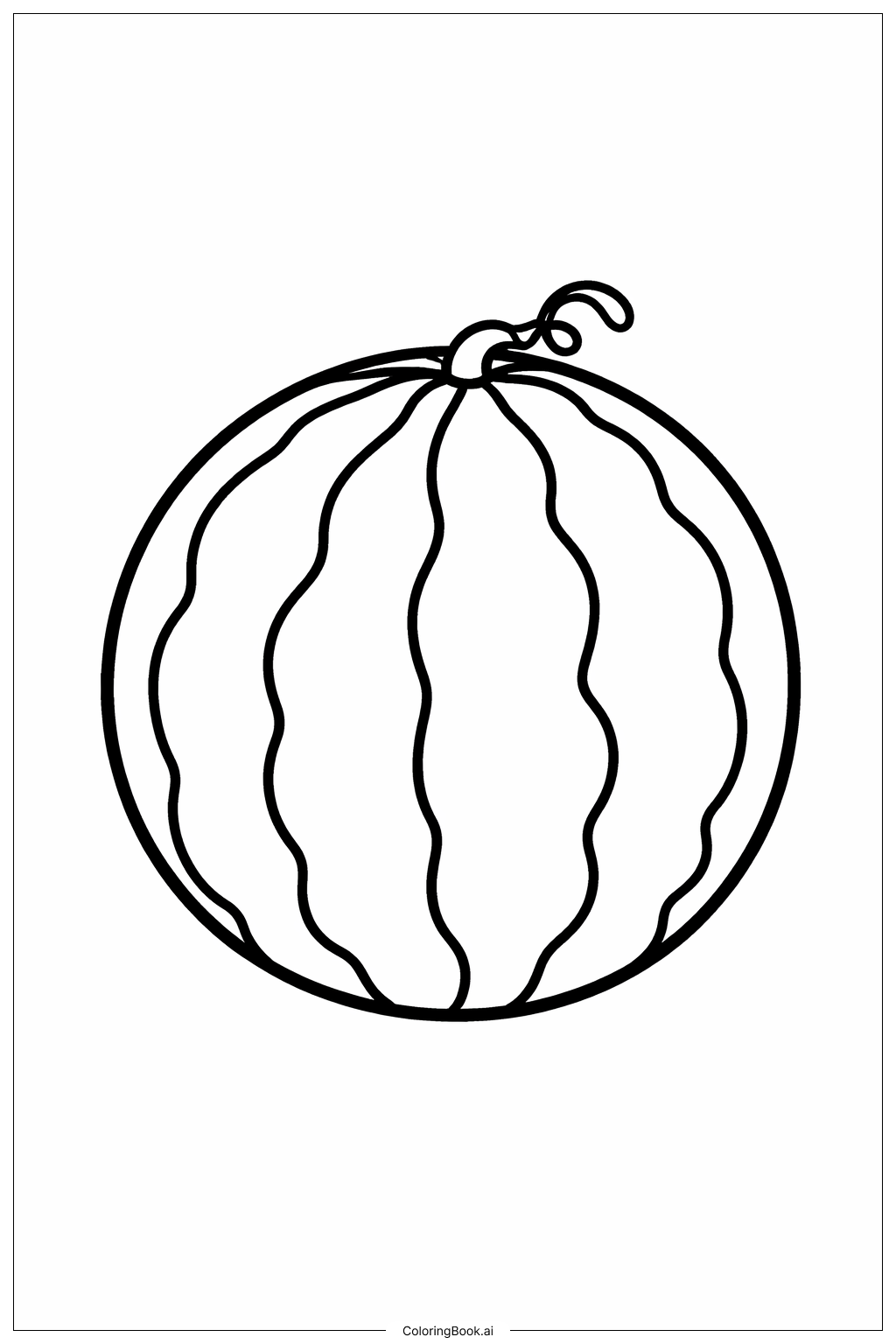
Start by coloring the main sections of the watermelon with bright green shades for the outer skin. Use different tones of green to show the stripes—darker green for the stripes and lighter green in between. For the top stem and vine, use brown and dark green colors to make them stand out. You can also add some shading by blending colors gently to give the ball a 3D look. Use pink or red tones if you want to color the watermelon flesh inside, imagining the ball being sliced open. Have fun experimenting with different green shades to make your watermelon ball unique!
Coloring challenges: Which parts are difficult to color and need attention for Watermelon Ball Toy coloring page?
1. Coloring the wavy stripes evenly can be tricky because they curve and twist around the ball shape, requiring careful attention to stay within the lines.
2. The small stem and curly vine need detailed coloring, which might be difficult for younger children to color accurately.
3. Creating a natural look with colors requires blending different green shades smoothly, which can be challenging for beginners.
4. Avoiding color bleeding between the stripes needs focus and steady hand control, especially when using markers or watercolor.
5. Adding a 3D effect by shading might be hard as it needs understanding of light and shadow to make the ball look rounded.
Benefits of coloring books: Advantages of drawing Watermelon Ball Toy coloring page
Coloring this watermelon ball toy helps children improve fine motor skills by practicing staying inside the lines. It encourages creativity as kids choose different shades of green and decide how to color the stem and vine. This activity also teaches them about shapes and patterns, especially the unique wavy stripes of a watermelon. Coloring the details enhances focus and patience. Most importantly, it is a fun way to relax and express themselves with bright, happy colors.