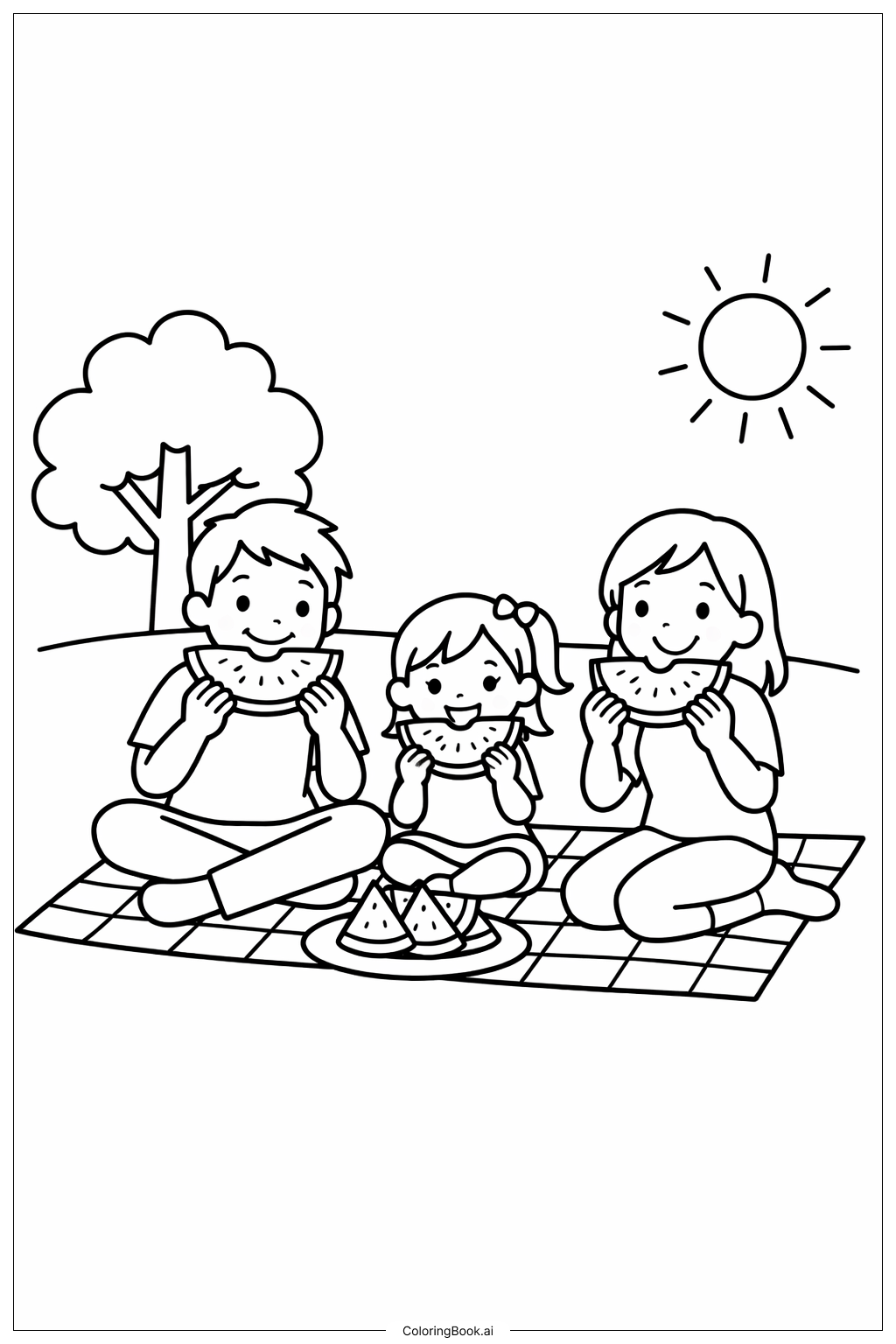
Coloring tips: How to color Tiny Watermelon Seed Row coloring page well?
For this Tiny Watermelon Seed Row image, you can use soft shades of brown or black to color each seed, since watermelon seeds are usually dark. Try using light green or pale yellow for the background to represent fresh soil or a garden bed. You can also add subtle highlights on the seeds with a white or cream color to make them look shiny and smooth. To make the seeds stand out, use a darker outline color like dark brown or black around each seed. Children can experiment with different greens around the row to show grass or small plants growing nearby. Using colored pencils or crayons with fine tips will help color inside the small seed shapes neatly. Feel free to add little dots or tiny patterns on the seeds to make them more playful and unique.
Coloring challenges: Which parts are difficult to color and need attention for Tiny Watermelon Seed Row coloring page?
• Small Details: The tiny size of each watermelon seed requires careful coloring and attention to stay within the small outlines without going over the edges.
• Uniform Spacing: Maintaining consistent color shades across all seeds can be challenging to keep the row looking even and harmonious.
• Subtle Shading: Adding highlights or shadows to give a sense of roundness on the seeds may be tricky for younger children due to the seeds’ small size.
• Patience Required: Coloring a long row of repeating elements demands patience and focus, which might test the concentration of some children.
• Background Balance: Choosing and applying a background color that complements the seeds without overpowering them can be difficult, especially with limited space around the row.
Benefits of coloring books: Advantages of drawing Tiny Watermelon Seed Row coloring page
Coloring this Tiny Watermelon Seed Row helps children develop fine motor skills by practicing precise coloring within small shapes. It encourages patience and attention to detail as they carefully fill each seed. This activity also promotes concentration and hand-eye coordination, useful for many other creative tasks. Working on a repetitive pattern teaches kids about consistency and rhythm through coloring. Additionally, it can boost creativity by inviting children to experiment with different colors and shading techniques. Overall, this simple image is a wonderful way to build foundational art skills while having fun with nature-themed content.