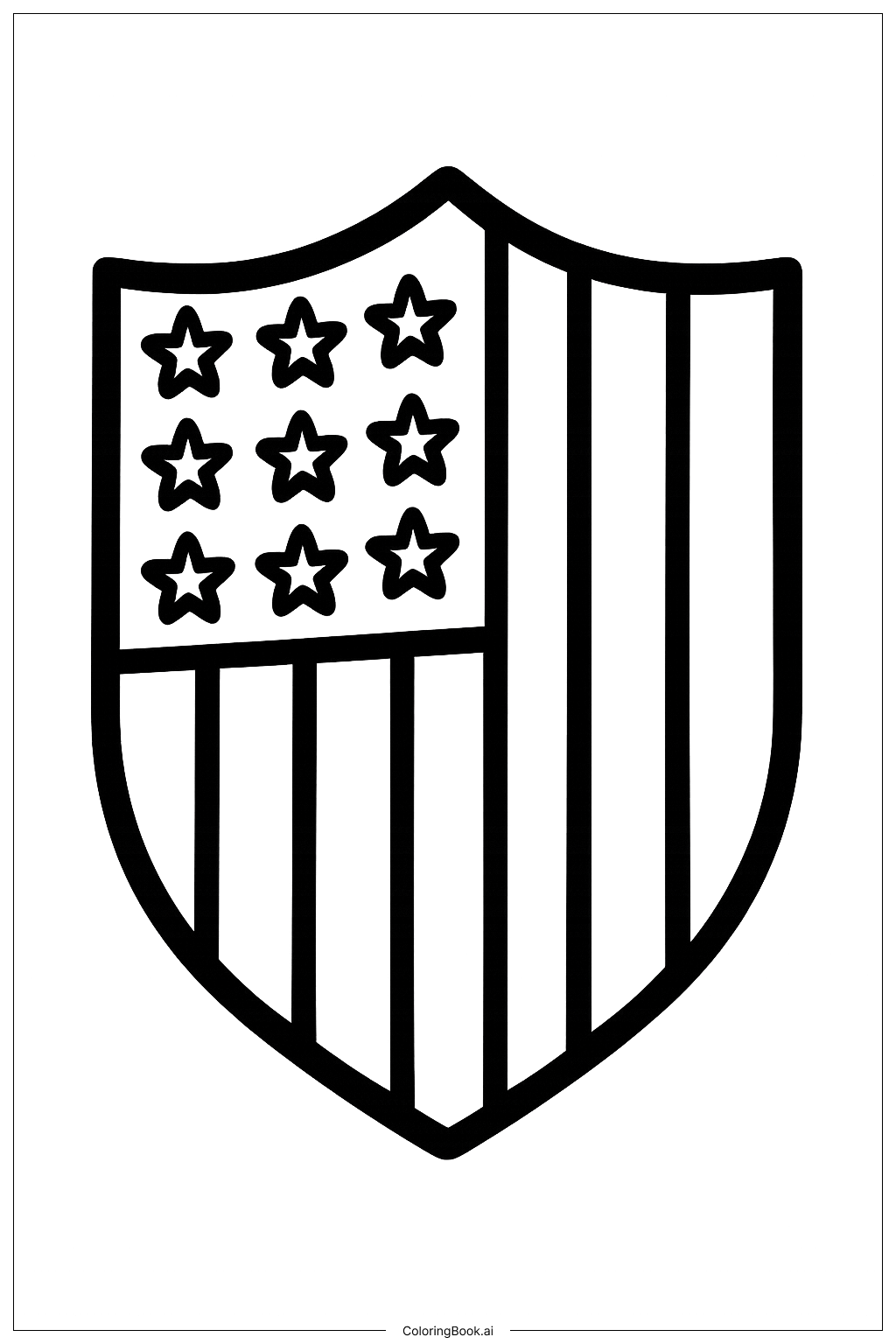
Coloring tips: How to color USA Flag Shield coloring page well?
Start with the star field at the top of the shield. Fill it in with deep blue to create a rich, classic look. Use bright red and clean white to alternate the stripes in the lower section. Keep the red stripes bold and the white stripes as light as possible. You can leave the white stripes uncolored to let the paper show through naturally. Color the shield border with gold or yellow to make it stand out. For younger kids, using thick crayons or markers makes it easier to stay inside the lines. Older colorists can try colored pencils to blend shades and add depth to the stars and stripes. Take your time with the stars — they are small but important. A fine-tip marker or a sharp colored pencil works best for those tiny shapes. Stay consistent with the stripe colors to keep the flag looking authentic and recognizable.
Coloring challenges: Which parts are difficult to color and need attention for USA Flag Shield coloring page?
• Star Field Precision: The upper section of the shield contains many small stars arranged in rows. Coloring each star neatly without smudging the surrounding blue background is tricky. A fine-tip tool is strongly recommended. Younger children may find it easier to simply color over the entire star field area in blue without worrying about individual star outlines.
• Stripe Consistency: The red and white stripes must alternate evenly across the lower shield. Keeping each stripe the same width and color intensity can be challenging, especially near the curved edges of the shield where the lines taper. Working slowly from top to bottom helps maintain a clean result.
• Shield Border Details: The outer edge of the shield often includes decorative lines or ornamental borders. These narrow areas require careful control to avoid coloring outside the design. Using a thin marker or a sharpened pencil for border work prevents accidental overflow onto the background.
• Curved Edges and Symmetry: The shield shape itself is symmetrical, meaning both sides should look balanced when finished. Applying color evenly on both the left and right halves takes patience. Rotating the page as you work can help you maintain an even hand pressure on both sides.
• Color Transitions at Section Borders: Where the blue star field meets the top stripe, there is a clean boundary that must be respected. Bleeding blue into the red or white stripes breaks the flag design. Outlining the boundary lightly with a matching color before filling in each section helps keep transitions sharp and intentional.
Benefits of coloring books: Advantages of drawing USA Flag Shield coloring page
Coloring this USA Flag Shield page offers a wonderful mix of creative and educational rewards for kids and adults alike. Working with the flag design helps children learn about American symbols and national identity in a hands-on, memorable way. Recognizing the stars and stripes reinforces early social studies concepts without feeling like a lesson.
The structured layout of stripes and stars gives younger colorists clear boundaries to follow, which builds fine motor skills and hand control. Staying inside defined lines takes focus and practice, and this image provides plenty of opportunity for both.
For older children and adults, the detailed star field and precise stripe work encourage patience and concentration. Choosing the right shades of red, white, and blue also develops color recognition and decision-making skills.
Completing the shield gives a strong sense of accomplishment. The finished page looks impressive and can be displayed proudly. This makes the activity feel meaningful beyond just passing time.
Coloring also has a calming effect. The repetitive motion of filling in stripes and carefully dotting in stars helps reduce stress and brings a quiet sense of focus. It is a relaxing activity that works well for a wide range of ages, from young children discovering Coloring Pages for the first time to Adults looking for a mindful creative outlet.