Coloring tips: How to color USA Flag On Pole coloring page well?
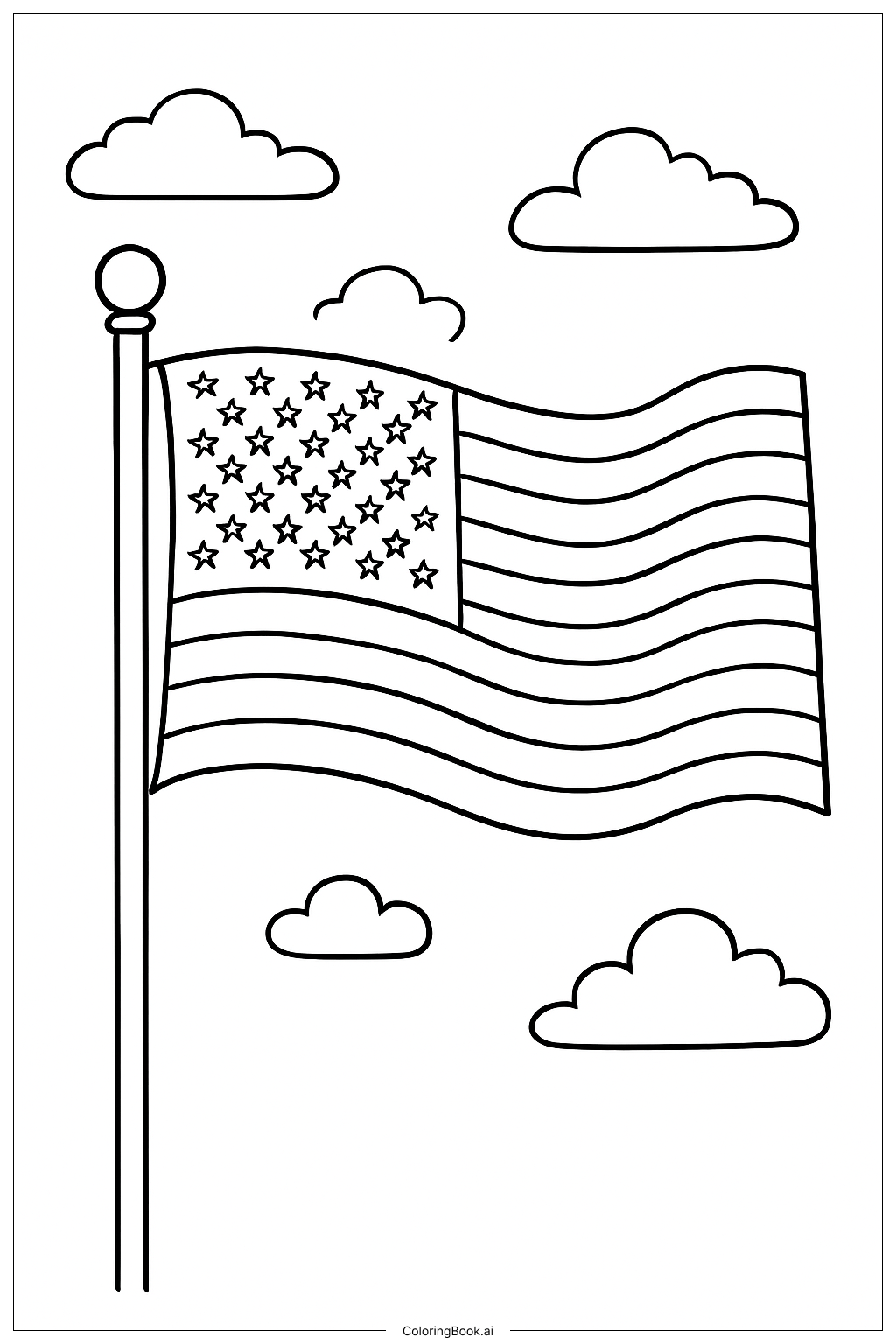
Children can use red for the stripes, white for the gaps, and blue for the square with stars. Bright colors will make the flag stand out. They can also add a touch of creativity by coloring the clouds in light blue or gray. Using different shades of blue for the flag can also create depth. Encouraging children to use colors that express their feelings about the flag can make this activity even more personal. They might want to use sparkly crayons or markers to add some fun touches to the stars.
Coloring challenges: Which parts are difficult to color and need attention for USA Flag On Pole coloring page?
1. Staying within the lines: Younger children might find it challenging to color neatly within the stars and stripes due to the intricate details. They need to practice control of their coloring tools. 2. Color choices: Children may struggle to choose the right shades of red, white, and blue. They might be confused by the requirements for the American flag. 3. Blending colors: If kids want to create depth by blending colors, they may find it challenging. Learning how to blend shades can take practice. 4. Detailed areas: The stars in the flag require careful coloring. Focusing on small areas can be frustrating for some children. 5. Patience: Some kids might lose interest if the coloring takes too long, especially with detailed designs, requiring a boost in concentration.
Benefits of coloring books: Advantages of drawing USA Flag On Pole coloring page
Coloring this American flag image helps children learn about their country's symbol in a fun way. It promotes creativity, enabling kids to express themselves through colors. This activity also enhances fine motor skills, improving hand-eye coordination. As they color, children develop focus and patience, skills that are important for their overall growth. Coloring can be a relaxing activity, helping kids unwind while being productive. It can also spark discussions about patriotism and national pride, giving them a deeper understanding of their cultural heritage.