Coloring tips: How to color Turkey Making Nest coloring page well?
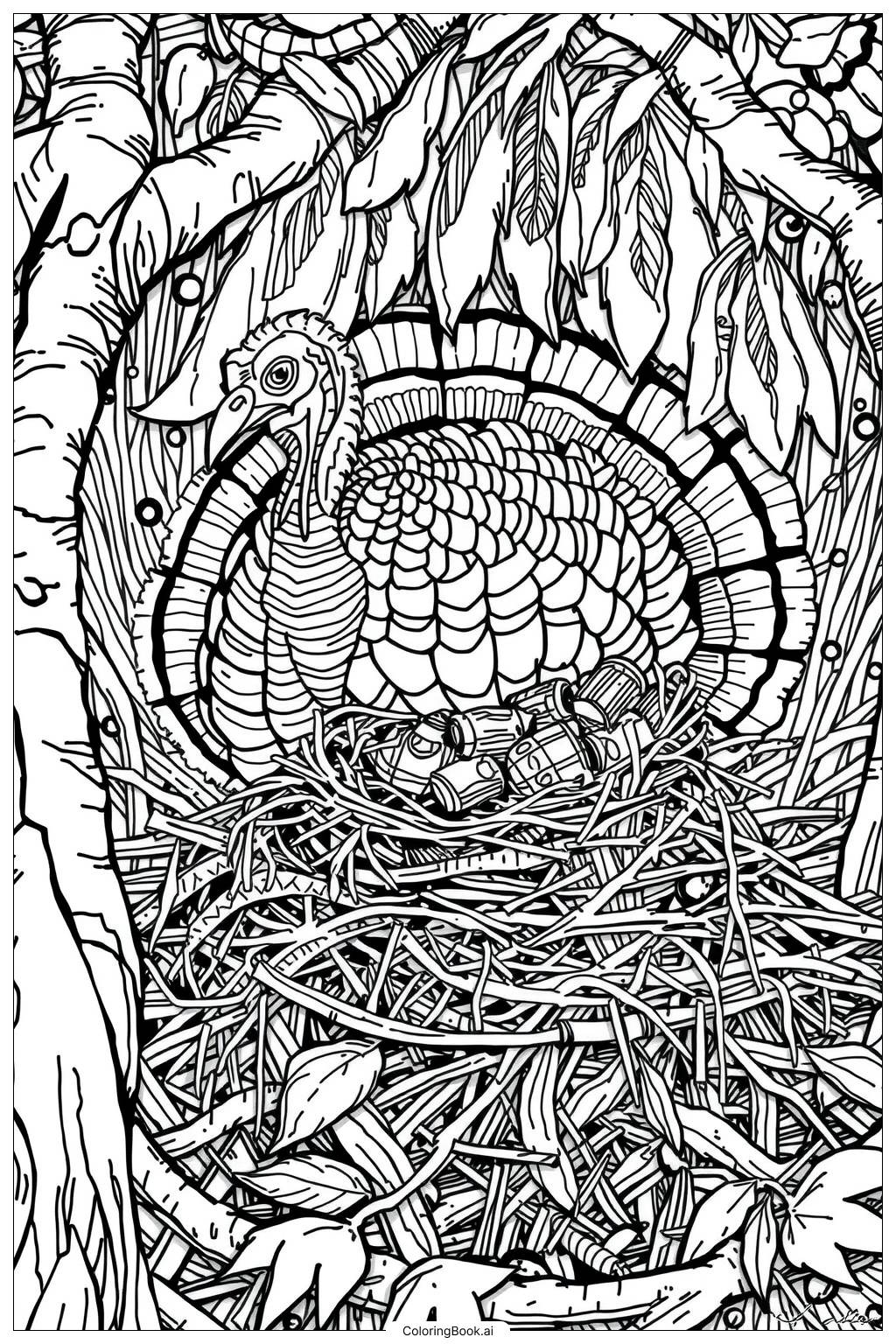
For this turkey coloring page, try using rich and warm colors. You can color the turkey’s feathers with shades of brown, rust, and orange to give it a realistic look. Use a lighter shade, like cream or beige, for the softer feathers around its neck. The grass can be various greens, from bright to dark, to make the setting lively. Browns and yellows work well for the twigs and leaves in the nest. You can even add some blue or gray to give hints of sky or shadows on the ground. Don’t forget to color the turkey’s beak and feet with soft orange or yellow. Have fun blending colors to show textures like feathers, grass, and dry leaves!
Coloring challenges: Which parts are difficult to color and need attention for Turkey Making Nest coloring page?
• Feathers Texture: The turkey’s feathers have many fine details and layers. Coloring them evenly while showing their different shapes can be challenging for beginners.
• Nest Materials: The nest contains a mix of twigs, leaves, and grass. It requires using different shades of brown and green to create a realistic look without making the area too crowded.
• Small Details: The turkey’s eye and beak are small but important features. Coloring inside these tiny parts carefully is necessary to keep the image neat.
• Overlapping Objects: The turkey overlaps with grass and nest materials, which means careful attention is needed to keep each element distinct.
• Natural Shades: Using natural colors that blend well requires good control over shading and layering to avoid harsh lines or unrealistic patches.
Benefits of coloring books: Advantages of drawing Turkey Making Nest coloring page
Coloring this Turkey Making Nest image helps improve focus and patience, as children must pay attention to small details like feathers and nest materials. It encourages creativity by allowing choices in color shades and blending techniques. This activity also teaches kids about nature and wildlife, making them aware of a turkey’s life and behaviors. Coloring different textures in the picture supports fine motor skills development and hand-eye coordination. Overall, this image offers a fun and educational experience that combines art with learning about animals.