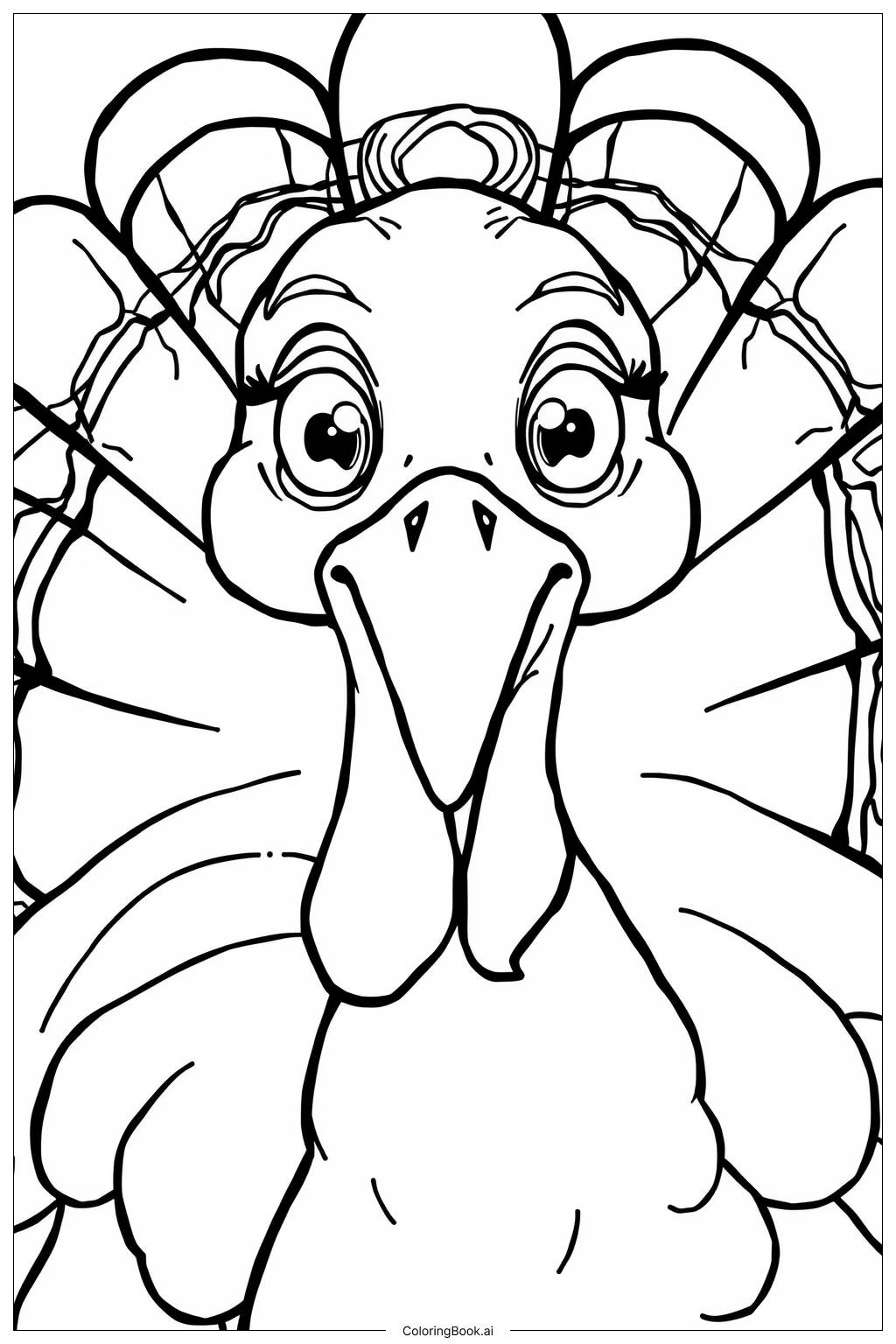
Coloring tips: How to color Happy Turkey Face-2 coloring page well?
Try using warm, autumn colors for the turkey’s feathers such as browns, oranges, yellows, and reds to capture the seasonal feel. Use bright red or orange for the wattle and beak to make them stand out. The eyes can be colored black with a little white space left to create a shiny, lively look. You might want to experiment with blending different shades of brown or adding highlights to the feathers for more depth. Don’t forget to color the background softly with light blue or green to make the turkey’s warm colors pop. Feel free to be creative and use colors you like, since this turkey is all about happiness and fun!
Coloring challenges: Which parts are difficult to color and need attention for Happy Turkey Face-2 coloring page?
• Feather Details: The feathers have many closely spaced lines which can be tricky to color without going outside the lines. Use a sharp colored pencil or thin marker for precision. • Small Facial Features: The eyes, beak, and wattle have small areas that require careful coloring to avoid overlapping colors. • Color Blending: To give the feathers a realistic or lively look, blending multiple shades is ideal, which may be challenging for beginners. • Consistent Color Application: Avoid uneven coloring to maintain the happy and bright look of the turkey’s face. This requires steady hand control. • Symmetry: Since the feathers fan out in a pattern, coloring them symmetrically or in pleasing color patterns will take some planning and patience.
Benefits of coloring books: Advantages of drawing Happy Turkey Face-2 coloring page
Coloring this happy turkey face helps improve fine motor skills by encouraging careful coloring within small spaces. It also promotes creativity as children choose colors and shading styles for the feathers and face. Focusing on the detailed feathers boosts concentration and patience. Additionally, this joyful turkey subject can inspire feelings of happiness and calmness, making art a positive and enjoyable activity. Practicing color blending and symmetry here can prepare children for more complex coloring projects, building their confidence and art skills step by step.