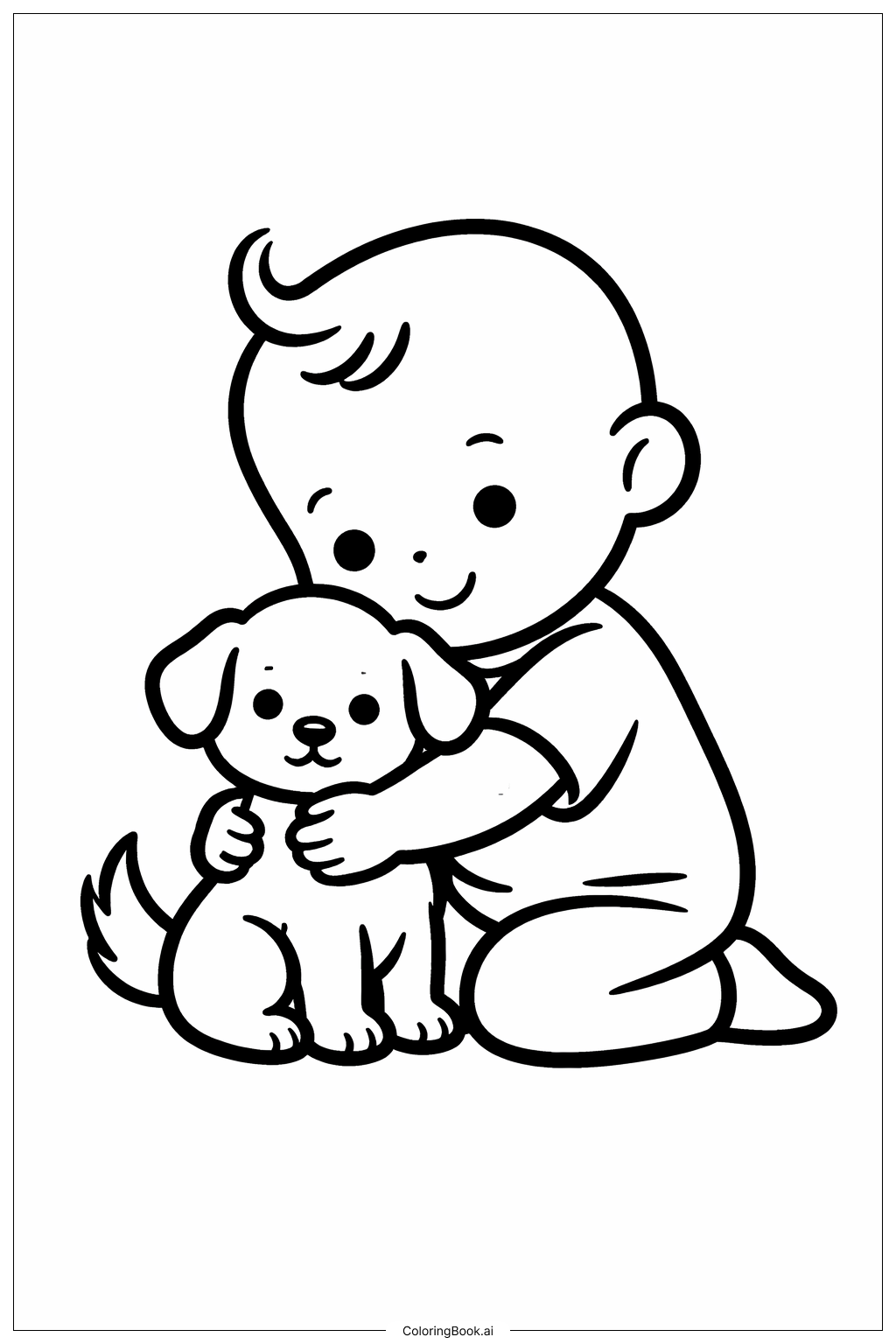
Coloring tips: How to color Toddler Hugging Puppy coloring page well?
Start with the toddler's skin using a soft peach or light tan tone to keep the look natural and warm. Use bright, cheerful colors for the child's outfit — yellows, greens, or light blues all work well and suit the playful mood. For the puppy, try golden brown, cream, or spotted black and white depending on the breed you imagine. Use a slightly darker shade to add depth to the puppy's fur along the edges. Color the hair with warm browns, golden yellows, or soft blacks. Keep the background light — pale greens or soft yellows help the main characters stand out. Add small pops of color to any accessories like a toy or flowers. Use gentle, rounded strokes that match the soft, cuddly feel of the scene. There are no wrong color choices here — let your creativity and emotions guide every color pick.
Coloring challenges: Which parts are difficult to color and need attention for Toddler Hugging Puppy coloring page?
• Toddler's Facial Features: The toddler's face includes small, closely spaced details like eyes, a tiny nose, and a smile. These require a fine-tipped tool and a steady hand to color neatly without going outside the lines. Rushing this area can easily blur the expressions and reduce the cuteness of the character.
• Puppy Fur Texture: Fur is one of the trickiest surfaces to color realistically. The puppy's coat may have curved lines suggesting softness and fluffiness. Coloring in the direction of the fur strokes and layering lighter and darker shades will help create a natural, three-dimensional look rather than a flat, single-colored surface.
• Overlapping Areas Where Child and Puppy Meet: Where the toddler's arms wrap around the puppy, the two figures overlap closely. Keeping their colors distinct in this shared space requires careful attention to boundaries, especially if similar warm tones are used for both skin and fur.
• Small Clothing Details: The toddler's outfit may include folds, buttons, cuffs, or patterns. These small fabric details are easy to miss but add a lot of visual richness when colored thoughtfully. Using slightly varied shades of the same color for folds helps suggest the fabric's shape and movement.
• Maintaining a Warm, Cohesive Mood: With multiple elements — child, puppy, clothing, background — it can be challenging to keep all the colors balanced and harmonious. Choosing a limited warm color palette from the start helps prevent the image from looking too busy or mismatched.
Benefits of coloring books: Advantages of drawing Toddler Hugging Puppy coloring page
Coloring this sweet image of a toddler hugging a puppy offers a wide range of wonderful benefits for young artists. First, it helps children build fine motor skills as they carefully stay within the lines and handle their coloring tools with growing control and precision. Second, the gentle subject matter naturally encourages feelings of calm and emotional comfort, making it a great activity for winding down after a busy day. Children also develop their creativity and color sense as they choose hues for skin, fur, and clothing — there are endless possibilities and no wrong answers. The image's theme of kindness and love between a child and an animal sparks conversations about caring for pets and treating all living things with gentleness. For older kids, the overlapping figures and textured surfaces offer a satisfying challenge that builds patience and attention to detail. Completing the page also gives children a real sense of achievement, boosting self-confidence and pride in their work. Whether done alone or alongside a parent, this coloring page is a joyful, enriching experience that nurtures both artistic growth and emotional well-being.