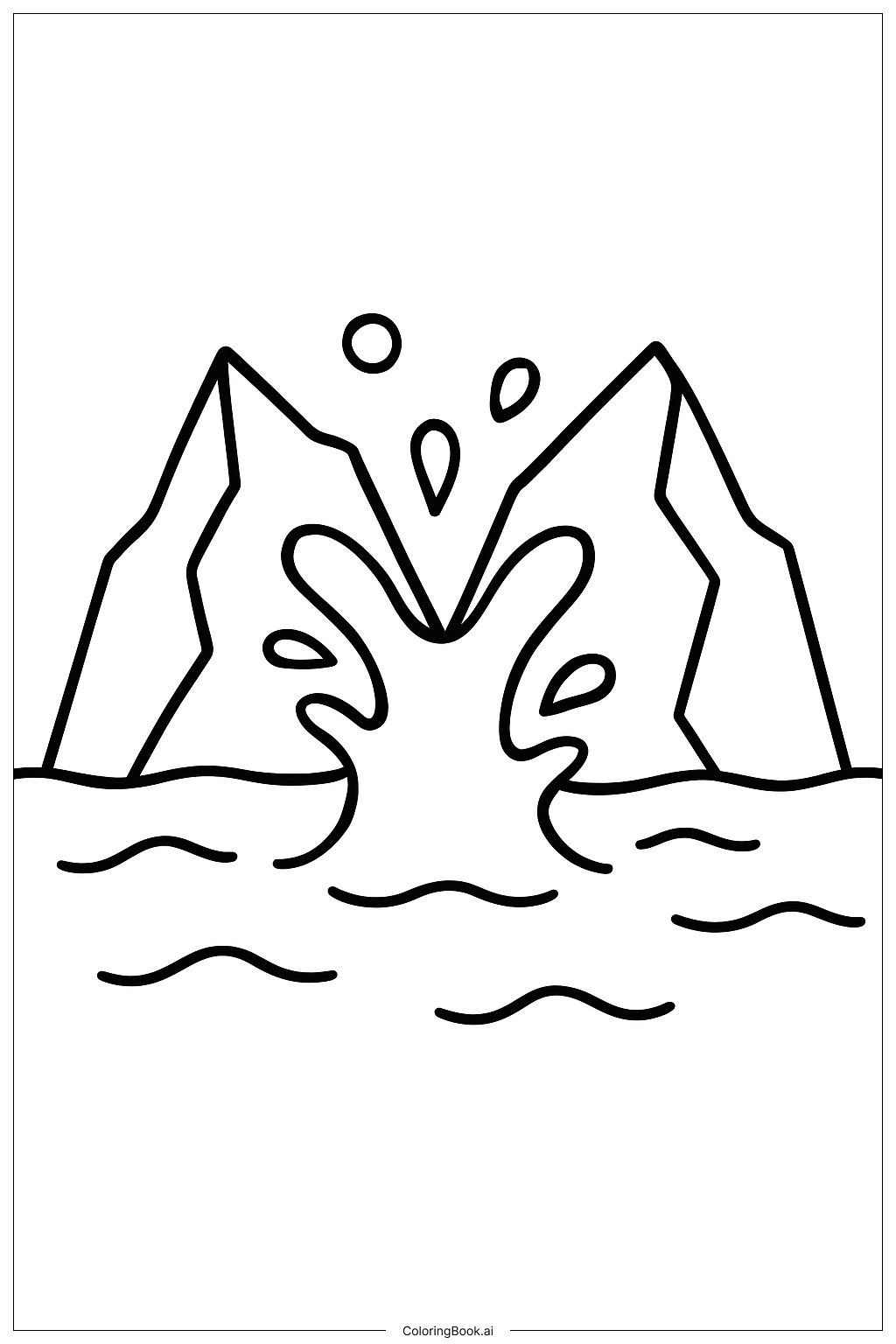
Coloring tips: How to color Iceberg Collision With Water Splash coloring page well?
Start with the iceberg. Use light blue, icy white, and pale gray to show its cold, frozen surface. Add darker blue or teal in the deeper cracks and shadowed areas to give it depth.
For the Titanic's hull, use dark navy or charcoal gray. The upper deck areas can be a lighter cream or warm white. Add small touches of rust or brown near the waterline for a realistic look.
The ocean water should be deep blue and blue-green. Use darker shades around the edges and lighter tones where the water splashes up near the iceberg. The water splash itself looks great in bright white, sky blue, and pale aqua.
The sky can be dark and dramatic. Try deep navy or stormy gray to set the mood of the night scene. Add a few soft gray clouds to fill the background.
For the scattered ice chunks on the water, keep them light — white with soft blue shadows. This will make them stand out against the darker ocean. Take your time with the splash areas. Layering colors there will really make the image come alive.
Coloring challenges: Which parts are difficult to color and need attention for Iceberg Collision With Water Splash coloring page?
Coloring this image comes with several exciting challenges that will help you grow your skills:
• Water Splash Details: The exploding water splash is one of the hardest parts to color. Water is not just one shade of blue. It has highlights, shadows, and transparent areas. Try layering light blue, white, and aqua tones to show movement. Leave some areas nearly white to suggest foam and the force of the impact.
• Iceberg Texture and Depth: Icebergs look solid and cold but also have many layers of color. Flat white will not capture the right feel. You need to blend pale blue, gray, and white together carefully. Use darker tones in the cracks and crevices to show depth and make the iceberg look three-dimensional and realistic.
• Ship Hull Shading: The Titanic's hull is large and curved. Showing the curve and shadow on a flat coloring page takes careful shading. Use lighter grays at the top where light would hit and darker tones near the waterline. Small details like portholes and railings require a fine-tipped tool and a steady hand.
• Dramatic Night Sky: The scene takes place at night, which means the sky must feel dark and atmospheric without looking flat or dull. Blending deep navy, dark gray, and hints of purple can create a moody, realistic sky that adds to the tension of the scene.
• Balancing the Overall Scene: With so many elements — the ship, iceberg, water, sky, and ice chunks — it can be hard to make everything work together. Try to use a consistent color palette so the image feels unified and not too busy.
Benefits of coloring books: Advantages of drawing Iceberg Collision With Water Splash coloring page
Coloring this powerful scene from history offers many great benefits for kids and adults alike.
Learning through art is one of the biggest rewards here. As you color the Titanic and the iceberg, you naturally think about what happened on that night in 1912. It sparks curiosity about history, oceans, and ships.
This image also builds important art skills. The water splash, the icy textures, and the dark night sky all require color blending and shading. Practicing these techniques improves your ability to show light, shadow, and movement in any artwork.
For younger colorists, working on the fine details — like the portholes and railings on the ship — helps develop hand-eye coordination and fine motor control. Staying inside the lines and choosing the right colors also builds focus and patience.
The dramatic mood of the scene encourages creative thinking. Kids get to make their own choices about how stormy the sky looks or how bright the water splash should be. This kind of creative decision-making builds confidence.
For older colorists and adults, this image provides a satisfying, detailed project that promotes mindfulness and relaxation. Focusing on a complex scene quiets the mind and offers a healthy break from daily stress. Finishing such a detailed piece also gives a real sense of accomplishment.