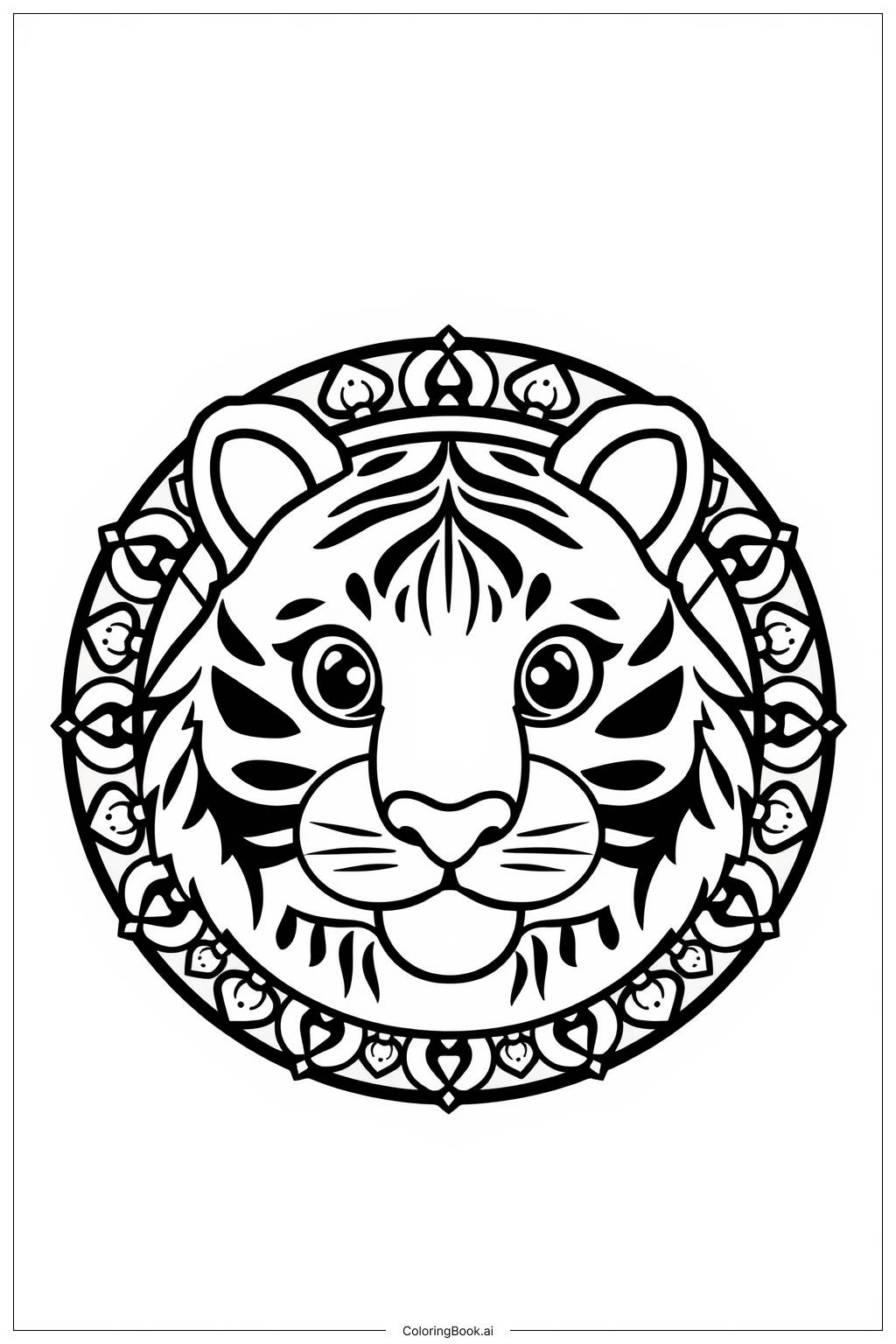
Coloring tips: How to color Tiger Mandala Art coloring page well?
Start with the tiger's face before moving to the surrounding mandala. Use warm orange and golden yellow for the tiger's fur. Add dark brown or black for the bold stripe markings. Color the eyes a striking amber or green to make them pop. For the mandala patterns, try a mix of jewel tones like deep purple, teal, royal blue, and magenta. Alternate colors in each ring of the mandala to create a rainbow effect. Use lighter shades near the center and gradually go darker toward the edges. For the floral and leaf motifs, greens and soft pinks work beautifully. Gold or yellow accents on the geometric shapes can add a sense of elegance. Take your time and enjoy filling in each small section. There is no wrong way to color — let your imagination guide your choices.
Coloring challenges: Which parts are difficult to color and need attention for Tiger Mandala Art coloring page?
• Tiny Geometric Shapes: The mandala is filled with very small geometric sections, including triangles, diamonds, and fan shapes. These small areas require a fine-tip coloring tool like a colored pencil or thin marker. Using a tool that is too thick may cause colors to bleed into neighboring sections and muddy the overall design. Patience and a steady hand are key.
• Symmetry and Color Balance: A mandala is built on symmetry, meaning the patterns repeat on both sides. Keeping colors balanced and consistent across matching sections can be tricky. It helps to plan your color scheme before you start and use the same colors in mirrored positions throughout the design to maintain visual harmony.
• Tiger Stripe Placement: The tiger's facial stripes follow natural curves and angles. Coloring them neatly while keeping the face looking realistic takes careful attention. Pressing too hard or going outside the stripe lines can make the face look uneven. Using short, light strokes that follow the direction of the fur gives a more natural result.
• Blending the Center and Outer Rings: Transitioning smoothly from the detailed tiger face to the surrounding mandala layers can feel challenging. The two elements have very different styles — one organic and one geometric. Choosing a color palette that ties both areas together, such as using a shared accent color in both the tiger and the mandala, helps unify the whole image.
• Staying Inside Fine Lines: Many of the mandala's decorative details have very thin outlines. Coloring neatly within these lines requires focus and a light touch, especially in the outermost sections where patterns become more complex.
Benefits of coloring books: Advantages of drawing Tiger Mandala Art coloring page
Coloring this Tiger Mandala Art page offers a wide range of benefits for both kids and Adults. The intricate mandala patterns help build focus and concentration as you work through each small section carefully. This kind of detailed activity trains the brain to slow down and pay close attention, which is a great skill for school and everyday life.
For younger colorists, filling in the tiger's bold stripes and facial features builds fine motor skills and hand-eye coordination. Choosing colors and planning a palette encourages creative thinking and self-expression.
For older kids and Adults, the repetitive, symmetrical nature of mandala coloring is deeply relaxing. It works much like meditation, helping to reduce stress and quiet a busy mind. Many people find that focusing on a detailed coloring page gives them a healthy break from screens and daily worries.
Completing the full image also builds a sense of accomplishment and pride. Seeing your finished, colorful tiger mandala is genuinely rewarding. It can boost confidence and motivate you to keep creating.
Overall, this page is a joyful, calming activity that supports mental well-being, creativity, and skill-building all at once.