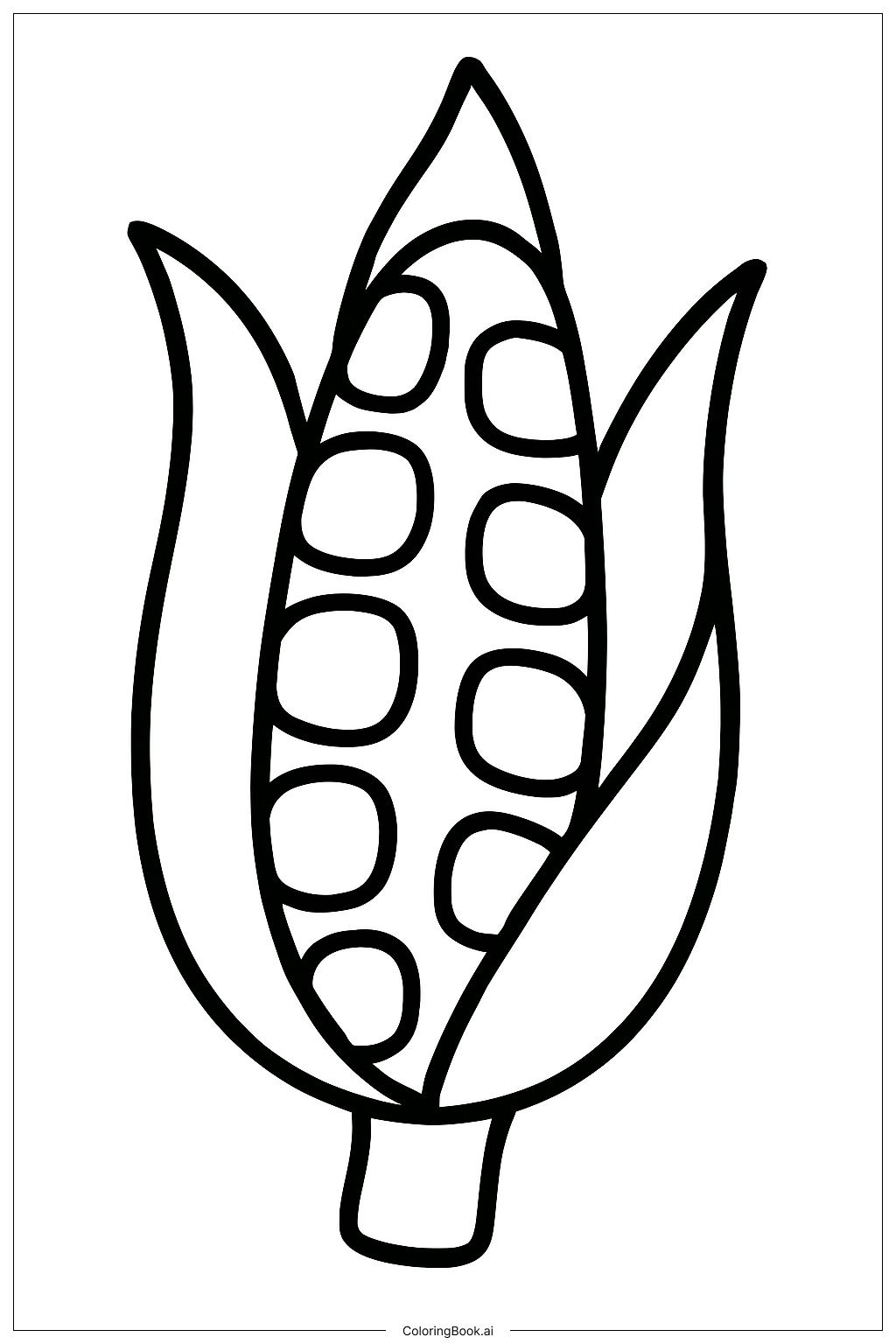
Coloring tips: How to color Thanksgiving Indian Corn coloring page well?
When coloring this Thanksgiving Indian Corn picture, try using warm, autumn colors like rich reds, deep oranges, golden yellows, and rusty browns for the kernels. You can mix these colors on each ear to show variety, just like real Indian corn. For the husks, use light greens, creamy tans, or soft browns to give a natural look. The bow can be colored with vibrant reds or deep purples to stand out against the corn. Feel free to experiment with shading by darkening one side of each kernel to create depth. Using different shades on kernels and husks will make your coloring more lively and realistic.
Coloring challenges: Which parts are difficult to color and need attention for Thanksgiving Indian Corn coloring page?
• Kernel Patterns: The many small kernels require careful coloring to stay inside the lines, which might be tricky for younger children. • Color Variation: Choosing different colors for each kernel can be challenging because you want the corn to look natural but still colorful and bright. It helps to plan your colors ahead for balance. • Husk Texture: The peeling husks have many fine lines and curves. Coloring these smoothly while maintaining their flow may need patience. • Ribbon Details: The bow wrapping around the corn has folds and overlapping parts. Capturing these layers with consistent shading demands attention. • Small Spaces: Tight spaces between kernels and around the bow can make it hard to color without going outside the lines or over coloring other areas.
Benefits of coloring books: Advantages of drawing Thanksgiving Indian Corn coloring page
Coloring this Thanksgiving Indian Corn picture helps improve fine motor skills by requiring control to fill small detailed areas. It encourages creativity through selecting and mixing warm fall colors. Children learn to recognize natural patterns and textures found in nature, like kernels and husks. Coloring also promotes focus and patience, as the image has many small parts needing careful attention. Finally, it introduces cultural appreciation by connecting the artist to the traditions of Thanksgiving and harvest time, making it a meaningful activity.