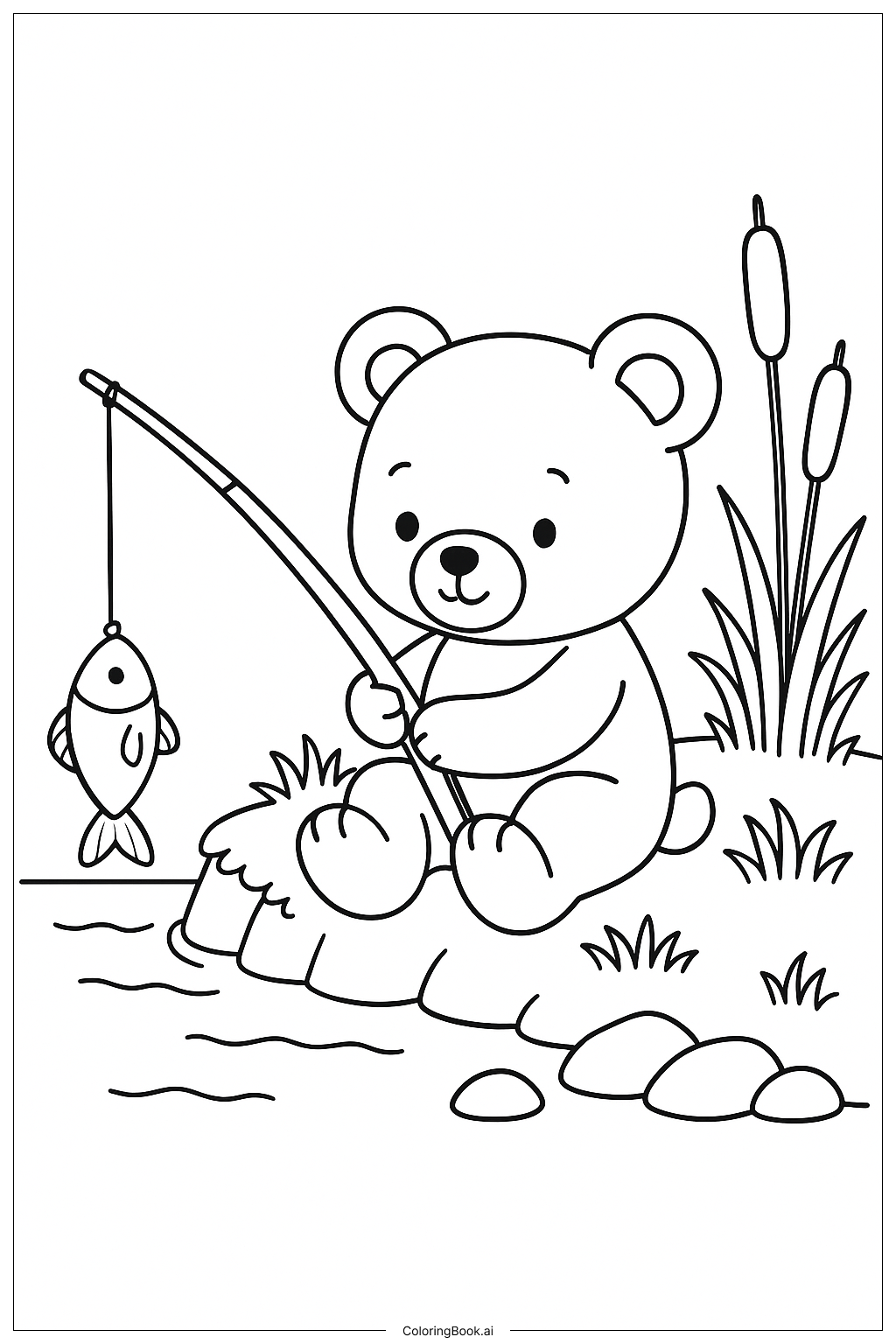
Coloring tips: How to color Teddy Bear With A Fishing Rod And Fish coloring page well?
Start with the teddy bear's body. Use warm shades like light brown, tan, or golden yellow to fill in the fur. Add darker brown to the ears, paws, and face for depth. Color the bear's outfit — try bright colors like red, blue, or green for overalls or a hat to make it pop. For the fishing rod, use dark brown or gray. The fishing line can be a thin light blue or silver. Color the fish in bright, fun shades like orange, red, or yellow to make it stand out. Use light blue and aqua tones for the water, and add white highlights for ripples. Fill in any plants like reeds or lily pads with various shades of green. Use a warm yellow or light orange for the sky to suggest a sunny day. Feel free to mix and experiment — this is your scene to bring to life!
Coloring challenges: Which parts are difficult to color and need attention for Teddy Bear With A Fishing Rod And Fish coloring page?
• Teddy Bear Fur Texture: The bear's rounded, fluffy body can be tricky to shade well. To make the fur look soft and three-dimensional, use at least two shades of brown — a lighter base tone and a darker shade for the edges and creases. Short, gentle strokes that follow the curve of the body will give the fur a more realistic feel. Blending carefully around the face and belly will help the bear look warm and cuddly.
• Small Facial Details: The bear's eyes, nose, and mouth are tiny features packed close together. Staying inside these small areas requires a sharp pencil or fine-tip marker. Coloring the eyes neatly in dark brown or black without smudging onto the muzzle area takes patience. The nose is usually a small oval, and even a slight slip can throw off the whole expression.
• Fishing Rod and Line: The rod is long and narrow, making it one of the hardest parts to color cleanly. Use a thin marker or a well-sharpened colored pencil to trace along its length without going outside the lines. The fishing line is even thinner — it may be easier to trace it lightly with a gray or silver pen rather than a broad crayon.
• Water and Reflections: The water surface needs layered blues and greens to look realistic. Adding lighter streaks or leaving small white spaces to suggest ripples and light reflections takes a steady hand and some planning before you start.
• Fish Details: The dangling fish is small but has scales, fins, and a tail that deserve careful attention. Using contrasting colors for the body and fins will make the fish look lively and fun.
Benefits of coloring books: Advantages of drawing Teddy Bear With A Fishing Rod And Fish coloring page
Coloring this image of a Teddy Bear With A Fishing Rod And Fish offers a wide range of benefits for kids and beginners alike. The scene combines a beloved character with a peaceful outdoor activity, making it both engaging and calming to color.
Working on the bear's fur helps children practice blending and shading, building early art skills in a playful way. Choosing colors for the water, fish, and plants encourages creative thinking and decision-making. Kids learn to observe nature — noticing how water reflects light or how fish come in many colors.
The image also supports fine motor development. Carefully coloring small details like the fishing rod, the fish, or the bear's face strengthens hand control and pencil grip, skills that are valuable for writing and drawing.
For older kids, the scene offers a chance to experiment with color harmony — pairing warm bear tones against cool water blues creates a visually pleasing result. The relaxing, nature-inspired theme can also help reduce stress and encourage mindfulness, turning screen-free time into a rewarding creative session.
Most importantly, finishing this page gives a real sense of accomplishment. Seeing a fully colored, vibrant image is a confidence booster for colorists of any age. It is a simple, joyful way to express yourself through art.