Coloring tips: How to color Teacher Appreciation Reading Circle coloring page well?
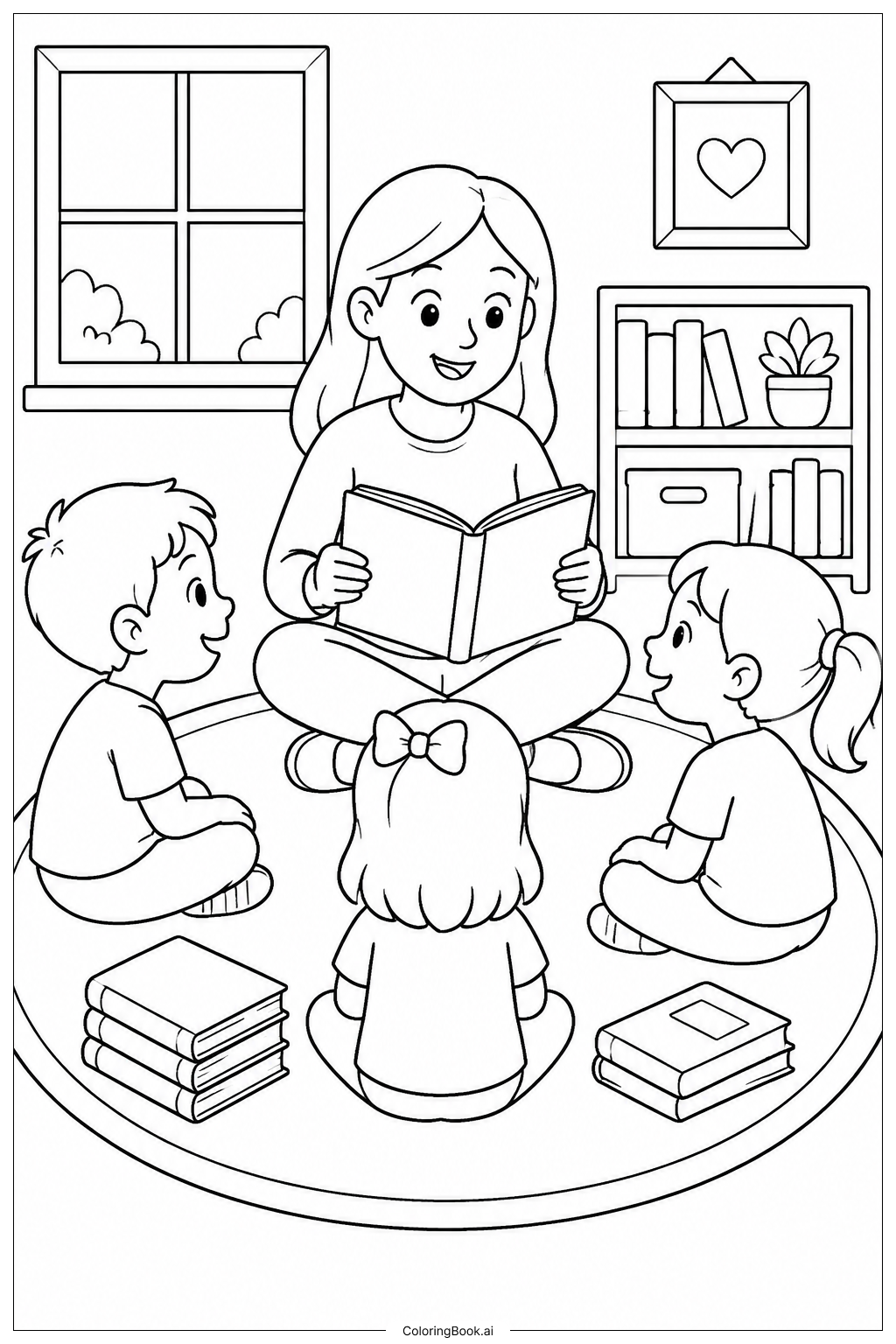
Start with warm, welcoming tones for the teacher's clothing—perhaps a soft blue cardigan or a cheerful yellow shirt to convey friendliness. Give each student different hair colors and skin tones to celebrate diversity: browns, blacks, blondes, and auburns. Use a variety of bright colors for their clothing—reds, greens, purples, and oranges—to make each child stand out. Color the book cover in a bright, eye-catching hue like red or blue. For the background, consider light beige or cream for the walls, and a warm multi-colored pattern for the reading rug. Add green to any plants and use natural wood tones for bookshelves. The colorful book spines in the background can feature rainbow hues, creating a vibrant learning environment that reflects the joy of reading together.
Coloring challenges: Which parts are difficult to color and need attention for Teacher Appreciation Reading Circle coloring page?
• Multiple Figures: This image contains numerous characters—the teacher plus several students—each requiring individual attention to clothing, hair, and facial features. Keeping each person distinct while maintaining color harmony across the group presents a significant challenge, especially for younger colorists who may struggle with planning a cohesive palette.
• Overlapping Elements: The circular seating arrangement means students overlap with one another, and some may be partially hidden behind others. Distinguishing where one child ends and another begins requires careful observation and steady coloring to avoid accidentally crossing boundaries between figures.
• Facial Expressions and Details: Each character has unique facial features and expressions that benefit from careful coloring. Eyes, mouths, and small details like glasses or hair accessories need precision work with fine-tipped coloring tools, which can be challenging for those still developing fine motor control.
• Background Complexity: The classroom setting includes bookshelves filled with individual books, wall decorations, plants, and flooring patterns. Each element adds to the overall scene but also increases the time commitment and attention required to complete the entire page thoughtfully.
• Clothing Patterns and Textures: Students may wear clothing with stripes, polka dots, or other patterns that require consistent coloring techniques. Maintaining pattern integrity across folds and contours of fabric tests patience and planning skills, particularly when deciding whether to color each stripe individually or use blending techniques.
Benefits of coloring books: Advantages of drawing Teacher Appreciation Reading Circle coloring page
Coloring this teacher appreciation scene offers wonderful developmental benefits for children. It strengthens fine motor skills and hand-eye coordination as they carefully navigate the many figures and details. The image encourages color planning and decision-making, helping children think about how different hues work together to create a harmonious classroom scene. It provides an opportunity to celebrate diversity by choosing various skin tones and hair colors, fostering inclusivity awareness. The reading circle theme reinforces positive associations with learning and literacy, reminding children of the special role teachers play in their lives. Completing this detailed page builds patience, focus, and a sense of accomplishment. It also sparks conversation about gratitude, respect, and the importance of education, making it both an artistic and emotional learning experience that children can proudly share with their own teachers.