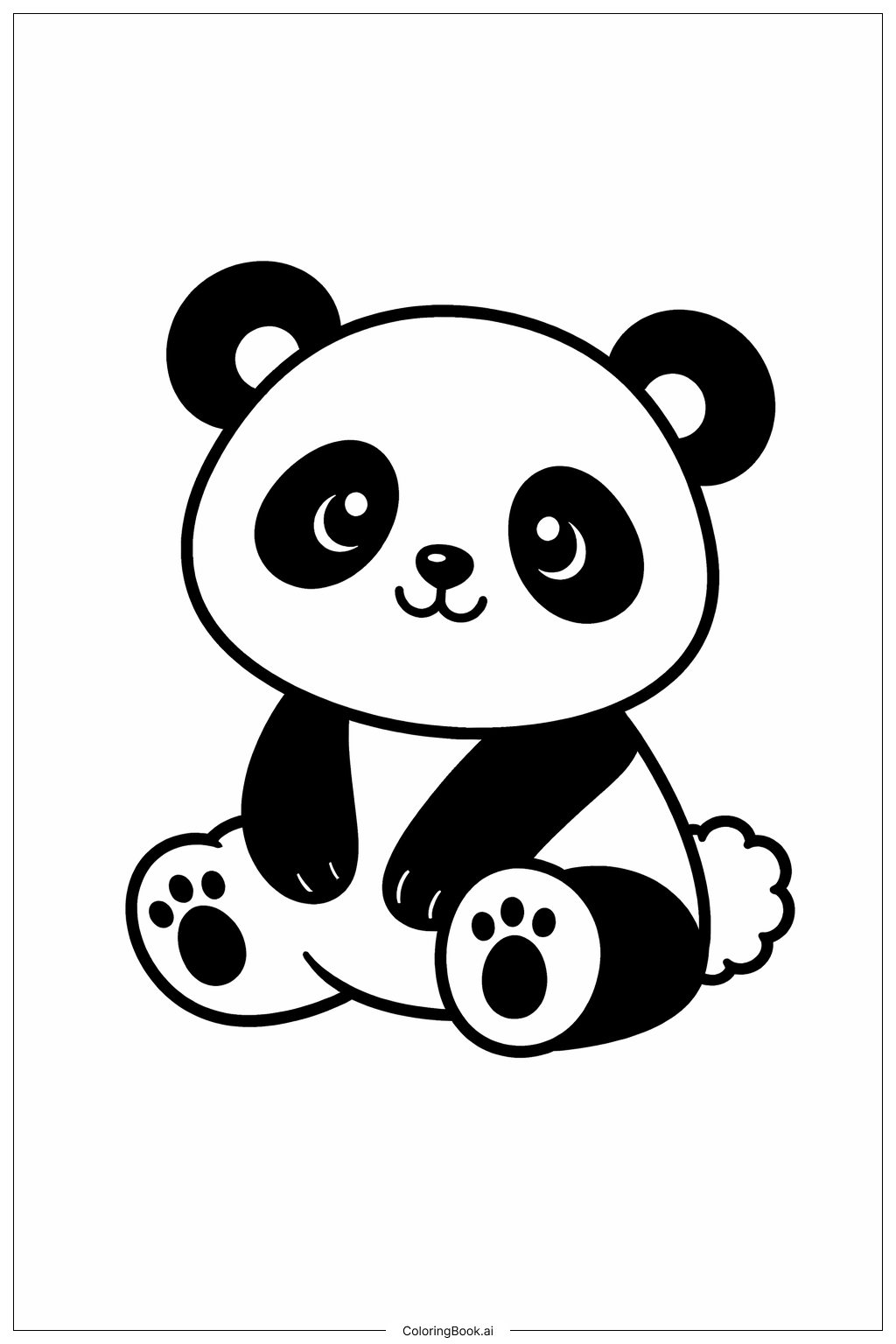
Coloring tips: How to color Panda Sitting Tails coloring page well?
Try using black for the panda’s ears, eyes, arms, and legs, as pandas usually have these dark parts. For the rest of the body, you can use white or very light gray to keep it natural. You can add soft pink to the cheeks to give the panda a cute and warm expression. For the paw pads, black or dark brown will make them stand out nicely. Don’t forget to color the eyes with white sparkles to make them look shiny. Feel free to add a light green or blue background to make the panda pop.
Coloring challenges: Which parts are difficult to color and need attention for Panda Sitting Tails coloring page?
1. Coloring the small paw pads can be tricky because they are tiny and need careful strokes.
2. The eyes have small details like sparkles and shapes, which require precision to color without coloring outside the lines.
3. The curved edges around the ears and arms can be difficult to follow accurately.
4. Balancing the black and white parts to keep the panda looking natural might be a challenge for some kids.
5. Keeping the fluffy tail properly shaped while coloring can need patience and steady hands.
Benefits of coloring books: Advantages of drawing Panda Sitting Tails coloring page
Coloring this panda helps children improve their hand-eye coordination and fine motor skills. It encourages creativity by choosing different shades for the panda and the background. Working on this picture also teaches children to focus on details and practice patience. It can be a fun way to learn more about animals while expressing themselves through colors. Additionally, coloring a friendly animal like this panda helps improve mood and reduce stress.