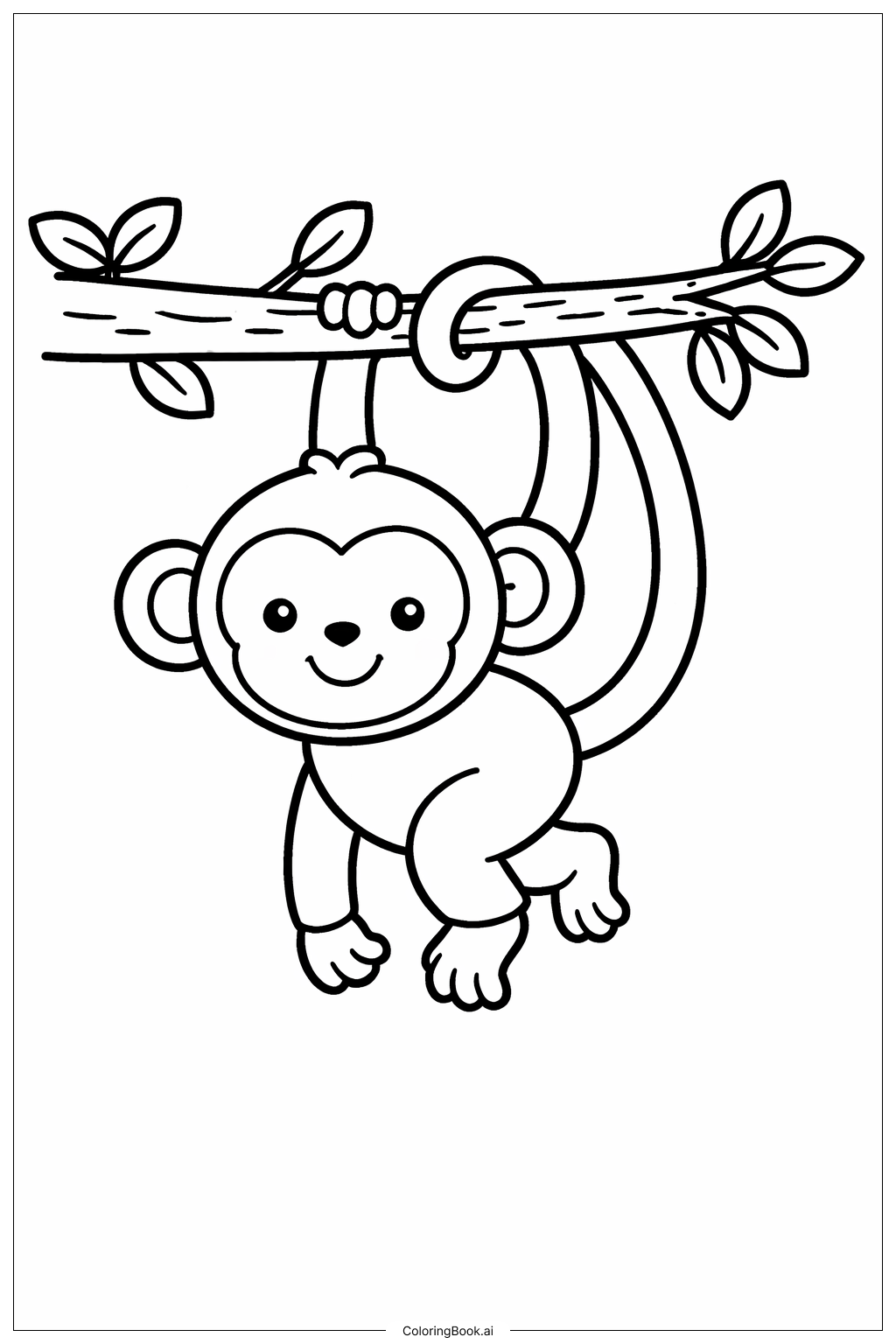
Coloring tips: How to color Monkey Swing Tails coloring page well?
You can use bright and warm colors like brown for the monkey's body and light beige or cream for its face and ears. Color the branch in shades of brown with some darker lines for texture. Use green colors for the leaves to make them look fresh and lively. Try shading the monkey a little to give it depth, but keep it simple for easy coloring. Feel free to add colorful background elements like blue sky or sunshine to make the picture more joyful.
Coloring challenges: Which parts are difficult to color and need attention for Monkey Swing Tails coloring page?
1. Small Areas: The monkey's fingers, toes, and the leaves have small spaces that can be tricky to color neatly.
2. Curved Tail: The tail wraps around the branch, creating curves that might be hard to follow with color.
3. Line Details: The branch has some wood texture lines that need careful coloring to make them stand out nicely.
4. Face Features: Coloring the monkey's face requires attention to keep the eyes, nose, and mouth clear and clean.
5. Keeping Colors Inside Lines: Young children might find it challenging to stay within the fine lines, especially around the branch and monkey's limbs.
Benefits of coloring books: Advantages of drawing Monkey Swing Tails coloring page
Coloring this picture helps improve hand-eye coordination by encouraging careful coloring inside the lines. It also enhances creativity as children choose colors for the monkey and nature. The activity promotes focus and patience, especially with small details on the hands and tail. Additionally, coloring animals like monkeys can teach kids about wildlife and nature while having fun. Overall, it is a relaxing and educational task that boosts fine motor skills.