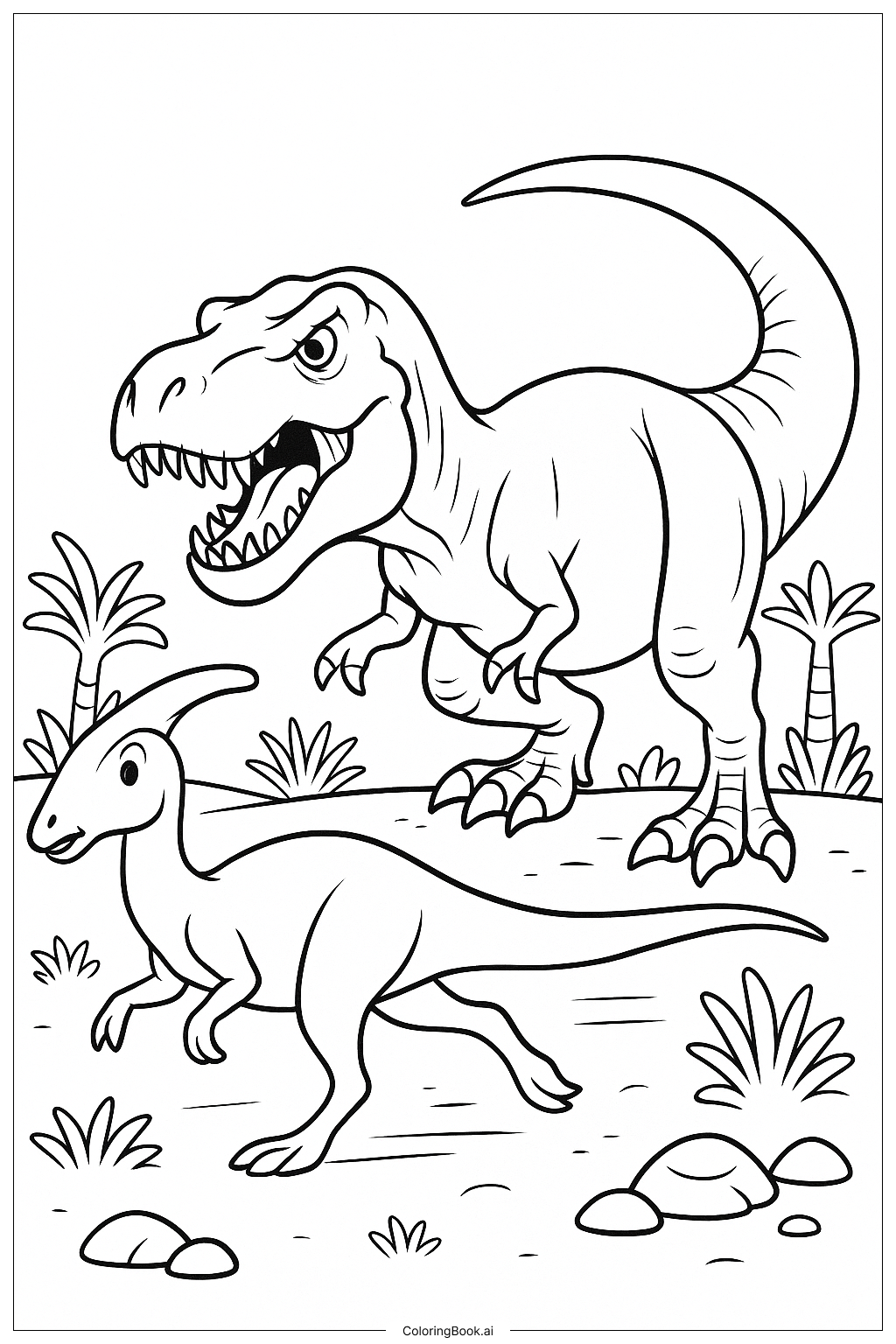
Coloring tips: How to color A Realistic T-Rex Hunting coloring page well?
For this T-Rex hunting scene, consider using earthy greens, browns, and grays for the dinosaur's body to create a realistic reptilian appearance. Mix darker shades of green with lighter tones to add depth to the scales. Use dark brown or black for shadows under the body, around the jaw, and between skin folds. The teeth can be ivory or cream white with light gray shading. For the eyes, try amber, yellow, or red to give an intense hunting expression. The claws should be darker than the body, perhaps black or deep brown. Consider adding subtle color variations across different body parts - perhaps a lighter underbelly in pale yellow or tan. The background can feature muted greens and browns for vegetation, with a dusty atmosphere using light oranges or yellows to suggest an active hunting environment.
Coloring challenges: Which parts are difficult to color and need attention for A Realistic T-Rex Hunting coloring page?
• Scale Texture Details: The T-Rex skin features numerous small scales and textured patterns across its entire body. Coloring each scale individually while maintaining consistent color transitions requires patience and attention to detail. Children may find it challenging to keep the scales uniform in size and color distribution, especially across larger body sections like the legs and torso.
• Dimensional Shading: Creating a three-dimensional appearance on the T-Rex requires understanding where light hits and shadows fall. The muscular structure, curved body surfaces, and overlapping body parts like the legs and tail create complex shadow patterns. Younger colorists may struggle with blending colors smoothly to show depth, particularly around the powerful hind legs and thick neck.
• Teeth and Mouth Interior: The open jaw reveals many sharp teeth arranged in rows, along with the dark interior of the mouth. Coloring individual teeth while keeping them distinct from each other and from the gums and mouth cavity requires precision with fine motor control. The spacing between teeth is narrow, making it easy to color outside the lines accidentally.
• Background Integration: Balancing the coloring of the T-Rex with the surrounding environment without letting them blend together inappropriately takes planning. Choosing colors that make the dinosaur stand out while keeping the scene cohesive requires color theory understanding that may challenge some children.
Benefits of coloring books: Advantages of drawing A Realistic T-Rex Hunting coloring page
Coloring this realistic T-Rex hunting scene offers excellent fine motor skill development through the detailed scales and intricate body features. Children practice precise hand-eye coordination while working on small areas like individual teeth and claws. The complex anatomical structure teaches patience and planning as they decide color placement and shading techniques. This image encourages learning about prehistoric life, sparking curiosity about dinosaurs, paleontology, and natural history. The dynamic hunting pose allows creative expression in choosing realistic or imaginative color schemes. Working on the texture and depth helps develop spatial awareness and understanding of light and shadow. Completing this detailed coloring page builds confidence and provides a sense of accomplishment. The focus required promotes relaxation and mindfulness, helping children practice concentration for extended periods while creating their unique version of this magnificent prehistoric predator.