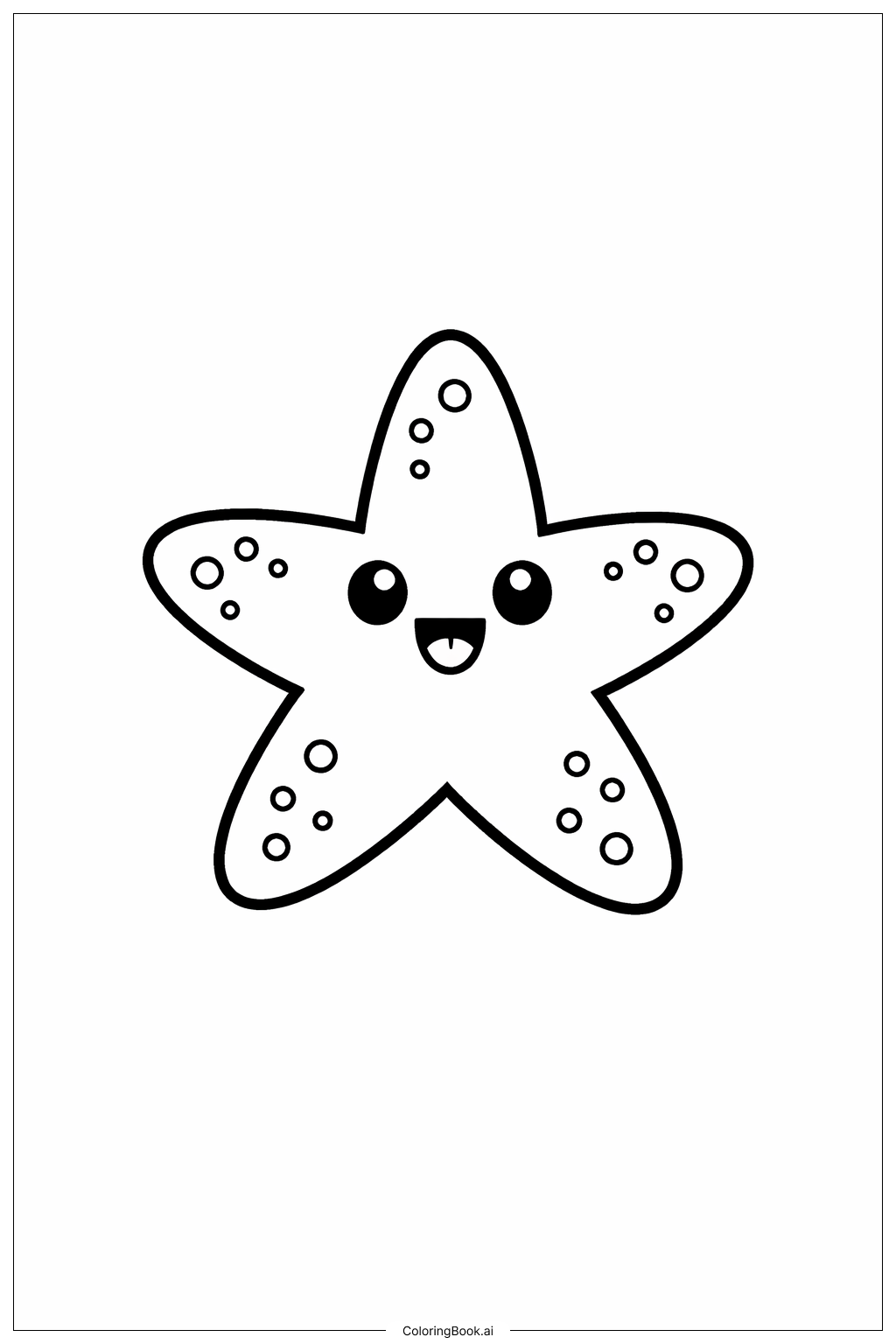
Coloring tips: How to color Tiny Starfish Buddy coloring page well?
Start with the starfish body using warm, sunny colors like orange, coral, or golden yellow to give it a classic ocean feel. You can also go creative with pink, red, or even purple for a more magical look. Use a slightly darker shade of the same color to add gentle shading along the edges of each arm, giving the starfish a soft, rounded appearance. Color the tiny bumps or dots in a lighter or contrasting shade, such as pale yellow on an orange body, to make the texture pop. The face details like the eyes and smile can be colored with dark brown or black outlines, with white highlights on the eyes to make them look lively and bright. For the background bubbles and swirls, try light blues, aquas, or soft purples to create a cool underwater atmosphere. Mixing shades of blue and teal in the background helps the warm starfish colors stand out beautifully. Keep the overall palette fun and cheerful to match the friendly personality of this little buddy.
Coloring challenges: Which parts are difficult to color and need attention for Tiny Starfish Buddy coloring page?
• Tiny Bump Details: The rows of small circular bumps along each arm of the starfish are very close together and quite small. Coloring each one individually without going outside the lines requires a fine-tipped colored pencil or marker. Young colorists may find it tricky to stay precise in these areas, so taking it slowly and using a sharp pencil tip is highly recommended.
• Facial Features: The starfish has a small face with eyes, a smile, and other delicate features packed into a compact space at the center of the body. Filling in these tiny areas with the right colors without smudging or overlapping into neighboring sections can be challenging, especially for beginners. Using a very fine tool and working carefully around each detail will help.
• Arm Edge Shading: Each of the five arms has a rounded, plump shape. Adding shading to show depth and dimension along the edges of the arms takes patience and a light touch. Blending two shades of the same color smoothly without harsh lines is a skill that takes practice.
• Background Elements: The surrounding bubbles and swirling lines are spread across the page in different sizes. Deciding which colors to use for each bubble while keeping the overall background balanced and not too busy can be a fun but tricky puzzle for colorists.
• Color Consistency Across Arms: Since the starfish has five arms that are all similar in shape, keeping the coloring style consistent across every arm, same shading direction, same bump colors, same edge treatment, helps the finished image look polished and unified. This requires attention and planning before starting.
Benefits of coloring books: Advantages of drawing Tiny Starfish Buddy coloring page
Coloring this Tiny Starfish Buddy page offers a wide range of benefits for children and young learners. First, it helps build fine motor skills. Carefully coloring the small bumps and tiny facial features trains the hand muscles and improves pencil control, which supports handwriting development. Second, it encourages creativity. Choosing colors for the starfish, the background bubbles, and the swirling water elements lets kids express their imagination freely. There is no single right answer, so every child can create their own unique version. Third, it introduces ocean science in a fun way. As kids color a starfish, they naturally become curious about real starfish and ocean life, sparking interest in nature and biology. Fourth, it promotes focus and patience. Staying inside the lines and working through the detailed areas requires concentration, helping children practice mindfulness and calm attention. Fifth, it builds confidence. Finishing a coloring page gives kids a real sense of achievement. Displaying their completed artwork encourages pride in their work and motivates them to keep creating. Overall, this friendly little starfish makes coloring both enjoyable and enriching.