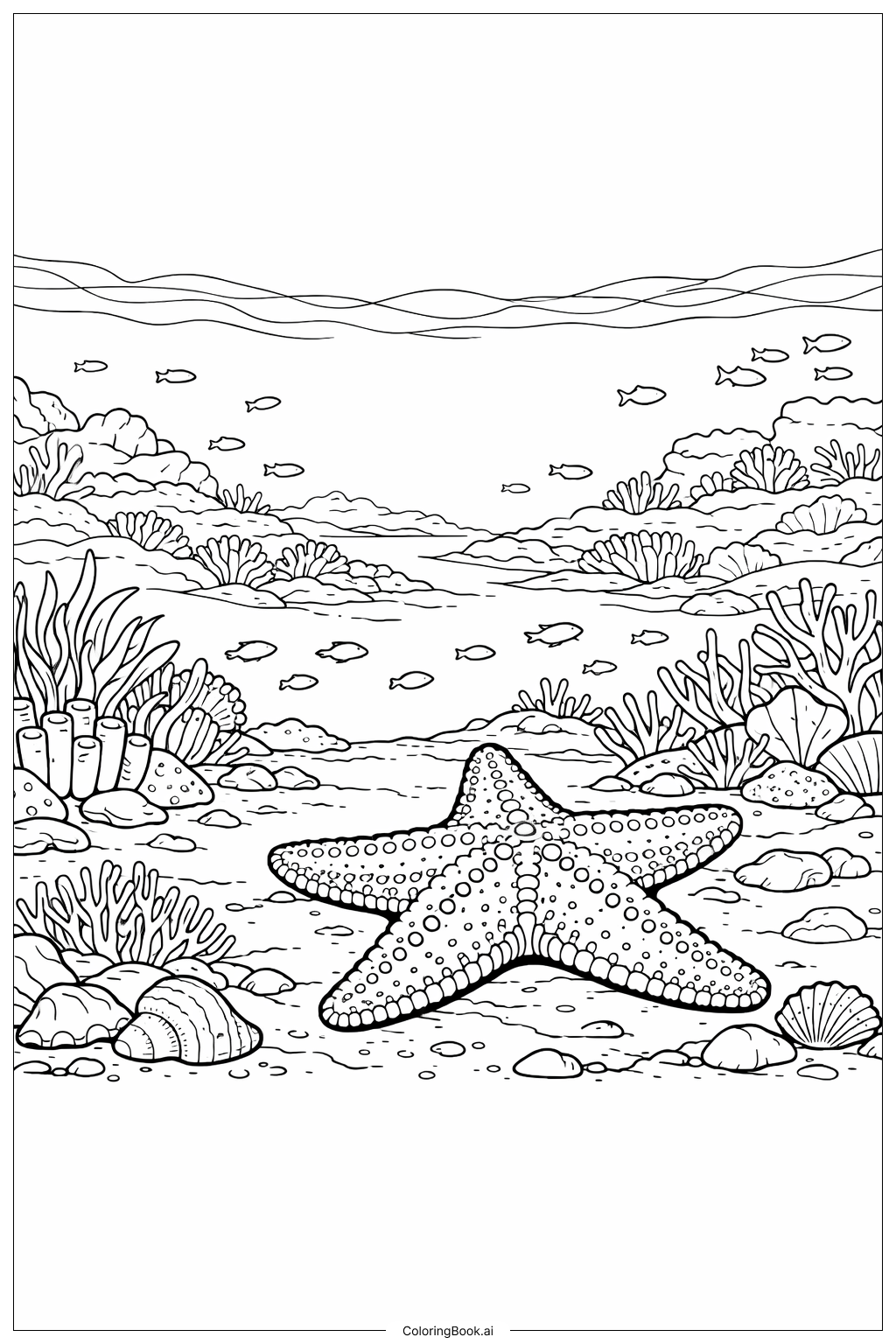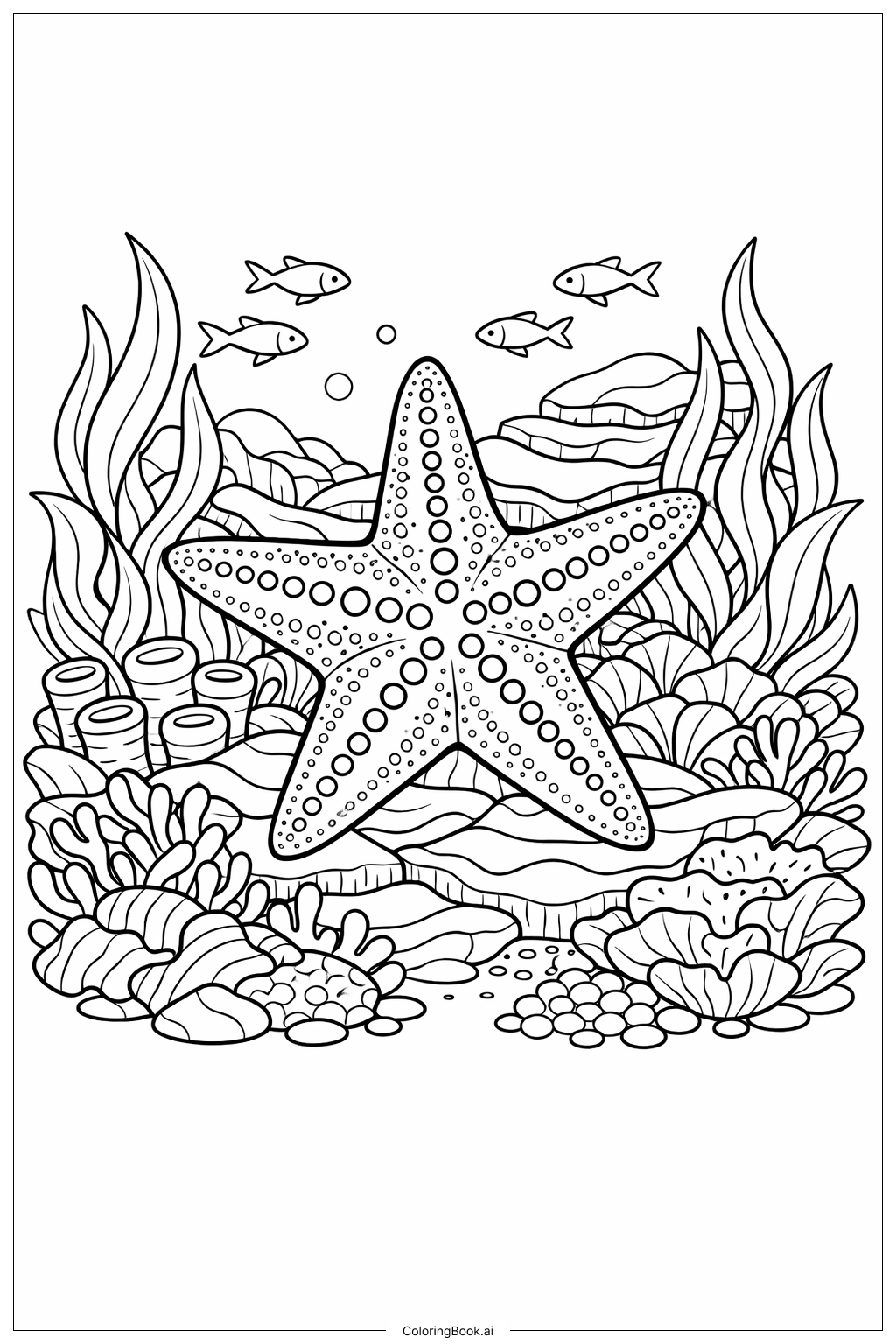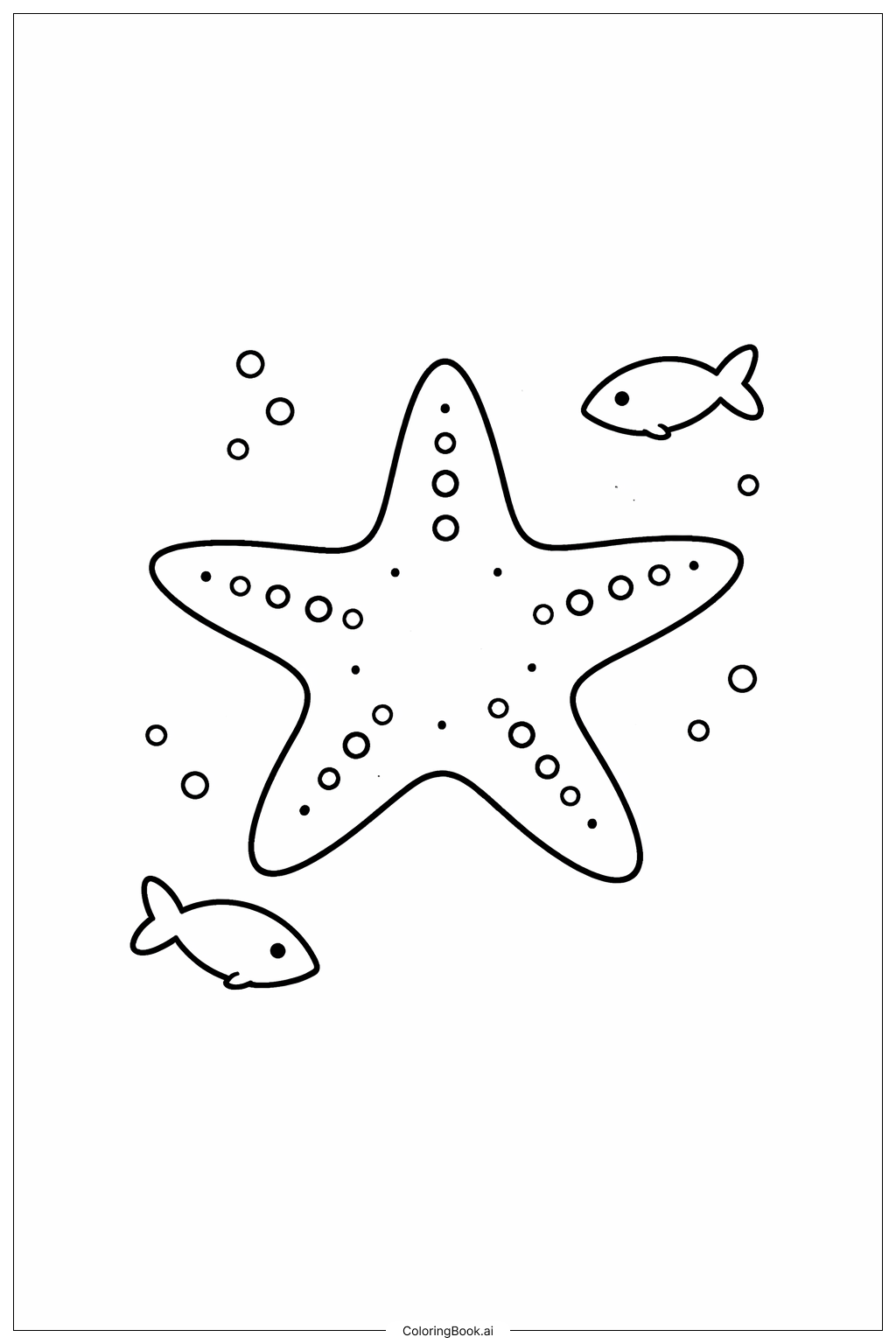
Coloring tips: How to color Starfish And Small Fish coloring page well?
Start with the starfish using warm, sunny colors like orange, yellow, or coral red to make it stand out as the main subject. For the small fish, try using a variety of bright colors — blue, green, purple, and pink — so each fish looks unique and fun. You can use a light blue or aqua for the water background to give the scene a cool underwater feel. Add white or pale yellow dots on the starfish arms to highlight its texture. Use darker shades of the same color along the edges of the fish and starfish to create depth and shadow. Bubbles can be colored with very light blue or left mostly white with just a thin outline. Let kids experiment freely with color combinations — there are no wrong choices in the ocean!
Coloring challenges: Which parts are difficult to color and need attention for Starfish And Small Fish coloring page?
• Starfish Arm Texture: The starfish arms are covered in small dots and bumpy surface details. Coloring each dot neatly without smearing into the surrounding area takes patience and a fine-tipped coloring tool. Young colorists may find it challenging to stay within these tiny shapes, so using colored pencils or thin markers is recommended.
• Small Fish Details: Each small fish has its own fins, tail, and eye. These features are compact and close together, making it easy to accidentally color over the lines. A steady hand is needed to fill in fins and tails without blending them into the fish body or the background.
• Overlapping Shapes: Some fish appear to swim near or behind the starfish arms, creating overlapping areas. Deciding which color goes where — and keeping the colors separate so shapes remain distinct — can be tricky, especially for younger children.
• Background Space: The water background includes bubbles and wave-like lines scattered throughout. These irregular shapes are small and varied, making it difficult to color them evenly. Choosing a light, consistent background color without going over the bubble outlines requires careful attention.
• Color Harmony: With so many fish in different positions, keeping the overall color scheme balanced and visually pleasing is a creative challenge. Using too many bold colors at once can make the image feel chaotic, so planning the color layout before starting helps achieve a well-composed final result.
Benefits of coloring books: Advantages of drawing Starfish And Small Fish coloring page
Coloring this starfish and small fish scene offers a wonderful range of benefits for children and young learners. First, it builds fine motor skills. Carefully filling in the small fish details, the starfish texture, and the tiny bubbles strengthens hand control and pencil grip, which supports writing development. Second, it encourages creativity. Choosing colors for each fish and the underwater background sparks imaginative thinking and lets kids express their own sense of style. Third, it teaches focus and patience. Working through the detailed patterns on the starfish arms and the many small fish bodies requires sustained attention, helping children practice concentration in a relaxed and enjoyable way. Fourth, it introduces ocean science in a fun format. As kids color, they naturally become more curious about starfish and fish, opening the door to conversations about marine life and ocean ecosystems. Finally, completing the page gives children a real sense of accomplishment, boosting confidence and encouraging them to keep exploring art. It is a simple, screen-free activity that is both calming and rewarding for all ages.