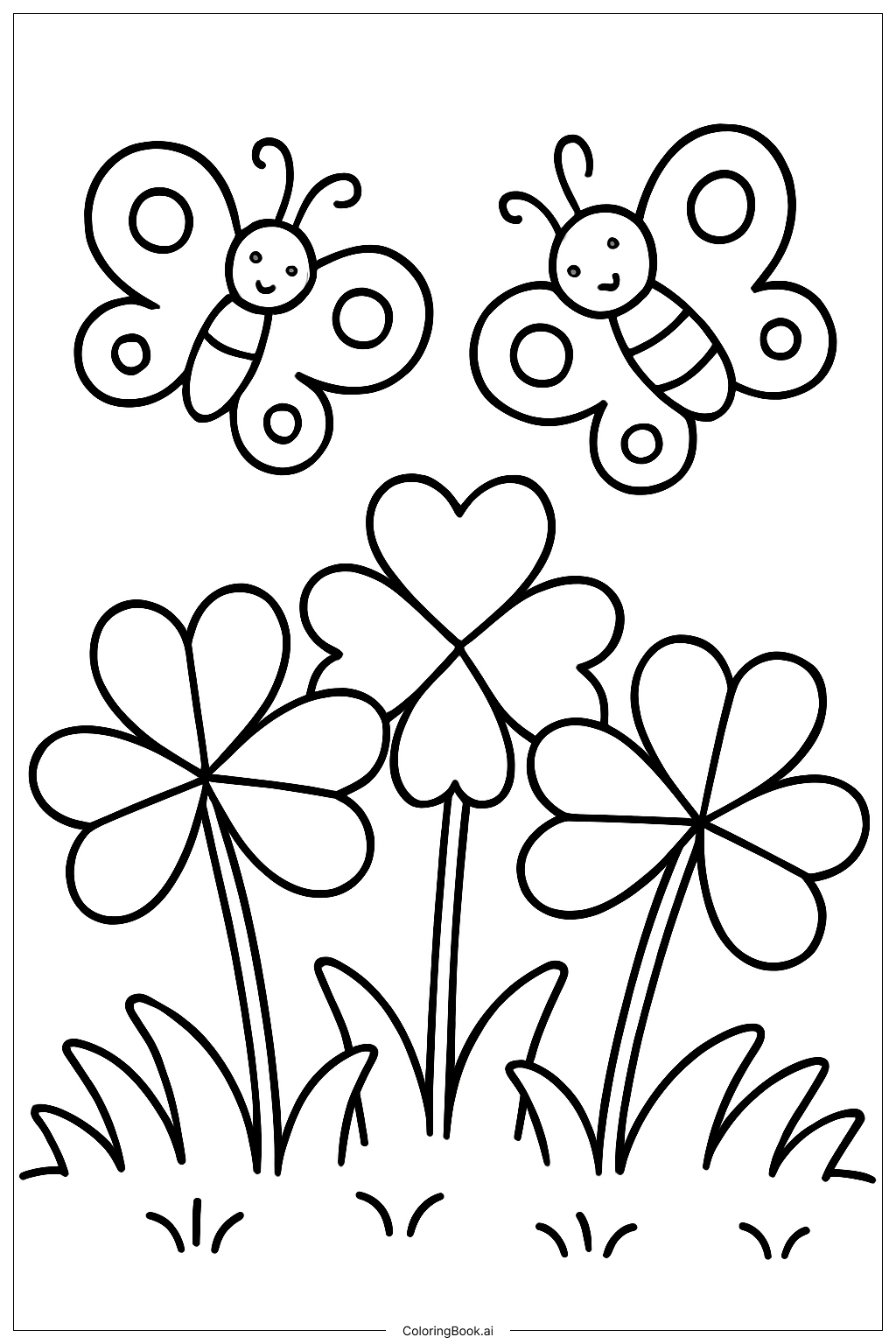
Coloring tips: How to color Clover Garden With Butterflies coloring page well?
Start with the clover leaves and use different shades of green to bring them to life. Try mixing light green, medium green, and dark green to show depth and make the garden feel full. For the four-leaf clovers, use a slightly brighter green to make them stand out as special.
Color the butterflies with bright, cheerful colors. Try orange and black like a monarch butterfly, or go with purple, blue, and pink for a more magical look. Use yellow near the center of the wings to add a warm glow.
For the small flowers scattered around the garden, try white, yellow, or light pink. These soft colors will contrast nicely with the green clovers.
Leave the background light, using pale blue or soft yellow to suggest an open sky or warm sunlight. This helps the garden scene feel fresh and bright.
Take your time with the butterfly wing patterns. These small details are a great chance to add your own creative touch. Have fun and make each butterfly unique!
Coloring challenges: Which parts are difficult to color and need attention for Clover Garden With Butterflies coloring page?
Coloring this garden scene is a joy, but it does come with some challenges worth knowing before you begin. Here are the key areas to watch out for:
• Clover Leaf Layering: The clover plants overlap each other throughout the scene. Keeping each leaf looking separate requires careful use of different green shades. If nearby leaves are the same shade, they blend together and lose definition. Try alternating between light and dark greens to keep each leaf distinct.
• Butterfly Wing Patterns: The butterfly wings contain fine lines and small compartments that form decorative patterns. Coloring inside these tiny sections takes a steady hand and a sharp pencil or fine-tipped marker. Rushing through this area can result in colors bleeding into each other and losing the detail of the design.
• Color Balance Between Butterflies and Clovers: The butterflies need to stand out against the green garden background. Choosing colors that are too similar to green, such as yellow-green or olive, may cause the butterflies to disappear into the leaves. Bright contrasting colors like orange, purple, or blue work best to make the butterflies pop.
• Small Flower Details: Tiny flowers tucked between the clover stems are easy to overlook. These small accents add charm to the scene, but their size makes them tricky to color neatly. Using a fine-tip tool and a light touch helps bring out these delicate details without overworking them.
• Overall Color Harmony: With so many elements in the scene, keeping the whole image looking balanced can be a challenge. Repeating a few key colors across different parts of the image helps tie everything together into a cohesive and pleasing garden picture.
Benefits of coloring books: Advantages of drawing Clover Garden With Butterflies coloring page
Coloring this Clover Garden With Butterflies page offers wonderful benefits for children and adults alike.
For kids, this page builds fine motor skills as they carefully fill in the clover leaves, butterfly wings, and tiny flowers. Controlling a crayon or marker within small areas strengthens hand muscles and improves pencil grip, which helps with writing too.
Choosing colors for the butterflies and garden encourages creative thinking. Kids get to make their own color choices and see how different combinations look, building confidence in their own ideas and artistic instincts.
The butterfly wing patterns and layered clovers require focus and patience to color neatly. This kind of calm, focused activity helps children practice sitting still and concentrating, skills that carry over into school and everyday life.
The St Patrick's Day theme also sparks curiosity about nature, seasons, and cultural traditions. Parents and teachers can use this page as a starting point for fun conversations about spring, lucky clovers, and butterflies.
For older children and adults, the detailed patterns offer a relaxing and meditative experience. Focusing on the gentle curves and organic shapes of the garden helps quiet a busy mind and reduce everyday stress. It is a simple, screen-free way to unwind and reconnect with a sense of playfulness and calm.