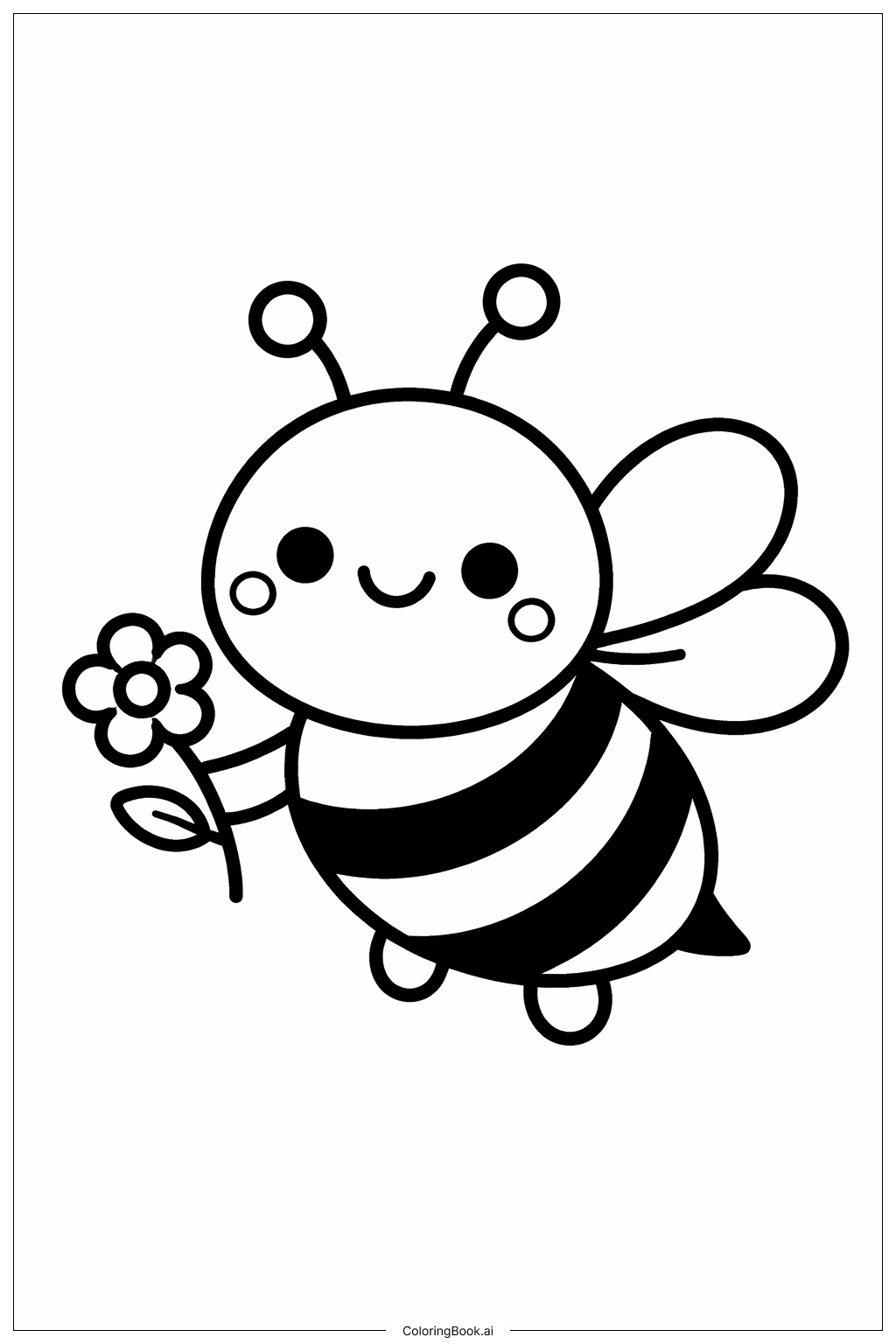
Coloring tips: How to color Spring Time Bee coloring page well?
Try using bright and lively colors to bring this Spring Time Bee scene to life. For the bee itself, classic yellows and black stripes work well, but feel free to add some subtle shades of orange or golden brown to give the body depth. Use light blues or soft purples for the bee’s wings to create a delicate, transparent effect. Color the flowers with cheerful colors like pink, white, yellow, or lavender, mixing tones to make each flower unique. For the grass and leaves, use different shades of green to add variety and energy. Don’t hesitate to experiment with blending colors lightly to show shadows under the bee or flower petals, making the picture feel more three-dimensional.
Coloring challenges: Which parts are difficult to color and need attention for Spring Time Bee coloring page?
• Fine Details on Bee: The bee’s wings and stripes have small areas that require careful coloring to stay within the lines, which can be tricky for younger children.
• Flower Petals: Each flower has several petals usually close together, demanding patience and steady hand movements to color cleanly without overlapping.
• Maintaining Contrast: Balancing bright colors for the bee and flowers while keeping the background subtle can be challenging to avoid making the image look overwhelming.
• Layering Colors: Adding depth by layering light to dark shades on the bee’s body and wings needs some skill in blending colors smoothly.
• Small Background Elements: The grass blades and leaves are drawn with thin lines that may be difficult for beginners to color without smudging or missing spots.
Benefits of coloring books: Advantages of drawing Spring Time Bee coloring page
Coloring this Spring Time Bee picture helps children develop fine motor skills through detailed shading and small shapes. It encourages creativity by allowing kids to choose various colors for nature elements like the bee and flowers. Focusing on the friendly bee and lively flowers can bring joy and a sense of calm, making it a relaxing activity. The scene also teaches young learners about springtime nature and pollination, fostering curiosity about the environment. Moreover, practicing steady coloring builds concentration and patience, valuable skills that transfer to other learning areas.